- H-85A, 2nd Floor, South Extension I, New Delhi, Delhi 110049

- Home
- COURSES
- DSTI Delhi
- Laxmi Nagar DSTI
- Online + Classroom Data Science in Laxmi Nagar
- Job-Oriented Data Science Training in Laxmi Nagar
- Weekend Data Science Course in Laxmi Nagar
- Advanced Excel and Power BI in Laxmi Nagar
- Data Analysis Training in Laxmi Nagar
- Data Visualization Course in Laxmi Nagar
- Artificial Intelligence Course in Laxmi Nagar
- Data Analytics Course in Laxmi Nagar
- Data Science Course in Laxmi Nagar
- Python for Data Science in Laxmi Nagar
- Power BI Training in Laxmi Nagar
- Machine Learning Course in Laxmi Nagar
- Contact Us
- About Us
- BLOG
AI Course in Delhi
Artificial Intelligence is reshaping the way businesses function, decisions are made, and digital systems interact with people. Technologies such as intelligent automation, predictive analytics, computer vision, and conversational AI are driving innovation across industries. At DSTI (Data Science Training Institute), our Artificial Intelligence training is designed to build strong foundational knowledge while introducing learners to practical AI applications used in real-world scenarios.


AI Course In delhi
The Artificial Intelligence program at DSTI focuses on combining theory with hands-on implementation to create industry-ready professionals. Learners gain practical exposure to building, deploying, and scaling AI-driven solutions through project-based learning and real use cases. With a strong emphasis on career readiness and industry relevance, DSTI prepares students and professionals to succeed in the rapidly evolving field of Artificial Intelligence.
AI (Artificial Intelligence Course) Syllabus
This module introduces learners to the core concepts of Artificial Intelligence, including its history, evolution, and real-world impact. Students understand different types of AI, such as narrow AI, general AI, and intelligent systems, along with ethical considerations and future trends. The module helps learners develop an AI mindset and understand how intelligent systems solve complex problems across industries.
Python is the foundation of modern AI development, and this module builds strong programming skills from the ground up. Learners work with Python syntax, data structures, functions, object-oriented programming, and AI-specific libraries. The focus is on writing efficient, readable code that can be used in data processing and AI model development.
This module strengthens the mathematical foundation required for AI algorithms. Learners explore linear algebra concepts such as vectors and matrices, calculus for optimization, and probability theory. The emphasis is on understanding how mathematical principles drive AI model behavior and performance.
Statistics plays a critical role in AI decision-making. This module covers descriptive and inferential statistics, probability distributions, hypothesis testing, correlation, and statistical inference. Learners develop the ability to interpret data, identify patterns, and make informed decisions using statistical techniques.
High-quality data is essential for effective AI systems. This module focuses on data cleaning, handling missing values, outlier detection, normalization, and feature transformation. Learners gain practical experience in converting raw data into meaningful features that improve AI model accuracy.
This module teaches learners how to explore datasets to uncover hidden patterns and insights. Students use visualization and statistical methods to understand data distribution, relationships, and anomalies, enabling better AI model selection and design.
Learners are introduced to machine learning as a core component of Artificial Intelligence. This module explains learning paradigms, model workflows, training processes, and evaluation strategies, forming the basis for advanced AI techniques.
This module dives deep into supervised learning methods used in AI systems. Learners implement regression and classification algorithms, understand decision boundaries, and analyze model performance using real datasets.
Unsupervised learning helps AI systems discover patterns without labeled data. This module focuses on clustering techniques, dimensionality reduction, and data segmentation to identify hidden structures in complex datasets.
Building an AI model is not enough; evaluating and optimizing it is critical. This module covers performance metrics, cross-validation, bias-variance tradeoff, and hyperparameter tuning to improve model reliability and accuracy.
This module introduces artificial neural networks, inspired by the human brain. Learners understand neurons, layers, activation functions, loss functions, and optimization techniques that form the backbone of deep learning.
Students work with deep learning frameworks to build complex AI models. This module focuses on multilayer neural networks, optimization strategies, and practical implementation of deep learning solutions.
This module explores how AI systems interpret visual information. Learners work with image processing, object detection, image classification, and facial recognition techniques used in real-world AI applications.
Natural Language Processing enables AI to understand human language. This module covers text preprocessing, sentiment analysis, language modeling, and conversational AI applications such as chatbots and virtual assistants.
This module focuses on analyzing time-based data for forecasting and trend analysis. Learners build AI models for demand forecasting, financial prediction, and performance monitoring.
Reinforcement learning enables AI systems to learn through interaction and feedback. Learners explore agents, environments, reward mechanisms, and decision-making strategies used in gaming, robotics, and automation.
This module bridges the gap between development and production. Learners understand how to deploy AI models, manage versions, monitor performance, and maintain scalable AI systems in real-world environments.
The final module allows learners to apply their knowledge to real-world AI problems. Students work on industry-based capstone projects, demonstrating end-to-end AI solution development and building a professional portfolio.
Connect With Counselor
Trusted for AI (Artificialintelligence)
Thousands trust us for Advanced training in Python, Data Science, Machine Learning, and AI. We deliver proven outcomes through hands-on experience.
Train with the best
Why Choose Us for AI COurse
Industry-Driven Artificial Intelligence Curriculum
DSTI’s Artificial Intelligence curriculum is carefully designed to reflect current industry requirements and emerging AI trends. Every module is aligned with real-world applications, ensuring learners acquire skills that are immediately relevant to today’s job market. The course content is regularly updated to include the latest AI tools, frameworks, and techniques used by leading organizations.
Expert Faculty with Real-World AI Experience
At DSTI, learners are trained by industry professionals who have hands-on experience working on live Artificial Intelligence and machine learning projects. Trainers bring practical insights, real use cases, and industry best practices into the classroom, enabling students to understand how AI solutions are developed and implemented in real business environments.
Strong Focus on Practical and Hands-On Learning
DSTI emphasizes learning by doing. Every theoretical concept is supported with hands-on coding sessions, lab exercises, and real-world datasets. This approach ensures learners gain confidence in implementing AI algorithms, building intelligent models, and solving complex problems independently.
Career-Oriented Artificial Intelligence Training
The AI program at DSTI is designed with career outcomes in mind. Learners are trained for in-demand job roles such as AI Engineer, Machine Learning Engineer, Data Scientist, and AI Analyst. The course structure helps students transition smoothly from learning concepts to applying them in professional settings.
Beginner-Friendly Learning Path with Advanced Depth
DSTI’s Artificial Intelligence course is structured to accommodate both beginners and experienced professionals. The program starts with core fundamentals and gradually progresses to advanced AI techniques, ensuring a smooth learning curve without compromising on depth or technical rigor.
Flexible Learning Options for All Learners
DSTI offers flexible learning modes that suit students, working professionals, and career switchers. The schedule is designed to balance learning with professional and personal commitments, making it easier for learners to stay consistent and complete the course successfully.
Real-World Projects and Portfolio Development
Learners at DSTI work on multiple industry-oriented projects that simulate real business challenges. These projects help build a strong AI portfolio that demonstrates practical skills, problem-solving abilities, and hands-on experience to potential employers.
Dedicated Career Support and Placement Assistance
DSTI provides end-to-end career support, including resume building, interview preparation, mock interviews, and job guidance. The institute actively supports learners in preparing for technical interviews and navigating AI career opportunities with confidence.
Top Placements


Our Process
Free Counseling Session
We understand your learning background and career goals to suggest the right learning path, batch type, and roadmap based on your needs.
Demo Class Experience
Join a live or recorded demo session before enrolling. This gives you a clear idea of our teaching method, course quality, and delivery style.
Enrollment & Onboarding
After joining, you’ll receive access to course materials, dashboard login, and software setup guides. Orientation sessions help you get started smoothly.
Concept + Practical Delivery
All sessions include both theory and real-time coding. You’ll learn how AI models work and also build them using real datasets and tools.
Assignments, Quizzes & Projects
Every module includes exercises to apply what you've learned. Assignments, mini-projects, and MCQ tests help track your progress and improve your understanding.
Doubt Support & Mentorship
You’ll get weekly doubt-clearing sessions and ongoing support from trainers. Ask questions, solve errors, and get detailed feedback on your work.
Job Preparation
Resume creation, interview practice, and profile optimization are part of the training. You’ll be well-prepared for interviews and confident during job discussions.
Placement Help
After course completion, we connect you with AI job openings and internship opportunities. Our placement team also prepares you for company-specific interview rounds.
Here's what our learnerssay!
Himenaeos ullamcorper placerat etiam tempor orci. Sem et tortor consequat id. Fermentum egestas tellus. Nunc eu hendrerit turpis. Fusce non lectus sem In pellentesque nunc.
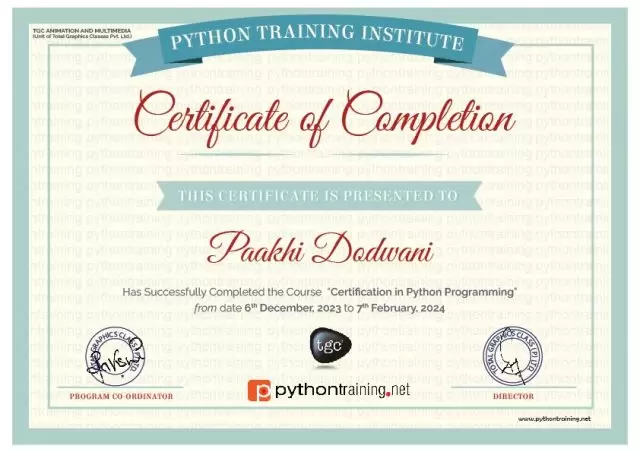
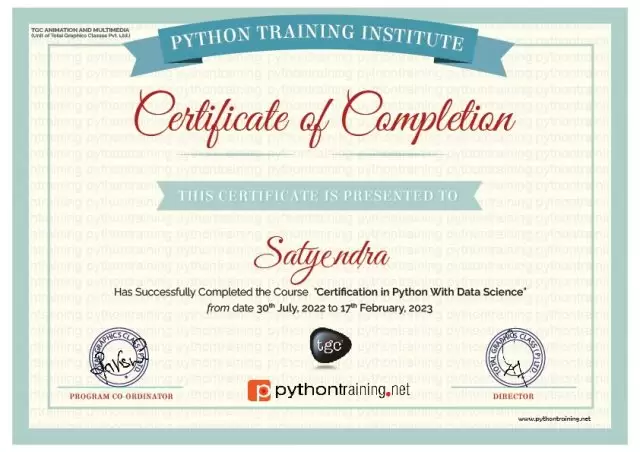
GET CERTIFICATE
JOB PLACEMENT
How Will You Secure Your First AI Job?

We focus on teaching what companies look for—Python, ML, Deep Learning, NLP, Computer Vision, and model deployment. You’ll work with real use cases, not just theory.
Build a portfolio of 4–5 AI projects that solve business problems. These act as strong proof of your capabilities when you apply for jobs or freelance work.
We help you write an impressive resume and create a recruiter-friendly LinkedIn profile that highlights your skills and achievements.
Practice technical interviews with our trainers. You’ll get real-time feedback to improve your answers and approach, both for coding and conceptual rounds.
We provide you with direct job openings, internship opportunities, and referrals to our hiring partners. You also get help applying on platforms like LinkedIn and Naukri.
We stay connected even after course completion. Our support team continues to share job alerts, project ideas, and guidance to help you grow in your AI career.
Honest Reviews, RealInsights
Ligula posuere hendrerit magna neque morbi tristique senectus Fermentum egestas tellus. Nunc eu hendrerit turpis. Fusce non lectus sem mi bibendum neque In pellentesque nunc.
I had the privilege of completing a 2-year course at TGC India, and it was an absolutely wonderful experience! The institution exceeded my expectations in every way.
I recently completed python course from TGC and had a great time while doing the course. I was provided with excellent teaching and guidance by Mr. Mohit sir. He was absolutely efficient and helpful during the entire length of the course.
I had joined TGC a few days ago for python course and I am highly satisfied with the level of teaching and guidance provided by the trainer Mr. Sulabh Agarwal. It was a great experience for me, TGC provide a great environment and curricullam to their students to explore new things and how to develop to our skills.
I had joined TGC a month back for python course and I am highly satisfied with the level of teaching and guidance provided by the trainer Mr. Mohit Sir. A fantastic trainer who carries vast knowledge about the course and also knows how to deliver it to his students.
I enrolled for Python - Data science and Machine learning and my experience has been really great. Sulabh Sir has deep knowledge and uses real world examples to explain concepts. Learning statistics was made easy him. Recommended for people starting out in this field.
Satisfied with the learning i got from TGC preet vihar. teacher here are professional while maintaining a chill and relaxing when teaching. i have completed my Data analytics and my teacher mr Sanjay sir is great at teaching with more visuals and practice than theory.
I just wanted to tell you how much I enjoyed the class (Python core ND Python Advance). What an excellent instructor and I learned things that I did not know about Project including how to do things better than I have been. Again thank you very much.
Python Training InstitutePlacementSupport
Perks
Perks Python Training Institute Placement support
- Industry-Relevant Curriculum crafted by expert data scientists
- Flexible Learning Options with both Offline and Online Sessions
- 1:1 Live Doubt Sessions for personalized feedback and improvement
- Weekend Extra Classes to reinforce key concepts and skills
- Dedicated Academic and Admin Support for a smooth learning experience
- Placement Manager Assistance for job search and application guidance
- Real-world Projects and Case Studies to enhance practical learning
- Hackathons and Competitions to build portfolio and gain recognition
- Master Classes by Industry Experts for insights into AI, ML, and Python
- 100% Placement Assistance to help you launch a successful tech career
We're Here To Provide 24X7Support
Say Hello!
Feel free to reach out to us for course details, timings, and enrollment information.

24/7 contact support
Frequently Asked Questions(FAQ)
Yes, the course is designed to support beginners by starting with fundamental concepts and gradually advancing to complex AI techniques. No prior AI experience is required.
Learners work on real-world AI projects such as predictive modeling, image recognition, text analysis, and intelligent automation, culminating in a comprehensive capstone project.
After completing the course, learners can pursue roles such as AI Engineer, Machine Learning Engineer, Data Scientist, AI Developer, and AI Analyst across multiple industries.
We offer both. You can attend our offline classes at the Delhi center or join online batches from anywhere in India or abroad.
es, learners receive a recognized certification from DSTI upon successful completion of the Artificial Intelligence course, validating their skills and expertise.
DSTI’s AI course stands out due to its industry-aligned curriculum, experienced trainers, hands-on learning approach, and strong focus on career outcomes. The program balances theory with practical implementation to ensure real-world readiness.
You’ll get session recordings and options to attend repeat or backup classes. No concept or topic will be missed out.