
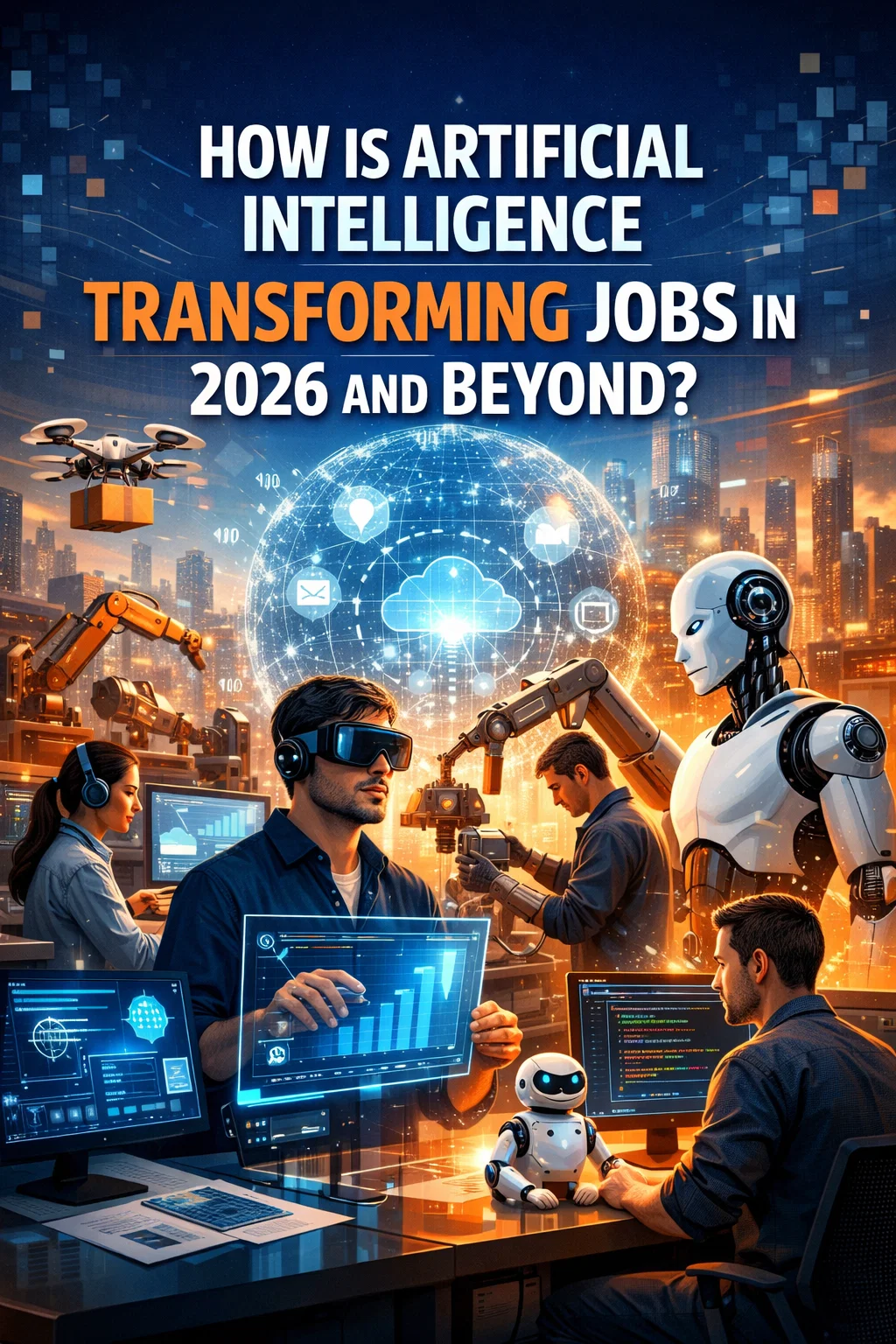
AI Redefining the Global Employment Landscape
AI is fundamentally reshaping the global employment landscape as organizations move toward automation, intelligence-driven decision-making, and digital-first operations. By 2026 and beyond, AI is no longer limited to IT departments; it is embedded across business functions, influencing how employees work, collaborate, and deliver results. This widespread adoption of AI is driving structural changes in job roles, workflows, and organizational hierarchies.
AI Creating High-Demand Careers and New Opportunities
AI is generating a wave of new career opportunities that are redefining professional growth paths. Job roles such as AI developer, data scientist, machine learning engineer, AI business analyst, and automation specialist are witnessing rapid demand. Even non-technical roles are evolving, with AI enabling professionals in marketing, finance, HR, and operations to become more data-driven and strategic in their decision-making.
AI Automating Tasks While Enhancing Productivity
AI is transforming jobs by automating repetitive and rule-based tasks that once consumed significant employee time. Automation powered by AI improves accuracy, reduces operational costs, and increases productivity across industries. Instead of replacing employees entirely, AI allows professionals to focus on problem-solving, innovation, and value creation, making workplaces more efficient and outcome-oriented.
AI Skills Becoming Mandatory for Future Professionals
AI skills are quickly becoming essential for career survival and advancement. Employers increasingly seek candidates who understand AI concepts, tools, and applications, regardless of their job role. Knowledge of AI, data analytics, automation platforms, and intelligent systems is now a critical requirement for professionals aiming to stay competitive in a fast-changing job market.
AI Transforming Traditional Roles and Responsibilities
AI is redefining traditional job roles by augmenting human capabilities rather than eliminating them. Accountants use AI for financial forecasting, doctors rely on AI-assisted diagnostics, and educators use AI for personalized learning experiences. These changes require professionals to adapt, learn new tools, and work alongside AI systems to deliver better outcomes and improved efficiency.
AI Driving Continuous Reskilling and Upskilling
AI adoption is accelerating the need for continuous learning and skill development. Organizations are investing in AI training programs to ensure their workforce can adapt to evolving technologies. Professionals who proactively reskill in AI-related domains are better positioned for leadership roles, higher salaries, and long-term career stability in an increasingly automated world.
AI Encouraging Human–Machine Collaboration
AI is transforming jobs by fostering collaboration between humans and intelligent machines. While AI handles large volumes of data and complex calculations, humans bring creativity, emotional intelligence, and ethical judgment. This synergy between human expertise and AI capabilities is leading to smarter business strategies, improved customer experiences, and innovation across sectors.
AI Shaping the Future of Work Beyond 2026
AI will continue to influence how jobs evolve well beyond 2026, making adaptability and technological awareness critical for success. As AI adoption expands globally, professionals with AI knowledge will have access to diverse career opportunities, remote work options, and global projects. AI-driven careers are expected to remain resilient, future-ready, and highly rewarding.