
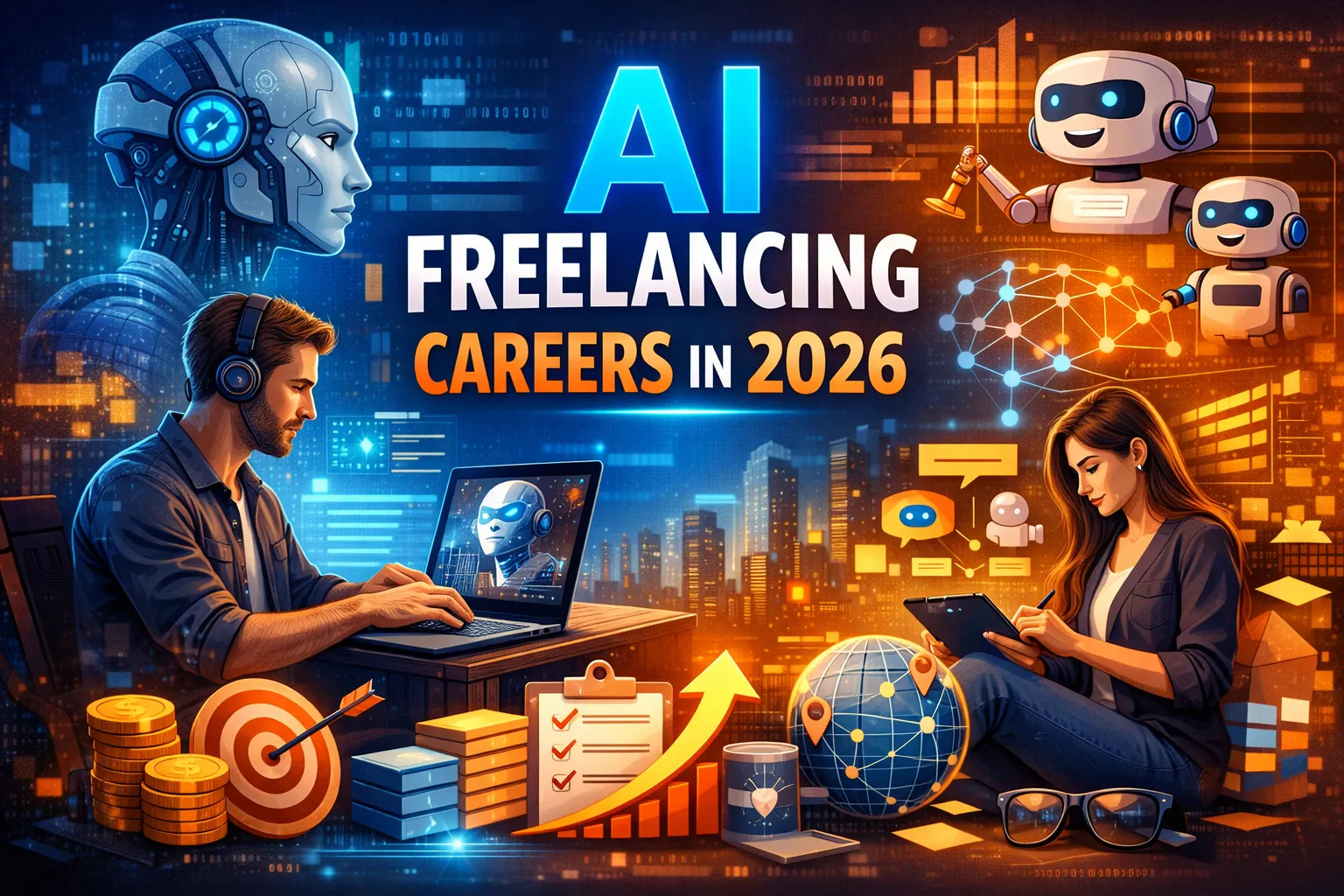
AI Freelancing Careers in 2026: Introduction
The global workforce is undergoing a major transformation as freelancing becomes a dominant employment model. With companies shifting toward remote work and project-based hiring, independent professionals are playing a critical role in business growth. Freelancing is no longer limited to creative or IT services; it now includes advanced technology-driven roles that demand strategic thinking and technical expertise. In 2026, freelancing offers professionals flexibility, global exposure, and the freedom to work across industries without geographical limitations.
AI Freelancing Careers Market Expansion
The rapid digitalization of businesses has created a strong demand for specialized freelance professionals. Organizations are investing heavily in automation, analytics, and intelligent systems to remain competitive. Instead of maintaining large in-house teams, companies prefer hiring freelancers for specific tasks, system development, and optimization projects. This trend has opened doors for skilled professionals to collaborate with startups, enterprises, and international clients, resulting in consistent project flow and long-term engagements.
AI Freelancing Careers, Job Roles, and Niches
Freelancers today can choose from a wide range of roles depending on their expertise and interests. Popular opportunities include automation specialists, data labeling professionals, chatbot designers, workflow consultants, prompt engineers, and AI-based content strategists. Many freelancers are also working in hybrid roles that combine business analysis with technical implementation. These niches allow professionals to build authority, charge premium rates, and differentiate themselves in competitive marketplaces.
AI Freelancing Careers Skills for Success
To thrive in freelancing careers in 2026, professionals must focus on both technical and soft skills. Knowledge of programming fundamentals, data handling, model evaluation, and tool integration is essential. Equally important are communication skills, client management, and problem-solving abilities. Freelancers who understand business objectives and translate them into technical solutions gain higher client trust and repeat projects. Continuous upskilling through certifications and real-world projects remains crucial for long-term success.
AI Freelancing Careers Income and Earning Potential
Freelancing income has seen significant growth due to the increasing value of specialized skills. Earnings vary based on experience, niche expertise, and client location, but skilled freelancers often earn more than traditional salaried professionals. Many freelancers build a stable monthly income through retainer contracts, consulting services, and recurring automation projects. With proper pricing strategies and value-based offerings, freelancing can become a highly profitable and sustainable career.
AI Freelancing Careers Platforms and Client Acquisition
Freelancers in 2026 rely on multiple channels to secure projects, including global freelancing platforms, professional networks, and direct outreach. Building a strong personal brand through portfolios, case studies, and social media presence helps attract high-quality clients. Many professionals also generate leads through blogging, webinars, and online communities. Trust, credibility, and consistent delivery play a key role in securing long-term clients.
AI Freelancing Careers: Challenges and Adaptability
Despite the opportunities, freelancing comes with challenges such as increasing competition, fast-changing tools, and client expectations. Freelancers must adapt quickly to new technologies and industry requirements. Time management, workload balance, and maintaining consistent income are also common challenges. Professionals who specialize in specific niches and focus on long-term skill development are better positioned to overcome these obstacles.
AI Freelancing Careers Future Outlook
The future of freelancing is extremely promising as businesses continue to adopt intelligent systems at scale. Independent professionals will remain essential for innovation, cost optimization, and digital transformation. Freelancing will evolve into a mainstream career option offering flexibility, autonomy, and global opportunities. Those who start early, build strong expertise, and adapt to market trends will enjoy sustained growth and professional independence well beyond 2026.