
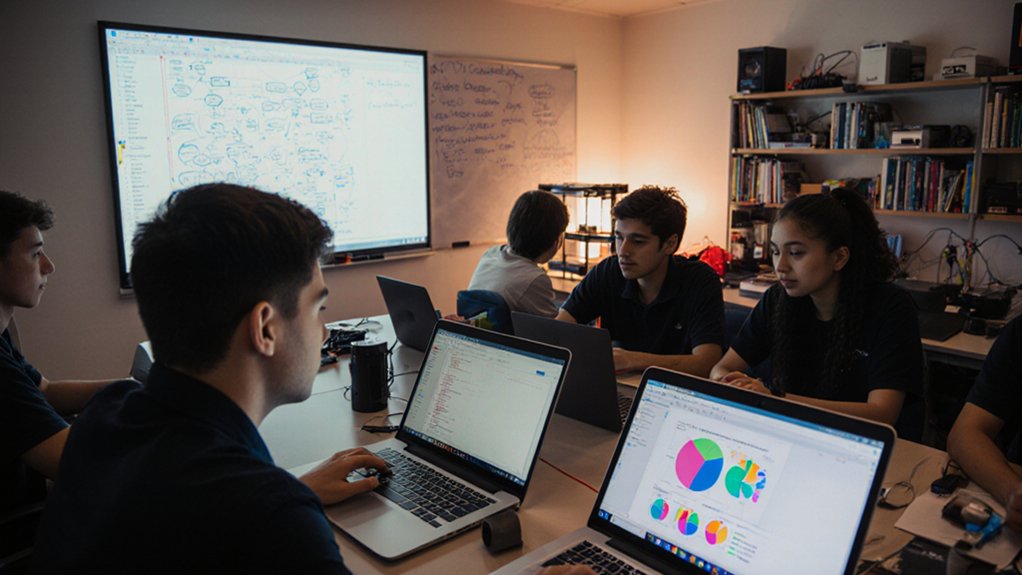
As final year students, we face the exciting challenge of applying our theoretical knowledge to real-world problems through machine learning projects. Whether it’s image classification or healthcare predictions, we can choose projects that align with our interests and skills. But how do we select the right project and the vital tools to succeed? Let’s explore these significant aspects together, setting the stage for impactful and innovative outcomes.
Key Takeaways
- Choose projects like Image Classification or Sentiment Analysis that align with your interests and skills.
- Assess your technical abilities and select projects that enhance those skills, such as using TensorFlow or Scikit-learn.
- Focus on real-world datasets to ensure your project has practical relevance and meaningful contributions.
- Utilize collaboration tools like GitHub for effective project management and teamwork.
- Present your findings with clear objectives, effective visualizations, and engaging storytelling to captivate your audience.
Top 10 Machine Learning Projects for Final Year Students
When it comes to selecting the right machine learning project for our final year, we’ve got plenty of exciting options to choose from. One standout idea is image classification, where we can develop models that categorize images into predefined classes. This project not only enhances our technical skills but also allows us to explore various algorithms and datasets. Another fascinating project is sentiment analysis, which involves analyzing text data to determine the sentiment behind it—be it positive, negative, or neutral. This can be applied to social media data or product reviews, giving us insights into public opinion. Both projects offer a chance to work with real-world data and make meaningful contributions, making them perfect choices for our final year endeavors. Additionally, leveraging hands-on practical sessions can significantly enhance our understanding and implementation of these projects.
Choosing the Right Project for Your Skills
How do we choose the right machine learning project that aligns with our skills and interests? First, we need to conduct a thorough skill assessment. Understanding our strengths and weaknesses helps in selecting a project that challenges us without being overwhelming. Here are three key steps for project alignment:
- Identify Interests: Choose a domain that excites us, whether it’s healthcare, finance, or robotics.
- Evaluate Skills: List our technical skills, such as programming languages, algorithms, and tools we’re familiar with.
- Research Feasibility: Look for projects that are not only interesting but also achievable within our timeframe and resource constraints. Additionally, consider incorporating industry-relevant projects that can provide practical experience and enhance our learning.
Must-Have Tools for Your Machine Learning Projects
Equipping ourselves with the right tools is essential for successfully guiding machine learning projects. First, we should consider libraries like Pandas and NumPy for data preprocessing techniques, helping us clean and transform our datasets efficiently. Next, TensorFlow and PyTorch stand out for building and training our models, offering flexibility and power. Once our models are trained, we can use Scikit-learn for model evaluation metrics, ensuring our models perform as expected. Visualization tools like Matplotlib and Seaborn also play a significant role, allowing us to interpret results effectively. Finally, GitHub helps us collaborate and manage our code seamlessly. By leveraging these tools, we enhance our chances of executing effective and impactful machine learning projects. Additionally, incorporating real-world projects into our learning process can significantly boost our portfolio and problem-solving skills.
Showcase Your Machine Learning Project Effectively
To effectively showcase our machine learning project, we need to focus on storytelling that highlights our objectives, methodologies, and results. An impactful project presentation can captivate our audience and communicate our hard work. Here’s how we can achieve that:
- Define Clear Objectives: We should articulate what problem we aimed to solve and why it matters.
- Explain Our Methodology: Let’s break down our approach clearly, including data sources, algorithms used, and the reasoning behind our choices.
- Present Results Visually: Using graphs, charts, and visuals will help convey our findings effectively and make them more digestible.
Real-World Applications of Machine Learning?
What are some of the most impactful real-world applications of machine learning that we can explore? One significant area is healthcare predictions. By analyzing patient data, machine learning algorithms can identify patterns and predict disease outbreaks or patient outcomes, helping medical professionals make more informed decisions. Another essential application is financial forecasting. Here, machine learning models assess market trends and consumer behavior, enabling businesses to optimize investment strategies and manage risks more effectively. These applications demonstrate how machine learning is revolutionizing industries by improving efficiency and accuracy. As we dive deeper into our final year projects, we should consider incorporating these real-world applications to create solutions that address pressing challenges in healthcare and finance. Additionally, utilizing data visualization tools can enhance our project’s presentation and insights, making complex data more accessible.
Conclusion
To sum up, diving into machine learning projects not only sharpens our technical skills but also prepares us for real-world challenges. By selecting the right project that aligns with our interests and leveraging essential tools, we can create impactful solutions. Let’s remember to showcase our work effectively, as it demonstrates our capabilities to potential employers. Ultimately, these projects are stepping stones that lead us toward exciting opportunities in the ever-evolving field of machine learning.