
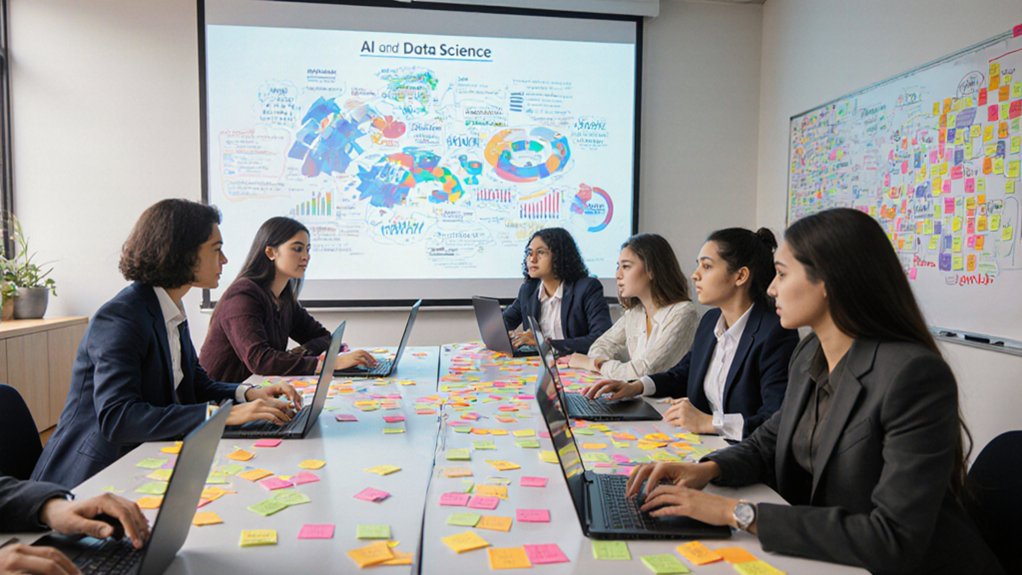
As we explore the possibility of commerce and arts students stepping into the world of AI and data science after 12th grade, we find that these fields are more accessible than ever. With the right resources and determination, we can equip ourselves with valuable skills. So, what does it take to shift into this tech-driven landscape? Let’s uncover the path forward and see how we can make this journey together.
Key Takeaways
- Yes, commerce and arts students can learn AI and data science, as these fields welcome diverse educational backgrounds.
- Essential skills like programming, analytical thinking, and statistical knowledge can be developed through targeted courses and resources.
- Numerous online courses and certifications are tailored for beginners, making it accessible for students from non-technical backgrounds.
- Hands-on experience through projects and collaboration enhances understanding and increases employability in the data-driven job market.
- Building a professional network and participating in industry events can provide valuable insights and opportunities for aspiring AI and data science professionals.
Why AI and Data Science Matter for Your Career
As we navigate today’s rapidly evolving job market, understanding AI and data science isn’t just beneficial; it’s essential for our careers. We all know that technology shapes industries, and by embracing these fields, we open up diverse career opportunities. Whether we’re in commerce or the arts, AI and data science can elevate our skill sets, making us more competitive in the job market. Additionally, gaining skills in data handling can significantly enhance your employability across various sectors.
Real-World Applications of AI and Data Science
Understanding the impact of AI and data science can greatly enhance our career prospects, but it’s just as important to recognize how these technologies are applied in real-world scenarios. Let’s explore some key applications and their industry impacts:
| Application | Industry Impact |
|---|---|
| Predictive Analytics | Enhances decision-making in finance |
| Natural Language Processing | Improves customer service in retail |
| Computer Vision | Transforms healthcare diagnostics |
These real-world applications illustrate the vast potential of AI and data science across various sectors. By embracing these technologies, we can contribute to innovative solutions, drive efficiency, and ultimately shape the future of our careers. Understanding these applications is essential as we navigate the evolving job market. Additionally, pursuing a machine learning course can provide job-ready skills that are vital in today’s competitive landscape.
Key Skills for a Career in AI and Data Science
Success in AI and data science hinges on a blend of technical and soft skills that empower us to tackle complex challenges. To thrive in this field, we need to cultivate a diverse skill set that includes:
- Programming Basics: Understanding languages like Python or R is essential for data manipulation.
- Analytical Thinking: We must develop our ability to interpret data and derive insights effectively.
- Statistical Knowledge: A solid grasp of statistics helps us make informed decisions based on data.
- Problem Solving: Tackling real-world issues requires creativity and a structured approach to solutions.
Additionally, we should embrace machine learning, data visualization, critical reasoning, ethical considerations, and domain expertise to enhance our capabilities in this dynamic field. Engaging in a comprehensive Data Analysis Training Program can significantly boost our proficiency in essential analytical tools and techniques.
How to Get Started: Courses and Certifications
As we explore how to get started in AI and data science, we’ll see that online courses are widely available to fit our schedules and learning styles. Many certification programs offer valuable credentials that can enhance our resumes and skills. Let’s uncover the best options for our journey together! Additionally, pursuing an AI course can provide a comprehensive understanding of foundational knowledge and practical applications in the field.
Online Courses Availability
Many online courses and certifications are available for commerce and arts students enthusiastic to immerse themselves in AI and data science. These courses, offered on various online platforms, cater to different skill levels and often have minimal course prerequisites.
Here’s how we can get started:
- Coursera: Offers courses from top universities, including beginner-friendly options.
- edX: Provides MicroMasters programs, ideal for those looking for a deeper understanding.
- Udacity: Features nanodegree programs focused on practical skills in AI and data science.
- DataCamp: Specializes in data science and analytics, perfect for hands-on learning.
Certification Programs Overview
When we immerse ourselves in certification programs, we access a structured pathway to mastering AI and data science. These programs offer numerous certification benefits, such as gaining practical skills that employers value and enhancing our resumes. We recommend starting with beginner-friendly courses like Google’s Data Analytics Professional Certificate or IBM’s AI Engineering Professional Certificate. These not only provide foundational knowledge but also hands-on experience. As we progress, we can explore advanced certifications like Microsoft Certified: Azure Data Scientist Associate. Each step we take in these programs builds our confidence and expertise, allowing us to shift seamlessly into this exciting field. By choosing the right courses, we can truly unleash our potential in AI and data science.
Resources and Tools for Learning AI and Data Science
While diving into the world of AI and data science, we can leverage a wealth of resources and tools that make learning both accessible and engaging. Here’s a list of some valuable options:
- Online resources: Websites like Coursera and edX offer courses on machine learning and coding languages.
- Learning platforms: Platforms like DataCamp focus on data visualization and interactive tools.
- Community forums: Engaging in forums like Stack Overflow helps us connect with others and share project ideas.
- Study groups: Joining local or online study groups fosters collaboration and enhances our understanding of complex topics.
Additionally, considering that many learners have successfully trained in AI through structured programs, it’s vital to explore options like comprehensive courses offered by reputable institutes. These resources not only guide us through our learning journey but also build a supportive network as we explore AI and data science together.
Navigating Challenges as a Non-Technical Student
As non-technical students, we often face unique challenges when learning AI and data science. It’s essential for us to identify and overcome these technical barriers while also focusing on building the relevant skills that can bridge our knowledge gaps. Together, we can transform our backgrounds into strengths and make meaningful progress in this exciting field.
Overcoming Technical Barriers
Though diving into AI and data science may seem intimidating for those of us without a technical background, we can successfully navigate these challenges with the right mindset and resources. Embracing a technical mindset is essential for overcoming fears and building our confidence in this field. Here are some strategies we can use:
- Start with online courses: Many platforms offer beginner-friendly courses tailored for non-technical students.
- Join study groups: Collaborating with peers can enhance our understanding and provide support.
- Utilize online communities: Forums and social media groups can connect us with mentors and resources.
- Practice regularly: Hands-on projects help solidify our knowledge and skills.
Building Relevant Skills
To thrive in AI and data science, we need to focus on building relevant skills that bridge the gap between our current knowledge and the demands of the field. As non-technical students, we can start with foundational concepts like statistics and programming languages such as Python. Engaging in skill development through online courses or workshops will help us gain confidence.
Moreover, we should explore practical applications by working on real-world projects or collaborating with peers. This hands-on experience not only solidifies our understanding but also makes us more appealing to potential employers. By actively seeking opportunities to apply our knowledge, we can navigate challenges and transform ourselves into competent professionals ready for the dynamic world of AI and data science.
Can Commerce or Arts Students Learn AI and Data Science After 12th?
How can Commerce or Arts students tap into the world of AI and Data Science after 12th grade? We can explore various learning pathways that enable us to make successful career shifts into this dynamic field. Here are some steps to reflect upon:
- Online Courses: Platforms like Coursera and edX offer tailored courses for beginners.
- Workshops and Bootcamps: Intensive programs can provide hands-on experience and practical skills.
- Networking: Connect with professionals in the field through events and social media.
- Projects and Internships: Real-world experience strengthens our understanding and builds our portfolios.
Frequently Asked Questions
What Are the Job Prospects for Non-Technical Graduates in AI and Data Science?
Non-technical graduates can find promising job opportunities in AI and data science. They can explore diverse career paths like data analysis, marketing analytics, and project management, leveraging their unique perspectives and skills in this evolving field.
Can I Pursue a Master’s Degree in AI Without a Technical Background?
Yes, we can pursue master’s programs in AI without a technical background. Many universities offer courses with non-technical prerequisites, allowing us to build essential skills and knowledge needed for a successful career in this field.
How Much Time Should I Dedicate to Learning AI and Data Science Weekly?
We recommend dedicating at least 10-15 hours weekly to learning AI and data science. By structuring our study methods around this schedule, we can effectively grasp complex concepts and stay motivated throughout our journey.
Are There Any Scholarships Available for Commerce or Arts Students in This Field?
Yes, there’re scholarship opportunities and financial aid specifically for commerce and arts students pursuing AI and data science. We should research institutions offering these options to enhance our learning journey without financial burden.
What Programming Languages Should I Focus on as a Beginner in AI?
As beginners, we should focus on Python and R for AI. They’re user-friendly and have essential frameworks like TensorFlow and PyTorch, making it easier for us to immerse ourselves in machine learning and data science.
Conclusion
To summarize, we believe that commerce and arts students can thrive in AI and data science after 12th grade. By embracing online courses, hands-on projects, and networking opportunities, we can equip ourselves with the essential skills needed for this tech-driven world. Let’s not shy away from these fields; instead, let’s plunge in and explore the vast possibilities that await us. Our unique perspectives can bring fresh insights to the ever-evolving landscape of AI and data science.