
The Sudden Drop in Structure and Routine
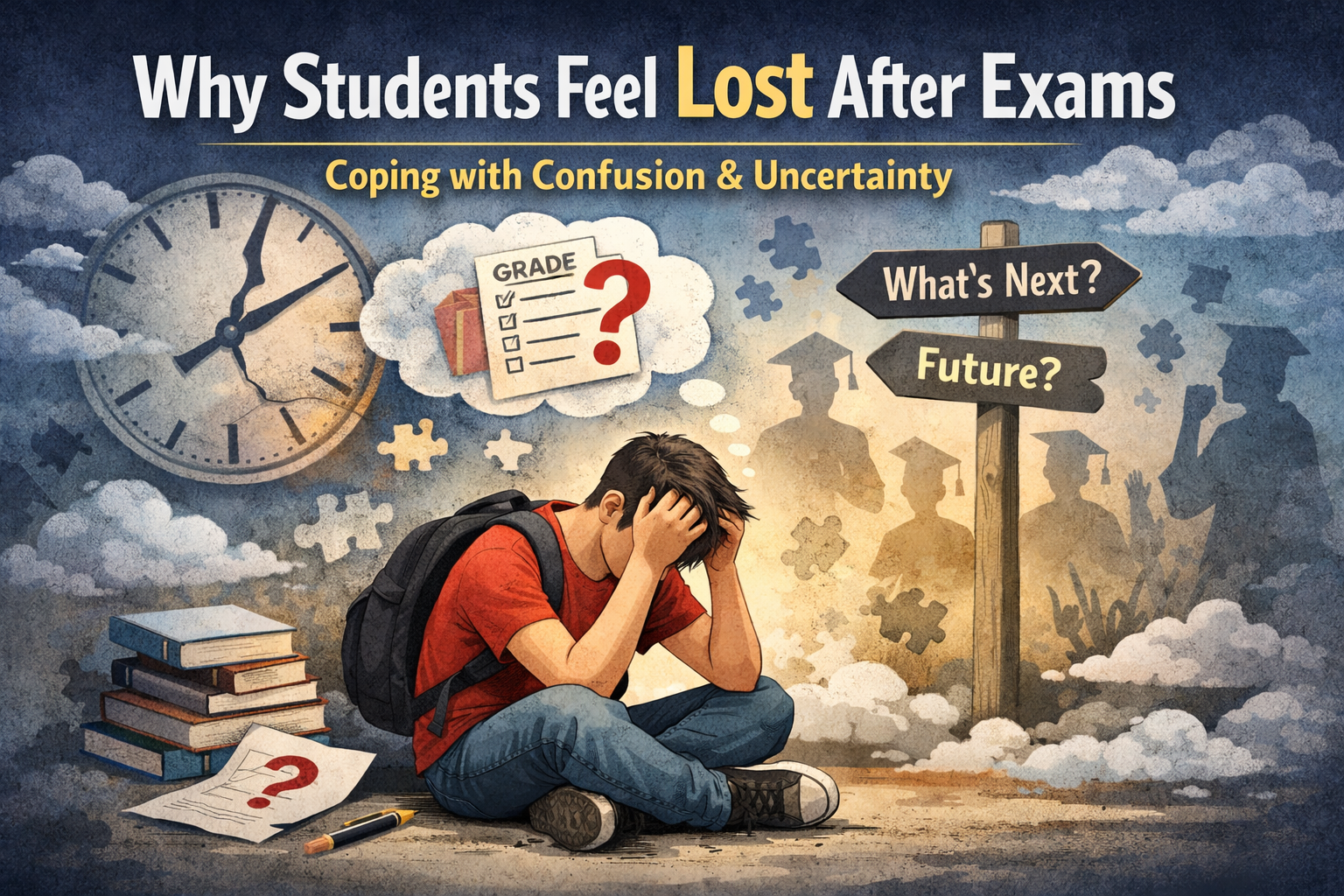
One of the biggest reasons students feel lost after exams is the abrupt loss of routine. For weeks or even months, their daily lives revolve around timetables, revision schedules, and academic pressure. Once exams end, that structured rhythm disappears almost overnight. The brain, which has been operating in a high-alert, goal-driven mode, suddenly faces a vacuum. This shift can create a strange emotional dip where students feel directionless despite having looked forward to the break. The lack of immediate academic goals often makes students question what to do next, leading to confusion and restlessness.
Post-Exam Emotional Crash Is Real
Many students experience what psychologists informally call a “post-exam crash.” During exam preparation, the body runs on adrenaline, cortisol, and constant mental stimulation. When exams finish, these stress hormones drop sharply. This chemical shift can trigger feelings of emptiness, fatigue, or even mild sadness. Students often mistake this natural decompression phase for laziness or lack of motivation. In reality, the mind and body are simply recovering from an extended period of pressure and performance mode.
Unrealistic Expectations About Freedom
Before exams end, students often fantasize about the freedom they will finally enjoy. However, when the moment arrives, reality rarely matches the expectation. Unlimited free time can feel overwhelming rather than exciting. Without planned activities or meaningful engagement, days start to blur together. This mismatch between expectation and reality can intensify feelings of being lost. Instead of relief, students may feel bored, guilty, or unsure about how to use their time productively.
Fear and Anxiety About Results
Another major factor behind post-exam confusion is uncertainty about results. Even after finishing exams, many students remain mentally stuck in evaluation mode. Thoughts like “What if I didn’t do well?” or “What happens next?” keep looping in the background. This unresolved anxiety prevents the mind from fully relaxing. Students may appear free physically, but mentally, they are still trapped in exam season. This limbo state often creates emotional heaviness and a lack of clarity about the future.
Loss of a Clear Short-Term Goal
Human motivation thrives on clear targets. During exam season, the goal is obvious: prepare, revise, and perform well. Once exams end, that short-term mission disappears. Without a defined next step, students can feel strangely purposeless. This is especially common among high-achieving students who are used to constant academic milestones. The brain, conditioned to chase measurable progress, struggles when there is no immediate scoreboard to track.
Social Disconnection After Exams
Ironically, exams often create a strong sense of shared struggle among classmates. Group studies, discussions, and mutual stress build a temporary social bond. After exams, everyone disperses into their own routines, vacations, or digital worlds. This sudden drop in peer interaction can contribute to feelings of isolation. Students who were constantly surrounded by academic conversation may now feel unusually quiet and disconnected.
Overthinking the Future Path
For many students, exams represent turning points, especially board exams, university finals, or competitive tests. Once the papers are done, big questions start surfacing: Which career should I choose? What if I picked the wrong stream? What comes next? This future-focused overthinking can create mental fog. Instead of enjoying the present break, students become trapped in long-term uncertainty, which amplifies the feeling of being lost.
How Students Can Regain Clarity and Motivation
The good news is that this lost feeling is temporary and manageable. The first step is normalization—understanding that post-exam emptiness is extremely common. Students benefit from gradually rebuilding structure rather than jumping into complete idleness. Setting small daily goals, exploring hobbies, exercising, and maintaining social contact can help restore balance. It is also helpful to reflect on achievements instead of immediately worrying about results. Creating a loose but meaningful routine helps the brain transition smoothly from high-pressure mode to growth mode.
The Importance of Intentional Rest
Many students underestimate how mentally exhausted they are after exams. Feeling unmotivated immediately afterward is often a sign of genuine burnout. Intentional rest—sleep, light activities, and digital detox- should not be viewed as wasted time. Recovery is a necessary phase of peak performance cycles. When students allow themselves guilt-free rest for a short period, their natural curiosity and energy typically return stronger.
Turning the Post-Exam Phase Into an Opportunity
Rather than seeing this phase as a void, students can treat it as a powerful reset window. It is an ideal time to explore skills outside textbooks, such as communication, creativity, fitness, or career research. Students who intentionally use this transition period often gain clarity faster than those who drift aimlessly. With the right mindset, the weeks after exams can become a launchpad for personal growth instead of a period of confusion.
Final Thoughts
Feeling lost after exams does not mean something is wrong with a student; it usually means their mind is adjusting after sustained pressure. The combination of hormonal changes, routine disruption, uncertainty about results, and lack of immediate goals creates a temporary emotional dip. With patience, gentle structure, and purposeful activities, most students naturally regain their direction. Understanding this phase is the first step toward navigating it confidently and turning post-exam emptiness into meaningful momentum.