
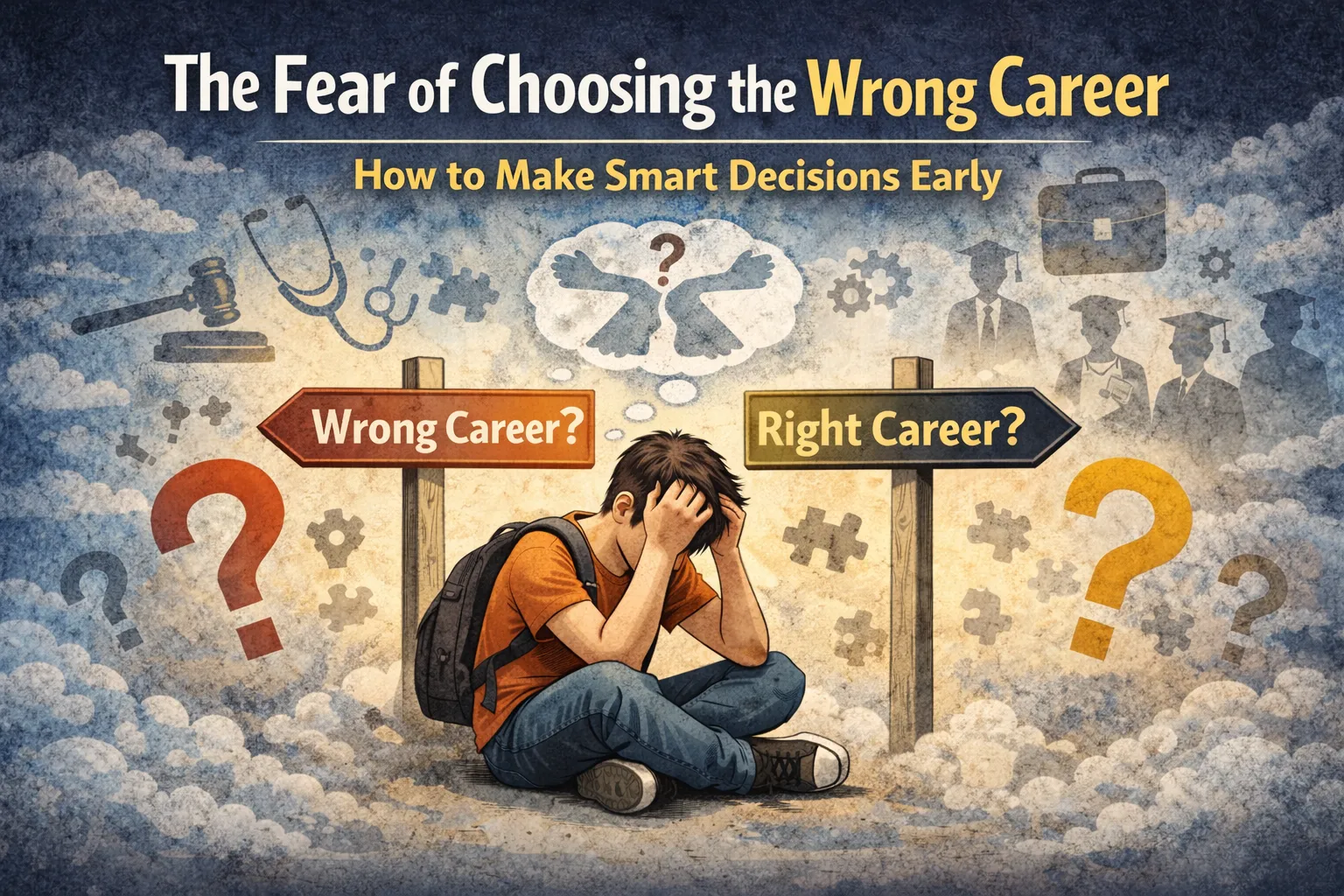
Why the Fear of Choosing the Wrong Career Is So Common
The fear of choosing the wrong career has become one of the most widespread anxieties among students and young adults. In a world filled with endless options and constant comparison, making a single decision about the future can feel overwhelming. Many individuals worry that one wrong step will permanently damage their success or happiness. This fear is especially intense during teenage and early adulthood years when identity, confidence, and long-term goals are still evolving. Understanding that this fear is both normal and manageable is the first step toward making smarter, calmer decisions.
The Psychology Behind Career Decision Anxiety
Career indecision is deeply rooted in human psychology. The brain naturally tries to avoid loss and uncertainty, which makes long-term decisions feel risky. When young people think about careers, they are not just choosing a job; they are imagining their entire future lifestyle, financial stability, and social identity. This high perceived pressure activates anxiety responses. Additionally, perfectionism plays a major role. Many students believe there is only one “perfect” career path, which increases the fear of making mistakes. In reality, most successful careers are shaped through gradual adjustments rather than one flawless early decision.
Social Pressure and Expectations from Family
Family expectations often amplify the fear of making the wrong career choice. In many households, certain professions are viewed as more respectable or secure, such as engineering, medicine, or government services. While guidance from parents can be helpful, excessive pressure can create internal conflict in young minds. Students may feel torn between personal interests and family approval. This emotional tug-of-war increases hesitation and self-doubt. When career decisions become tied to fear of disappointing loved ones, anxiety naturally intensifies.
The Myth of the “One Perfect Career”
One of the biggest misconceptions fueling career fear is the belief that there is only one correct path. Modern career research shows that most professionals change roles, industries, or specializations multiple times in their lifetime. The job market is dynamic, and new opportunities emerge constantly. Viewing career selection as a flexible journey rather than a permanent life sentence dramatically reduces pressure. When students understand that skills are transferable and paths are adjustable, they approach decisions with more confidence and less panic.
Signs That Fear Is Affecting Career Decisions
Career fear often shows up in subtle but important ways. Some students constantly delay choosing a stream or course, hoping clarity will magically appear. Others keep switching interests frequently because they fear commitment. Over-researching options without taking action, seeking constant reassurance, or feeling mentally stuck are also common signs. In some cases, students may completely avoid thinking about their future because the topic feels too stressful. Recognizing these patterns early helps prevent long-term decision paralysis.
Why Early Smart Decisions Matter
While no decision is perfectly final, making thoughtful early choices still provides a strong advantage. Early clarity allows students to build relevant skills, gain experience, and develop confidence sooner. It reduces wasted time and helps create momentum. However, “smart decisions” do not mean rushed or pressure-based choices. They mean informed, flexible, and self-aware decisions. The goal is progress, not perfection. When young people focus on learning and adaptability, even imperfect choices can lead to strong career outcomes.
Step One: Build Self-Awareness Before Choosing
The foundation of a good career decision is self-awareness. Students should first understand their interests, strengths, personality traits, and work preferences. Reflective questions such as “What activities energize me?” or “Do I prefer structured or creative work?” provide valuable insight. Psychometric or aptitude assessments can also help clarify natural inclinations. When decisions are based on self-knowledge rather than trends or pressure, the risk of regret drops significantly.
Step Two: Explore Careers Through Real Exposure
Many career fears come from making decisions based on incomplete information. Reading about careers is helpful, but real-world exposure is far more powerful. Job shadowing, internships, volunteering, online projects, and informational interviews with professionals give practical clarity. These experiences replace imagination-based fear with reality-based understanding. Even short exposure can help students eliminate unsuitable paths and feel more confident about promising ones.
Step Three: Think in Experiments, Not Lifetime Commitments
One of the smartest mindset shifts is to treat early career steps as experiments rather than irreversible commitments. Choosing a stream, course, or first job is simply the next step , not the final destination. This experimental mindset reduces pressure and encourages learning. Many successful professionals discovered their true path only after trying multiple directions. When students allow themselves to test and adapt, fear loses much of its power.
Step Four: Develop Decision-Making Skills
Decision confidence improves with practice. Students benefit from structured decision frameworks such as listing pros and cons, evaluating long-term growth, and considering personal interest levels. Setting short-term checkpoints instead of lifetime predictions makes choices more manageable. It is also helpful to accept that some uncertainty will always exist. Strong decision-makers are not those who eliminate risk but those who move forward despite manageable uncertainty.
The Role of Parents and Mentors in Reducing Fear
Supportive adults can significantly ease career anxiety. Parents and mentors should focus on guidance rather than control. Encouraging exploration, validating confusion, and sharing realistic career journeys helps normalize uncertainty. When young people feel psychologically safe, they think more clearly and make more authentic choices. Constructive conversations about skills, market trends, and personal strengths are far more helpful than pressure-driven comparisons.
When to Seek Professional Career Guidance
If a student feels persistently stuck, overwhelmed, or highly anxious about career choices, professional guidance can be valuable. Career counselors use structured assessments and expert insight to provide clarity. They help students connect personal traits with suitable career clusters, reducing guesswork. Early counseling is not a sign of weakness; it is a strategic step toward informed decision-making.
Turning Fear Into a Strategic Advantage
Interestingly, fear of choosing the wrong career can be useful when handled correctly. It often signals that a student cares deeply about their future. When this concern is channeled into research, self-reflection, and skill development, it becomes a powerful motivator. The goal is not to eliminate concern but to transform it into thoughtful planning and proactive exploration.
Final Thoughts
The fear of choosing the wrong career is a natural response to a high-stakes decision in an uncertain world. However, it becomes harmful only when it leads to paralysis or panic. By building self-awareness, gaining real-world exposure, adopting an experimental mindset, and seeking supportive guidance, students can make smart early decisions without overwhelming stress. Careers today are flexible and evolving, and no single choice defines an entire future. With informed action and an adaptable mindset, young people can move forward with clarity, confidence, and resilience.