
Why Academic Success Alone Is No Longer Enough
For decades, the education system has focused heavily on grades, memorization, and theoretical knowledge. While academic achievement still matters, employers today are increasingly looking beyond report cards. Companies want professionals who can adapt, communicate, solve problems, and collaborate in fast-changing work environments. Many graduates enter the workforce with strong subject knowledge but struggle to meet workplace expectations because essential real-world skills were never formally taught in school. Understanding this gap is critical for students who want to stay competitive in 2025 and beyond.
The Growing Gap Between Education and Industry Needs
The modern workplace has evolved faster than traditional education systems. Schools often follow fixed curricula that prioritize exams over employability skills. Meanwhile, industries are being reshaped by technology, globalization, remote work, and automation. Employers now value agility, digital fluency, and emotional intelligence just as much as technical expertise. This mismatch creates frustration on both sides; companies struggle to find job-ready candidates, while graduates feel underprepared despite years of schooling. Bridging this gap requires awareness of the skills that truly drive career success.
Communication Skills: The Ultimate Career Multiplier
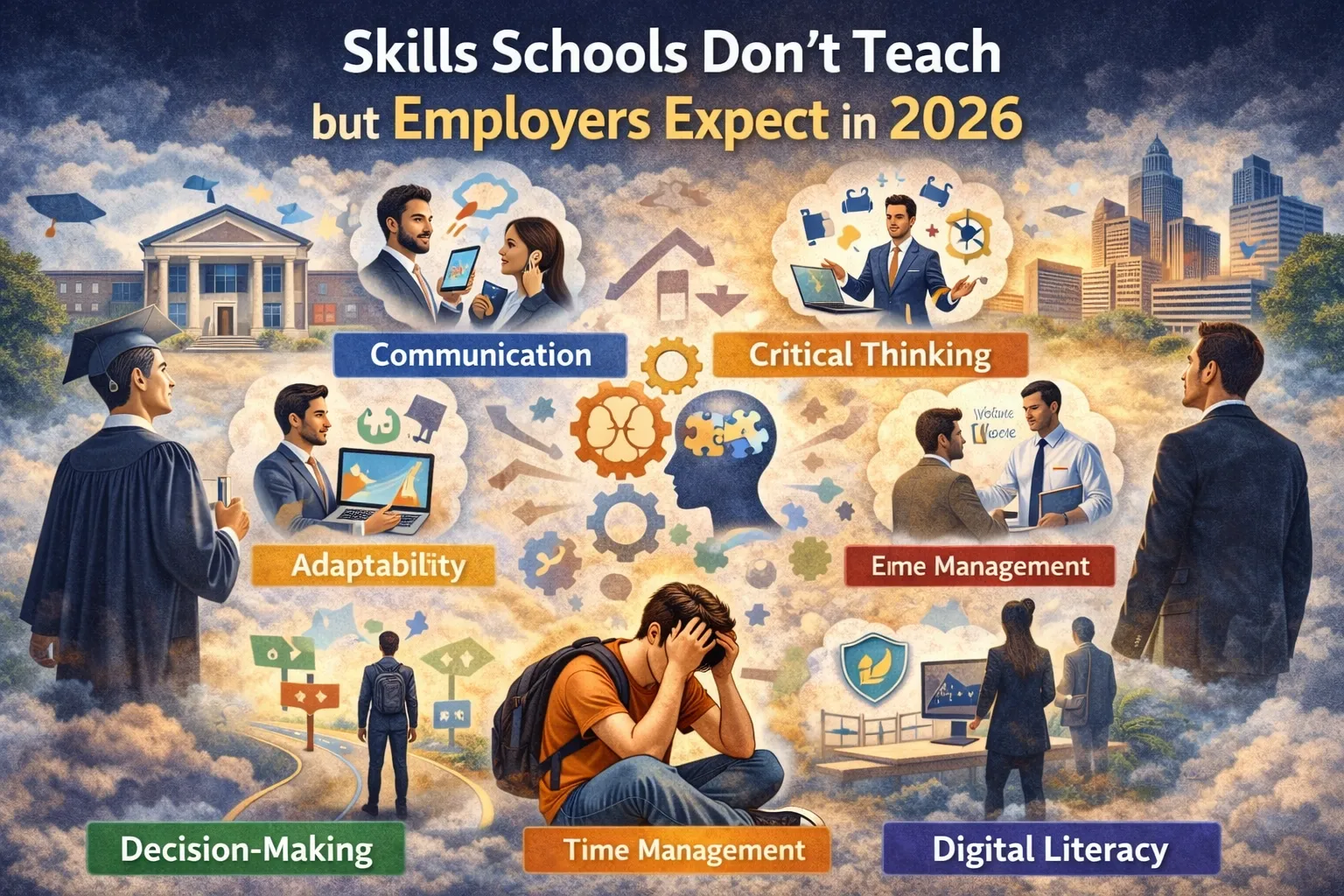
One of the most frequently cited employer concerns is poor communication ability among fresh graduates. Schools may teach grammar and writing, but they rarely train students in professional communication. Employers expect candidates to clearly express ideas, actively listen, write effective emails, present confidently, and participate in meaningful discussions. Strong communication skills improve teamwork, leadership potential, and client relationships. Students who deliberately practice public speaking, business writing, and structured thinking gain a significant advantage in interviews and workplace performance.
Critical Thinking and Problem-Solving Ability
In school, many students are rewarded for memorizing correct answers rather than questioning assumptions or analyzing complex situations. However, employers value individuals who can think independently and solve unfamiliar problems. Critical thinking involves evaluating information, identifying patterns, weighing risks, and making logical decisions under uncertainty. In real jobs, there is rarely a textbook answer. Professionals must navigate ambiguity daily. Students can strengthen this skill by working on case studies, participating in debates, engaging in project-based learning, and asking deeper “why” questions during their studies.
Adaptability in a Rapidly Changing Work Environment
The pace of change in today’s job market is unprecedented. New tools, platforms, and business models emerge constantly. Employers, therefore, prioritize candidates who demonstrate adaptability and a willingness to learn continuously. Unfortunately, most school systems reward stability and fixed routines rather than flexibility. Adaptable professionals are comfortable with change, open to feedback, and quick to learn new skills. Students can build adaptability by exploring internships, learning new digital tools, taking online courses, and stepping outside their academic comfort zones regularly.
Emotional Intelligence and Workplace Maturity
Technical knowledge may get someone hired, but emotional intelligence often determines long-term career growth. Emotional intelligence includes self-awareness, empathy, emotional regulation, and social awareness. Schools rarely teach students how to manage workplace conflicts, handle criticism professionally, or collaborate with diverse personalities. Employers, however, highly value individuals who can work well in teams, remain calm under pressure, and build positive professional relationships. Developing emotional intelligence requires intentional reflection, feedback from mentors, and real-world interaction with different types of people.
Time Management and Personal Accountability
Many students struggle in their first job, not because of a lack of intelligence but because of poor time management. School environments often provide structured schedules, reminders, and close supervision. Workplaces, however, expect self-driven professionals who can prioritize tasks, meet deadlines, and manage multiple responsibilities independently. Employers notice quickly when someone lacks ownership of their work. Students can prepare by using productivity tools, setting personal deadlines, managing academic projects independently, and practicing disciplined daily routines.
Digital Literacy Beyond Basic Computer Skills
While most students today are comfortable using smartphones and social media, true digital literacy goes far beyond basic usage. Employers expect familiarity with professional tools such as spreadsheets, presentation software, collaboration platforms, data analysis basics, and emerging technologies. Understanding digital workflows, cybersecurity awareness, and online professionalism is increasingly important. Students who proactively learn tools relevant to their industry, whether it is Excel, project management software, or AI-assisted tools, position themselves ahead of their peers in the hiring market.
Networking and Relationship Building
One of the least taught yet most powerful career skills is networking. Many opportunities in the professional world come through referrals, connections, and professional visibility. Schools rarely teach students how to build meaningful professional relationships, approach mentors, or maintain industry connections. Employers appreciate candidates who understand professional etiquette and relationship management. Students can start early by attending webinars, joining professional communities, reaching out to alumni, and maintaining a strong professional online presence.
Decision-Making Under Uncertainty
Real-world careers involve constant decision-making with incomplete information. Whether choosing projects, solving client problems, or prioritizing tasks, professionals must make timely and confident decisions. Schools often emphasize finding the single correct answer, which does not reflect workplace reality. Employers value individuals who can assess risks, consider trade-offs, and move forward decisively. Students can develop this ability by taking leadership roles in group projects, participating in simulations, and reflecting on the outcomes of their choices.
The Importance of a Growth Mindset
Perhaps the most important skill employers expect, but schools rarely teach explicitly, is a growth mindset. Professionals who believe skills can be developed through effort tend to learn faster and adapt better. In contrast, those with a fixed mindset may avoid challenges and fear failure. Employers look for candidates who show curiosity, resilience, and a willingness to improve continuously. Students can cultivate a growth mindset by embracing challenges, viewing feedback as learning fuel, and focusing on progress rather than perfection.
Practical Ways Students Can Build These Skills Early
The good news is that these skills can be developed intentionally, even outside the classroom. Students should seek internships, freelance projects, volunteering opportunities, and collaborative assignments that simulate real work environments. Participating in hackathons, debates, student clubs, and leadership roles also builds workplace readiness. Online learning platforms, mentorship programs, and career workshops provide additional support. The key is consistent, deliberate practice rather than waiting for schools to formally include these skills in the curriculum.
Final Thoughts: Preparing for the Real World
The future of work will reward those who combine knowledge with practical human skills. While schools provide an important academic foundation, true career readiness requires going beyond textbooks. Students who invest early in communication, adaptability, emotional intelligence, digital fluency, and decision-making will stand out strongly in the job market. Instead of relying solely on grades, focus on becoming a well-rounded, workplace-ready professional. The earlier these skills are developed, the smoother the transition from classroom to career will be.