
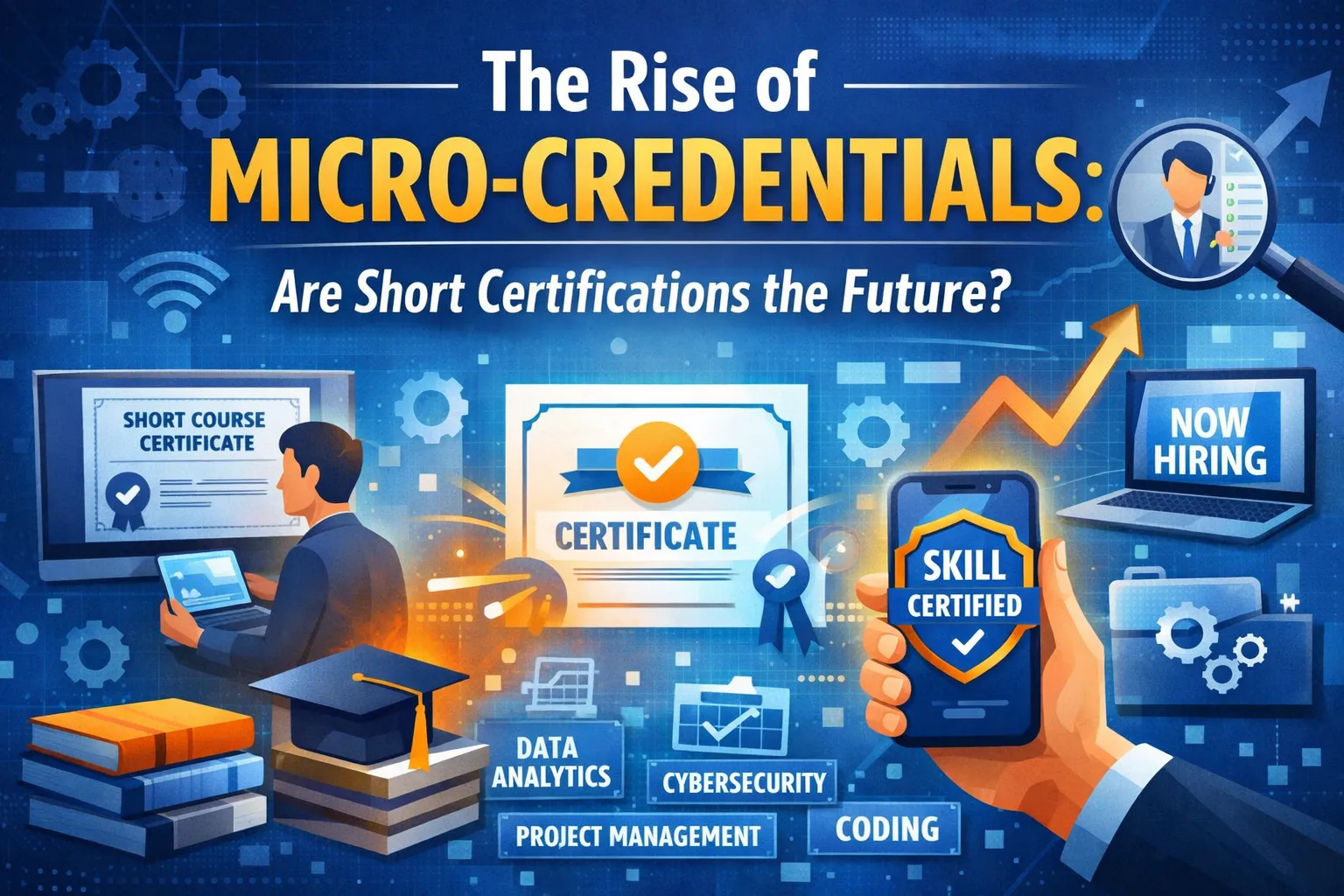
Introduction: The Shift from Degrees to Skills
The global education and employment landscape is undergoing a massive transformation. For decades, traditional university degrees were considered the gold standard for career success. However, in today’s fast-changing digital economy, employers are increasingly prioritizing skills over formal qualifications. This shift has led to the rapid rise of micro-credentials—short, focused certifications designed to build job-ready skills in a fraction of the time required for traditional degrees. As industries evolve and technology disrupts job roles, micro-credentials are emerging as a powerful alternative to long academic programs, raising the important question: Are short certifications the future of education and employment?
What Are Micro-Credentials?
Micro-credentials are short, skill-specific certifications that validate an individual’s expertise in a particular area. Unlike traditional degrees that cover broad subject areas over several years, micro-credentials focus on targeted competencies such as digital marketing, data analytics, artificial intelligence, cybersecurity, or project management. These certifications are often offered online through platforms like Coursera, edX, and Udemy, as well as universities and corporate training providers. They are typically shorter in duration, more affordable, and aligned with industry demands, making them accessible to students, working professionals, and career switchers alike.
Why Micro-Credentials Are Gaining Popularity
The popularity of micro-credentials is closely tied to the rapid pace of technological change. New tools, software, and digital systems are constantly emerging, requiring professionals to update their skills regularly. Traditional degree programs often struggle to adapt quickly to industry changes, whereas micro-credential programs can be updated in real-time to reflect current trends. Furthermore, employers today value practical, demonstrable skills. Hiring managers are increasingly looking for candidates who can prove competency in specific tools or technologies rather than just holding a general degree. This demand for agile, job-ready skills has fueled the growth of short certifications across industries.
The Role of Technology in Accelerating Micro-Credentials
Technology has played a crucial role in the expansion of micro-credentials. The growth of online learning platforms, digital classrooms, and virtual labs has made high-quality education accessible to learners across the globe. Massive Open Online Courses (MOOCs) have allowed leading universities and tech companies to deliver industry-relevant courses to millions of learners. For instance, global tech giants like Google and IBM now offer professional certificates that focus on practical skills such as IT support, data analysis, and cloud computing. These programs are often recognized by employers and sometimes even accepted for academic credit, blurring the lines between traditional and modern education systems.
Benefits of Micro-Credentials for Students and Professionals
One of the biggest advantages of micro-credentials is flexibility. Learners can pursue certifications while working full-time or studying in other programs. These short courses allow individuals to upskill or reskill without taking career breaks. Additionally, micro-credentials are cost-effective compared to full degree programs, reducing the financial burden on learners. Another key benefit is faster entry into the workforce. Instead of spending three to four years earning a degree, individuals can complete a specialized certification in a few weeks or months and immediately apply their knowledge in real-world settings. For working professionals, micro-credentials provide a way to stay competitive in industries driven by innovation.
Employer Perspective: Skill Validation and Workforce Readiness
Employers are increasingly recognizing the value of micro-credentials because they provide evidence of practical skills. In a competitive job market, companies prefer candidates who can demonstrate proficiency in specific software, methodologies, or technical areas. Micro-credentials often include hands-on projects, assessments, and real-world case studies, which make them more aligned with workplace expectations. Additionally, organizations are using micro-credentials internally to train and upskill employees. Corporate training programs are shifting from long workshops to modular certifications that allow employees to learn and apply new skills quickly. This approach improves productivity and ensures that the workforce remains adaptable.
Micro-Credentials vs Traditional Degrees
While micro-credentials are gaining traction, they are not necessarily replacing traditional degrees entirely. Degrees still offer comprehensive knowledge, critical thinking skills, and academic depth that short certifications may not fully provide. However, the future of education may lie in a hybrid model where traditional degrees are complemented by micro-credentials. Students might pursue a degree for foundational knowledge while earning multiple certifications to specialize in high-demand skills. This stackable learning approach allows learners to build a personalized education pathway that evolves with their career goals.
The Rise of Stackable and Digital Credentials
A key innovation in the micro-credential movement is the concept of stackable credentials. Learners can accumulate multiple short certifications over time, which can sometimes be combined to earn advanced diplomas or degrees. Digital badges and online verification systems also allow professionals to showcase their certifications on platforms like LinkedIn, making skills more visible to recruiters. This digital validation system enhances transparency and credibility in hiring processes. As blockchain-based credential verification gains popularity, digital certifications may become even more secure and widely accepted in the future.
Challenges and Concerns Around Micro-Credentials
Despite their benefits, micro-credentials also face certain challenges. One concern is quality assurance, as not all certifications are equally credible. The rapid expansion of online courses has led to variability in standards and recognition. Additionally, some employers may still prioritize traditional degrees over short certifications for certain roles. There is also the risk of skill fragmentation, where learners focus only on narrow competencies without developing broader analytical or communication skills. To ensure long-term success, micro-credential programs must maintain high standards and align closely with industry needs.
The Future of Short Certifications in the Global Economy
As automation, artificial intelligence, and digital transformation continue to reshape industries, continuous learning will become essential for career growth. Micro-credentials offer a scalable and accessible solution for lifelong learning. Governments, universities, and corporations are increasingly integrating short certifications into workforce development strategies. In the coming years, micro-credentials are likely to become a mainstream component of education systems worldwide. Rather than replacing traditional education, they will complement it, creating a flexible ecosystem where learners can continuously upgrade their skills.
Conclusion: Are Micro-Credentials the Future?
The rise of micro-credentials reflects a broader shift toward skill-based education and lifelong learning. In a world where industries evolve rapidly and job roles transform frequently, short certifications provide a practical, flexible, and cost-effective way to stay relevant. While traditional degrees will continue to hold value, micro-credentials are undoubtedly shaping the future of education and employment. As technology advances and employer expectations evolve, short certifications are poised to become a central pillar of modern career development.