
Understanding ROI Thinking in Education Decisions
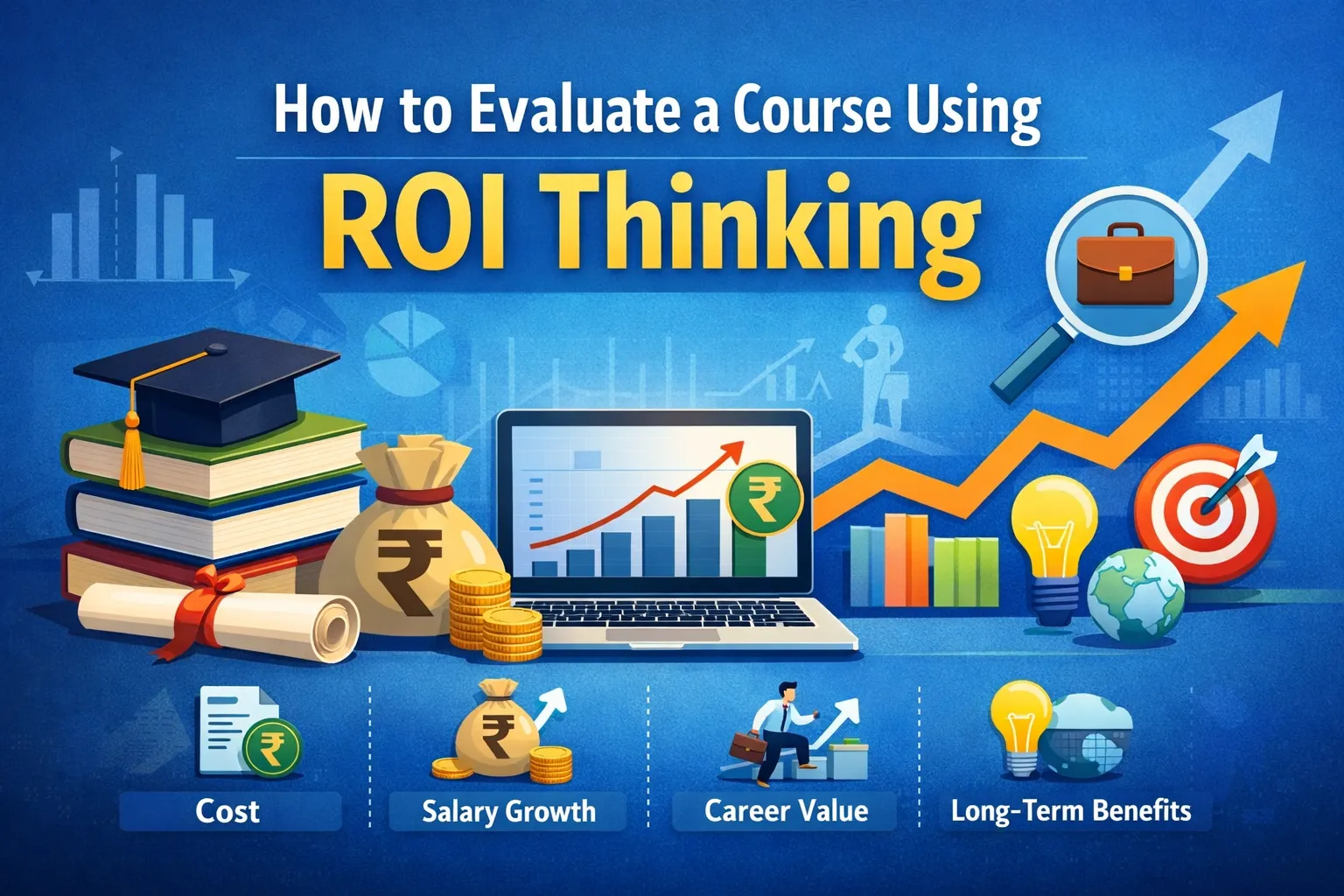
Return on Investment (ROI) is a concept traditionally associated with business and finance, but today it plays a crucial role in education and career planning. ROI thinking means analyzing whether the money, time, and effort you invest in a course will generate measurable benefits in return. With rising tuition fees, expensive certifications, and the growth of online platforms like Coursera and Udemy, students must think strategically before enrolling in any program. Instead of choosing a course based on hype or peer pressure, ROI thinking helps you evaluate long-term career outcomes, salary growth, skill relevance, and professional opportunities.
When you apply ROI thinking, you shift from emotional decisions to data-driven decisions. You ask practical questions: Will this course help me get a job? Will it increase my income? Will it open new opportunities? This mindset protects you from wasting money and ensures that your education aligns with your professional goals.
Why ROI Thinking Matters More Than Ever in 2026
In today’s fast-changing digital economy, skills become outdated quickly. Emerging technologies like Artificial Intelligence, data science, cybersecurity, and digital marketing are reshaping industries. Companies such as Google and Microsoft continuously update their skill requirements, making it essential for professionals to choose courses that match current industry demands.
ROI thinking matters because education is no longer just about earning a degree; it is about building employable skills. Many professionals invest in certifications without analyzing whether those certifications are recognized in the job market. By applying ROI thinking, you evaluate whether the course content aligns with real-world skills and whether employers value that qualification.
Step 1: Calculate the Total Investment Cost
The first step in evaluating a course using ROI thinking is to calculate the total cost. This includes not just tuition fees but also additional expenses such as study materials, certification fees, travel, accommodation (if offline), and opportunity cost. Opportunity cost refers to the income you might lose if you leave a job to study full-time.
For example, if a course costs ₹80,000 and requires three months of full-time study, you must consider whether you are sacrificing income during that period. Even online platforms like edX may have hidden costs such as exam fees or premium certifications. A clear understanding of total investment ensures that you make an informed financial decision.
Step 2: Estimate Potential Salary Growth
After calculating costs, the next step is estimating the financial return. Research average salaries before and after completing the course. Platforms like LinkedIn provide insights into salary ranges for different job roles.
For instance, if you currently earn ₹3 LPA and the course can help you secure a job paying ₹6 LPA, your annual income increases by ₹3 LPA. In such a case, you could recover your course investment within months. This is a strong positive ROI. However, if the salary difference is minimal, the return may not justify the investment.
Step 3: Analyze Industry Demand and Job Market Trends
ROI thinking requires analyzing whether the course aligns with current industry demand. Check job portals to see how many openings exist for the skills you will learn. If thousands of job listings require that certification, it indicates strong demand.
Technology-focused certifications from organizations like Amazon Web Services or IBM often carry a higher ROI because they are directly aligned with market demand. Courses in outdated or oversaturated fields may not provide strong returns.
Step 4: Evaluate Course Curriculum and Practical Exposure
A high-ROI course must offer practical exposure, not just theoretical knowledge. Employers value hands-on projects, internships, case studies, and real-world applications. If a course includes live projects, portfolio development, and placement assistance, its ROI increases significantly.
For example, digital marketing courses that include training in tools like Google Ads and analytics platforms offer better returns than theory-only programs. The more industry-aligned the curriculum, the higher the probability of career advancement.
Step 5: Consider Long-Term Career Growth
ROI should not be calculated only in short-term salary increments. Long-term career growth matters equally. Some courses may not immediately double your salary, but can position you for leadership roles in the future.
An MBA or advanced AI certification may take time to show financial returns, but can unlock managerial positions and global opportunities. ROI thinking includes analyzing whether the course builds transferable skills such as leadership, analytical thinking, and communication.
Step 6: Assess Credibility and Brand Value
Institutional reputation significantly affects ROI. Certifications from recognized universities or reputed companies carry more weight. Employers often prefer candidates with credentials from trusted institutions.
Before enrolling, research alumni reviews, placement statistics, and accreditation status. A credible course provider increases the likelihood of job placement and salary growth, enhancing your overall return on investment.
Step 7: Measure Non-Monetary Returns
ROI is not always purely financial. Some returns are intangible but highly valuable. These include networking opportunities, mentorship access, confidence building, and exposure to industry experts.
Networking platforms like LinkedIn Learning often provide community engagement and professional connections, which can lead to unexpected career opportunities. Such non-monetary benefits strengthen long-term ROI.
Common Mistakes to Avoid When Evaluating ROI
Many students focus only on course popularity rather than practical outcomes. A trending course does not automatically guarantee high returns. Avoid enrolling just because influencers promote it. Conduct independent research and compare alternatives.
Another mistake is ignoring hidden costs or failing to calculate opportunity costs. Some learners also underestimate the time commitment required, which affects their ability to complete the course successfully.
Creating a Simple ROI Formula for Course Evaluation
You can use a simple formula to evaluate ROI:
ROI = (Annual Salary Increase – Course Cost) ÷ Course Cost × 100
If the result is positive and significant, the course may be worth the investment. However, combine this numerical approach with qualitative analysis, like career alignment and industry demand.
Final Thoughts: Make Smart Education Investments
In a competitive job market, education should be viewed as an investment, not an expense. ROI thinking empowers you to make strategic decisions that align with your financial and professional goals. Whether you are considering a digital marketing certification, data science program, or management course, always evaluate cost, salary impact, industry demand, and long-term growth.
A well-chosen course can accelerate your career, increase your earning potential, and open doors to new opportunities. By applying ROI thinking consistently, you ensure that every learning decision contributes meaningfully to your success.