
Why Students Need a 5-Year Career Vision
In today’s competitive and fast-changing job market, students cannot rely only on degrees to secure a successful future. Industries are evolving rapidly due to digital transformation, automation, and Artificial Intelligence. Companies like Google and Microsoft continuously update their hiring criteria based on emerging skills. This makes it essential for students to think beyond short-term academic goals and adopt a structured long-term strategy.
The 5-Year Career Vision Method is a practical framework that helps students map out where they want to be professionally in the next five years and create a clear roadmap to get there. Instead of drifting through college without direction, students who apply this method make intentional decisions about skills, internships, certifications, and networking opportunities.
Understanding the 5-Year Career Vision Method
The 5-Year Career Vision Method is a strategic planning approach that encourages students to define their career goals, identify required skills, and build a step-by-step action plan. It combines goal setting, skill development, industry research, and personal growth into one structured framework.
This method is not about predicting the future perfectly. It is about creating clarity and direction. When students have a defined vision, they can align their education, internships, and certifications accordingly. Even if circumstances change, having a roadmap ensures they remain proactive rather than reactive in their career decisions.
Step 1: Define Your Ultimate Career Goal
The first step in the 5-Year Career Vision Method is defining where you want to be professionally in five years. Ask yourself: What role do I want? In which industry? At what level? What kind of salary and lifestyle do I aim for?
For example, a student interested in technology may aim to become a Data Analyst, Software Developer, or AI Engineer. Researching career paths on platforms like LinkedIn can provide insights into job roles, required skills, and salary benchmarks.
Your goal should be specific and measurable. Instead of saying “I want a good job,” define it clearly: “I want to work as a Digital Marketing Manager in a reputed company within five years.” Clarity drives focused action.
Step 2: Research Industry Demand and Trends
After defining your goal, research the industry landscape. Understand which skills are in demand and how the market is evolving. For instance, certifications in cloud computing from Amazon Web Services or data analytics programs from IBM often hold strong industry value.
Students must analyze job portals, industry reports, and skill trends. If your target role shows increasing demand and salary growth, it strengthens your long-term prospects. However, if the field is declining or oversaturated, you may need to refine your goal.
Industry research ensures that your 5-year plan aligns with real-world opportunities, not outdated assumptions.
Step 3: Identify the Skills and Qualifications Required
Once you know your target role, break it down into required skills. These may include technical skills, soft skills, certifications, and experience.
For example, a digital marketing aspirant must learn SEO, social media marketing, analytics tools, and paid advertising platforms. Online learning platforms like Coursera and Udemy offer industry-relevant certifications that can boost employability.
Make a checklist of skills and qualifications. Then categorize them into short-term (1–2 years) and long-term (3–5 years) goals. This structured breakdown makes the journey manageable and less overwhelming.
Step 4: Create a Year-by-Year Action Plan
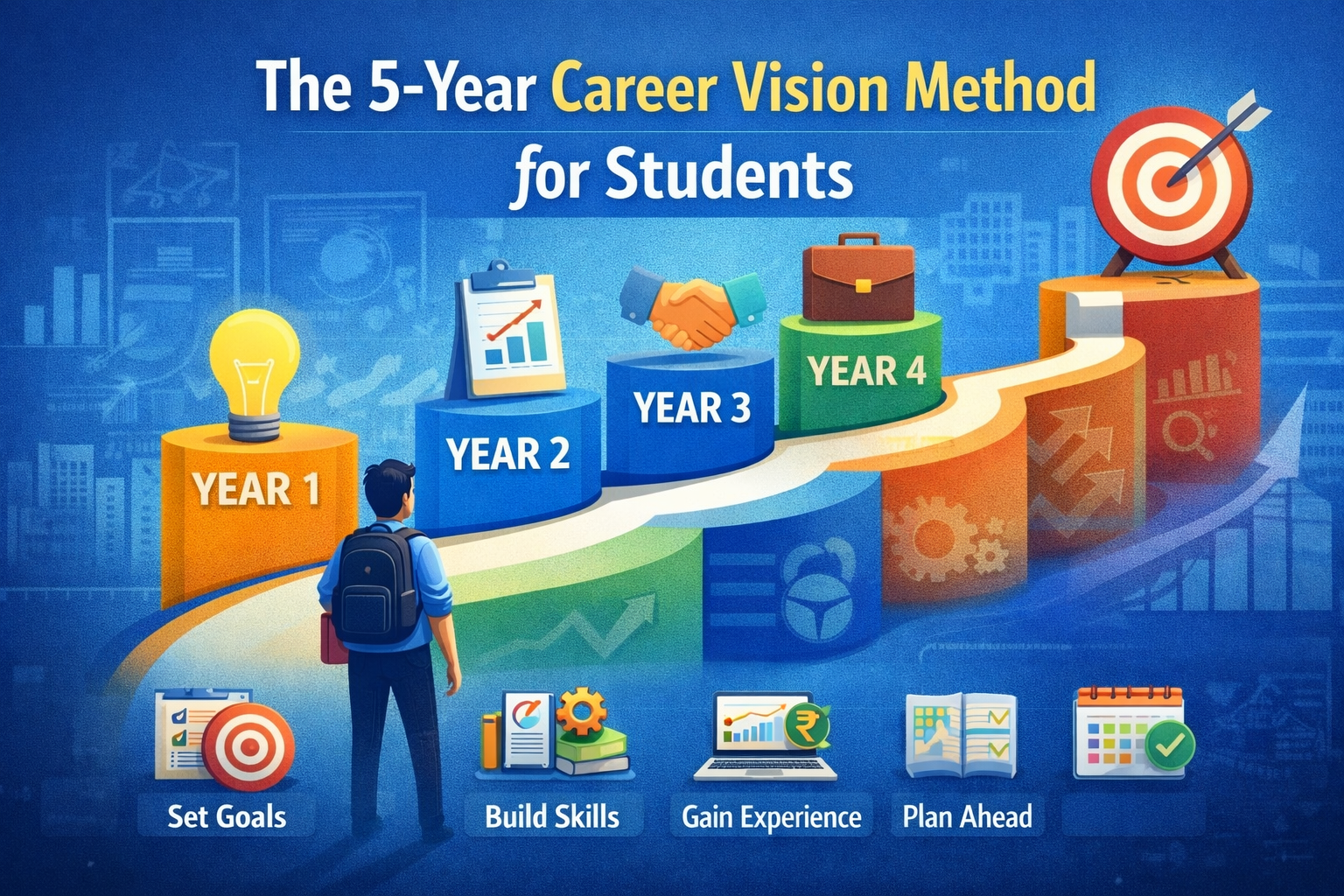
The power of the 5-Year Career Vision Method lies in breaking your big goal into yearly milestones.
Year 1 may focus on foundational skills and academic performance.
Year 2 may include internships and portfolio building.
Year 3 may involve advanced certifications and networking.
Year 4 may focus on specialization and industry exposure.
Year 5 may concentrate on job placement or promotion.
By dividing the journey into smaller phases, students stay consistent and motivated. Progress tracking ensures accountability and helps adjust strategies if necessary.
Step 5: Build Practical Experience Early
Practical experience significantly increases employability. Internships, freelancing, live projects, and part-time roles provide real-world exposure. Employers value candidates who can demonstrate hands-on experience rather than just theoretical knowledge.
Students should start building their professional presence early. Creating a strong profile on LinkedIn and connecting with industry professionals can open doors to opportunities. Practical exposure bridges the gap between classroom learning and workplace expectations.
Step 6: Develop Soft Skills and Personal Branding
Technical skills alone are not enough for long-term career growth. Communication skills, leadership abilities, time management, and problem-solving are equally important. Companies prioritize candidates who can collaborate effectively and adapt to changing environments.
Personal branding also plays a crucial role. Students should maintain an updated resume, create an online portfolio, and showcase projects. Sharing insights, achievements, and certifications on professional platforms enhances visibility and credibility.
Step 7: Monitor Progress and Adapt Strategically
A 5-year career vision is not a rigid plan. Industries evolve, and personal interests may shift. Therefore, regular review is essential. Assess your progress every six months or annually.
If you find new opportunities in emerging fields like Artificial Intelligence or cybersecurity, you may refine your plan accordingly. Strategic flexibility ensures that your vision remains relevant in a dynamic job market.
Common Mistakes Students Should Avoid
Many students make the mistake of planning only until graduation. Without a long-term strategy, they feel lost after completing their degree. Another mistake is copying someone else’s career path without evaluating personal strengths and interests.
The 5-Year Career Vision Method is personal and customized. It requires honest self-assessment, research, and consistent effort. Avoid procrastination and unrealistic expectations. Career growth is gradual and requires patience.
Benefits of the 5-Year Career Vision Method
Students who adopt this method experience clarity, confidence, and direction. They make smarter decisions regarding courses, internships, and certifications. Instead of random skill accumulation, they focus on targeted development aligned with their career goals.
This method also reduces stress and uncertainty. When you know your direction, you are less influenced by peer pressure or market hype. You become proactive in shaping your career rather than waiting for opportunities to appear.
Final Thoughts: Design Your Future Intentionally
The 5-Year Career Vision Method empowers students to take control of their professional journey. Success rarely happens by accident; it is the result of strategic planning, consistent effort, and continuous learning.
By defining clear goals, researching industry trends, acquiring relevant skills, and building practical experience, students can create a strong foundation for long-term success. The next five years can transform your career trajectory — but only if you design them intentionally.