
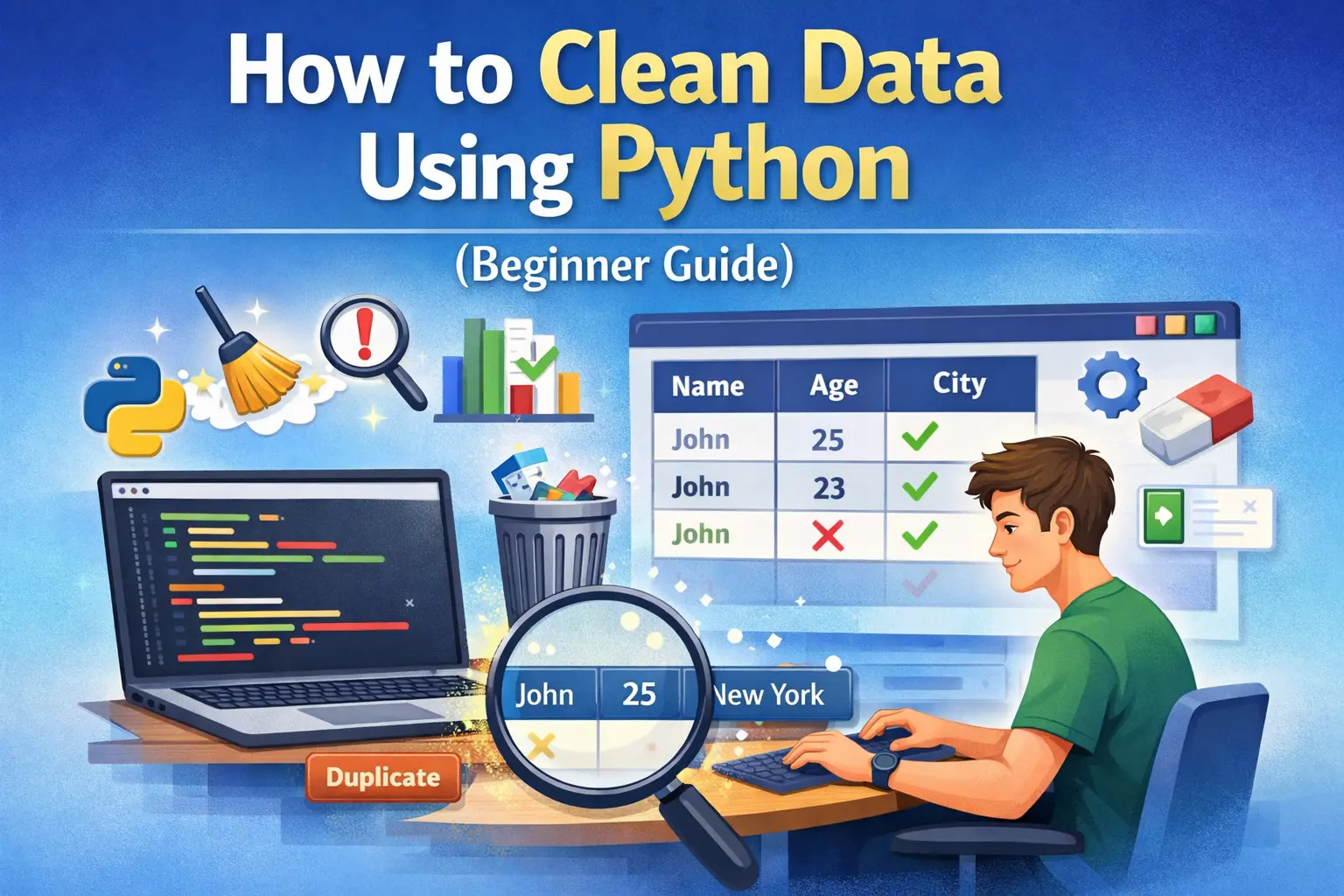
Introduction to Data Cleaning in Modern Technology Fields
In today’s digital world, data plays a vital role in informed decision-making across various industries. Fields such as data science and data analytics rely heavily on accurate and well-structured datasets. However, raw data is often messy, incomplete, or inconsistent. This is where data cleaning becomes essential. Using Python, beginners can efficiently clean and prepare datasets for analysis, ensuring better performance in various applications.
Why Data Cleaning is Important for Beginners
Data cleaning is the foundation of any successful project in machine learning and AI. Poor-quality data can lead to incorrect insights and unreliable predictions. Cleaning data helps remove errors, duplicates, and irrelevant information, making it easier to process and analyze. For beginners entering the world of Data Science, mastering data cleaning is a critical first step toward building strong analytical skills.
Common Data Issues You Will Encounter
When working with real-world datasets, you will face several common issues such as missing values, duplicate records, inconsistent formatting, and incorrect data types. In data analytics, these problems can significantly impact results. Tools like Python provide powerful libraries that help identify and fix these issues quickly, making the data ready for further processing.
Essential Python Libraries for Data Cleaning
Python offers several libraries that simplify data cleaning tasks. The most popular one is Pandas, which allows you to manipulate and analyze data easily. NumPy is also helpful for numerical operations. These tools are widely used in machine learning projects to preprocess data before training models. Beginners can start with simple functions and gradually move toward advanced techniques.
Handling Missing Values in Data
Missing data is one of the most common challenges in data analytics. In Python, you can handle missing values by removing them or replacing them with mean, median, or mode values. This step is crucial in AI systems where incomplete data can affect model accuracy. Choosing the right method depends on the dataset and the problem you are trying to solve.
Removing Duplicate Data for Better Accuracy
Duplicate records can distort analysis results and lead to biased outcomes. In Data Science projects, removing duplicates ensures that each data point is unique and meaningful. Python provides simple functions to detect and delete duplicate rows, making the dataset cleaner and more reliable for further analysis.
Standardizing and Formatting Data
Inconsistent data formats can create confusion during analysis. For example, dates may appear in different formats, or text may have varying cases. Using Python, you can standardize data formats, convert data types, and clean text fields. This is especially useful when working with Power BI dashboards, where consistency is key for visualization.
Dealing with Outliers in Data
Outliers are unusual data points that differ significantly from the rest of the dataset. In machine learning, outliers can negatively affect model performance. Python allows you to detect outliers using statistical methods and remove or adjust them accordingly. This step helps improve the overall quality of your data.
Data Cleaning Workflow for Beginners
A structured workflow makes data cleaning more efficient. Start by understanding your dataset, then identify issues such as missing values and duplicates. Next, clean and transform the data using Python tools. Finally, validate the cleaned data to ensure accuracy. This workflow is widely followed in Data Science and AI projects.
Best Practices for Effective Data Cleaning
To become proficient in data cleaning, always keep your code organized and document your steps. Use automated scripts to save time and ensure consistency. Regularly validate your data to avoid errors. In data analytics, following best practices helps maintain high-quality datasets and improves overall project outcomes.
Conclusion: Building Strong Foundations in Data Cleaning
Learning how to clean data using Python is an essential skill for beginners aiming to build a career in Data Science, AI, Power BI, machine learning, and data analytics, python. Clean data leads to better insights, improved model performance, and more accurate decision-making. By mastering these techniques, you can confidently handle real-world datasets and advance in your data-driven journey.