
Introduction
The education system is changing rapidly in 2026 because Artificial Intelligence is becoming part of everyday learning. Students now use AI tools, online classes, and smart apps along with regular classroom education. Some learners prefer technology-based study methods, while others still value traditional teaching. Both learning styles offer different advantages, and many students are now using a combination of both for better results.
1. Growth of Smart Learning
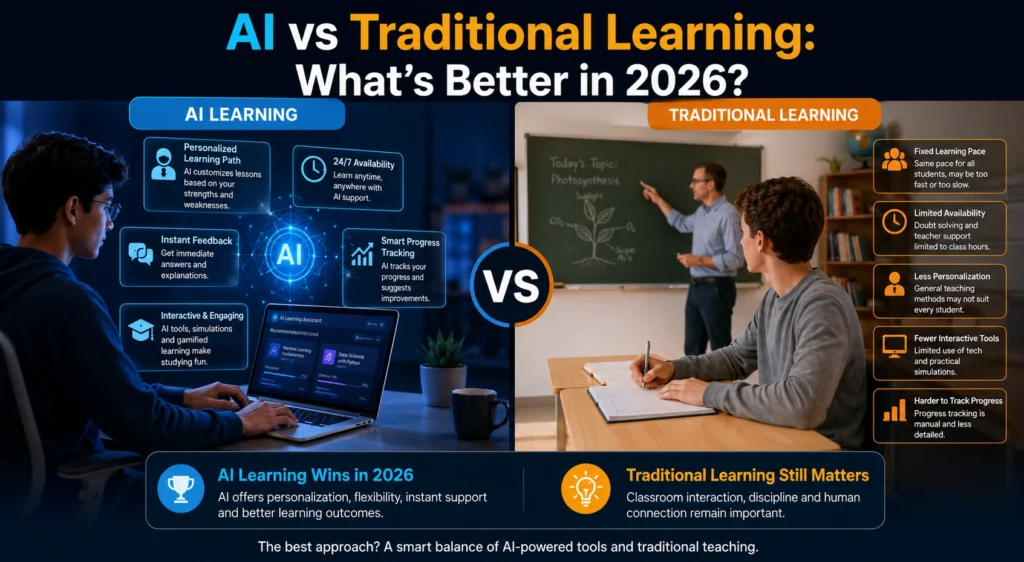
AI-powered learning has become more advanced and student-friendly. Modern platforms can guide learners through topics step by step and provide instant answers. Many students are choosing courses like Data Science, AI, Machine Learning, and Python because these skills are highly useful in today’s digital world.
2. Value of Classroom Education
Traditional learning continues to be important because it creates real interaction between teachers and students. Classroom discussions, group activities, and direct guidance help learners stay active and focused during studies. It also improves confidence and communication skills.
3. Learning Anytime and Anywhere
One of the biggest benefits of AI learning is convenience. Students can study from home, during travel, or even after work hours. This flexible approach is helping many learners improve their skills in Digital Marketing and Business Analytics without affecting their daily schedules.
4. Customized Learning Experience
Every student learns differently, and AI systems can adjust lessons according to individual performance. If a learner finds Machine Learning or Python difficult, the platform can suggest easier examples and extra practice. This makes online learning more comfortable for beginners.
5. Human Guidance Still Matters
Even though AI tools are smart, they cannot completely replace teachers. Students often understand topics better when they receive personal explanations and encouragement from experienced educators. Traditional learning provides emotional support and direct communication that technology cannot fully copy.
6. Affordable Education Opportunities
AI-based education has reduced learning costs for many students. Online courses are often cheaper than regular classroom programs, and learners can access study materials from anywhere. This has made professional education more reachable for students interested in technical and business-related fields.
7. Faster Career Skill Development
AI learning platforms focus strongly on practical skills and industry knowledge. Students can quickly learn modern subjects such as AI, Data Science, Digital Marketing, and Business Analytics through interactive lessons and real-world projects. This helps learners become job-ready in less time.
8. Practical Exposure in Traditional Learning
Traditional education offers practical experiences like presentations, classroom projects, workshops, and teamwork activities. These experiences help students improve leadership qualities and problem-solving abilities that are important in real workplaces.
9. Dependence on Technology
AI learning depends on internet connections, software, and digital devices. Technical problems can sometimes interrupt studies. Traditional learning is less affected by technology issues, which makes it more stable in areas where internet access is limited.
10. Future Learning Trends
The future of education is moving toward blended learning, where AI tools and classroom teaching work together. Schools and training institutes are using smart technology to improve learning while still maintaining teacher-student interaction. This balanced method is becoming more popular in 2026.
Conclusion
AI learning and traditional learning both have unique benefits for students. AI offers flexible and personalized education, while traditional learning provides real human interaction and classroom experience. In 2026, combining both methods is helping students gain modern technical skills along with strong communication and practical knowledge for future careers.