
Introduction
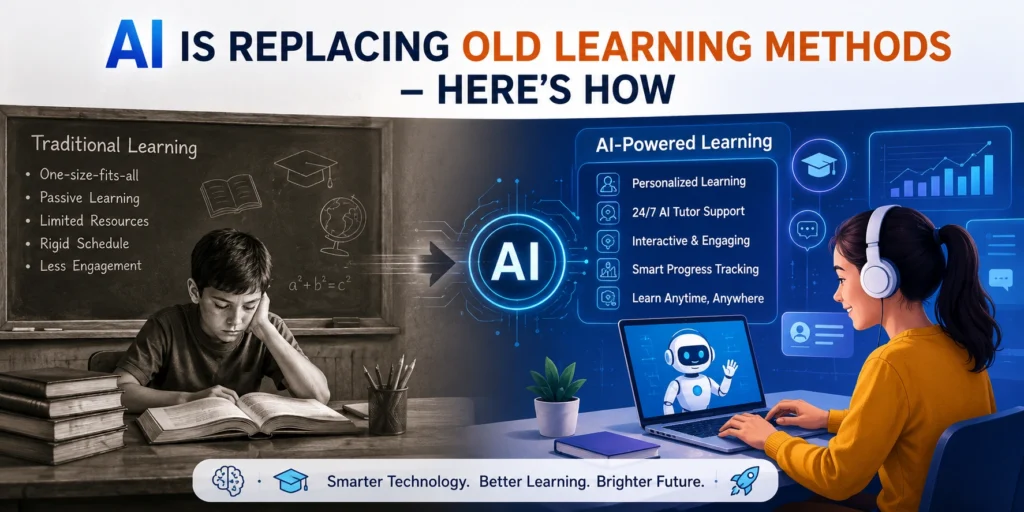
Artificial Intelligence is changing the education system faster than ever before. Traditional learning methods like long classroom lectures, memorizing textbooks, and one-size-fits-all teaching are slowly being replaced by smarter and more flexible AI-powered learning systems. In 2026, students are learning through personalized apps, virtual tutors, smart classrooms, and interactive platforms that make education easier and more effective. AI is not only improving how students study but also helping teachers save time and provide better guidance. From schools and colleges to online training platforms, AI is becoming a major part of modern education.
1. Traditional Learning Methods Are Becoming Outdated
For many years, education mainly depended on textbooks, blackboards, and classroom lectures. Students had to follow the same learning speed, even if they struggled to understand certain topics. This traditional approach often made learning stressful and less engaging. AI-powered tools are now solving these problems by creating customized learning experiences. Students can learn at their own pace, repeat lessons anytime, and access smarter study materials through digital platforms.
2. AI Creates Personalized Learning Experiences
One of the biggest advantages of AI in education is personalized learning. AI systems analyze student performance, learning habits, and weaknesses to recommend suitable study plans. Instead of giving the same lesson to every student, AI tools provide content based on individual understanding levels. This makes learning more effective and less confusing. Students studying subjects like Data Science, AI, Machine Learning, and Python can now receive personalized coding exercises and instant feedback through AI-based platforms.
3. Smart Virtual Tutors Are Replacing Extra Coaching
Earlier, students often depended on private tutors or coaching centers for additional support. Today, AI-powered virtual tutors are becoming a strong alternative. These smart systems can answer questions instantly, explain difficult topics, and provide 24/7 learning support. Students no longer need to wait for classroom sessions to clear doubts. AI tutors use interactive methods such as videos, quizzes, and voice support to make learning more engaging and practical for beginners.
4. AI Makes Learning Faster and More Interactive
Traditional education methods sometimes feel slow and repetitive. AI tools improve learning speed by offering interactive lessons, gamified quizzes, and real-time practice sessions. Instead of reading long chapters, students can learn through simulations, animations, and live examples. This approach improves understanding and keeps learners motivated. Courses related to Business Analytics and Digital Marketing are now using AI-driven projects and live case studies to help students gain practical industry skills.
5. Online Learning Platforms Are Growing Rapidly
The rise of AI has also increased the popularity of online learning platforms. Students can now study from anywhere using smartphones, tablets, or laptops. AI helps these platforms recommend the best courses, track student progress, and suggest improvement strategies. Learners interested in Machine Learning, Artificial Intelligence, and Python programming can access high-quality online training without attending physical classrooms. This flexibility is replacing many old learning systems that depended completely on offline education.
6. AI Improves Student Performance Analysis
In traditional classrooms, teachers often find it difficult to track every student’s performance individually. AI tools now solve this challenge by analyzing student progress in real time. These systems identify weak areas, monitor attendance, and generate performance reports automatically. Teachers can use this data to provide better guidance and support. Students also receive instant feedback on assignments and tests, helping them improve faster and stay motivated throughout their learning journey.
7. Smart Classrooms Are Changing Education
Modern classrooms are becoming smarter because of AI technology. Schools and colleges are introducing smart boards, AI attendance systems, and digital learning software to improve the classroom experience. Teachers can use AI-generated presentations, automated grading systems, and interactive teaching tools to make lessons more interesting. This reduces manual work and allows educators to focus more on student development instead of repetitive administrative tasks.
Important Benefits of AI in Education
- Personalized learning for every student
- Faster doubt-solving with AI tutors
- Better student performance tracking
- Interactive and engaging study methods
- Flexible online learning opportunities
- Practical skill development for modern careers
8. AI Supports Career-Focused Education
Today’s education system is becoming more career-oriented, and AI is playing a major role in this transformation. Students are now learning industry-demand skills instead of focusing only on theory. AI-based learning platforms help learners practice real-world projects in fields like Data Science, Artificial Intelligence, Machine Learning, Python, Digital Marketing, and Business Analytics. This practical approach prepares students for future jobs and improves employability in competitive industries.
9. Teachers Are Using AI as a Support Tool
Many people think AI will completely replace teachers, but that is not true. AI is mainly helping teachers become more productive and efficient. Educators can use AI tools to create lesson plans, check assignments, prepare quizzes, and monitor student progress quickly. This saves valuable time and allows teachers to focus more on creativity, communication, and personal interaction with students. AI is acting as a smart assistant rather than a complete replacement for human teachers.
10. Challenges of AI-Based Learning
Although AI offers many benefits, there are still some challenges in AI-powered education. Some students may become too dependent on technology and lose interest in traditional reading habits. Internet access and digital devices are also necessary for AI learning, which may not be available everywhere. In some cases, AI systems may provide incorrect information if not monitored properly. Therefore, balancing technology with human guidance remains very important in modern education.
11. The Future of Learning with AI
The future of education will become even more advanced with AI innovations. Smart learning systems, virtual reality classrooms, and AI-driven career guidance will continue replacing outdated learning methods. Students will experience faster, more flexible, and more practical education systems in the coming years. Educational institutions are already adapting to this transformation by introducing technology-focused courses and digital learning environments that prepare students for future careers.
Conclusion
Artificial Intelligence is transforming education by replacing traditional learning methods with smarter, faster, and more personalized systems. From virtual tutors and smart classrooms to online learning platforms and career-focused training, AI is making education more accessible and engaging for students worldwide. While traditional teaching still has value, AI is improving learning experiences in ways that were impossible before. Students who adapt to modern AI-driven education and develop skills in areas like Data Science, Machine Learning, Python, Digital Marketing, AI, and Business Analytics will have better opportunities in the future job market.