
Introduction
Artificial Intelligence is transforming the education sector faster than ever before. Schools, colleges, universities, and online learning platforms are now using AI-powered technologies to improve teaching methods, personalize student learning, and simplify administrative tasks. In 2026, emerging AI technologies are helping students learn smarter, teachers work more efficiently, and institutions deliver better educational experiences. From virtual tutors to predictive analytics, AI is changing the future of education in exciting ways. Students interested in modern career opportunities are also exploring courses like Data Science, AI, Machine Learning, Python, Digital Marketing, and Business Analytics to understand these technologies and build future-ready skills.
AI-Powered Personalized Learning
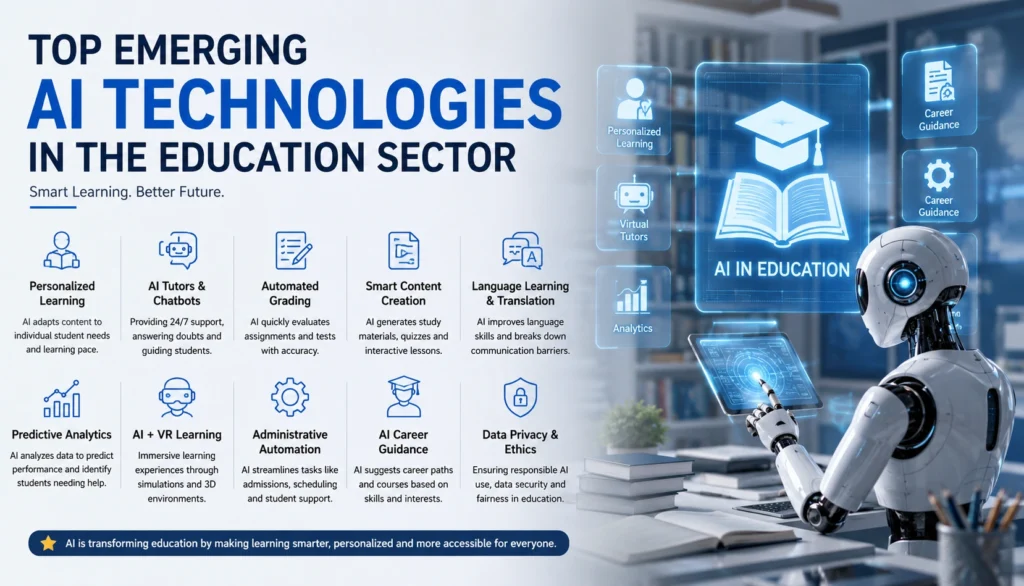
One of the biggest AI technologies in education is personalized learning systems. Traditional classrooms often follow the same teaching method for every student, but AI can customize lessons according to individual learning speed and performance. AI tools analyze student behavior, strengths, and weaknesses to recommend study material that matches their needs. This helps students learn more effectively without feeling left behind. Personalized learning platforms are becoming popular in schools and online education because they improve student engagement and academic performance.
Intelligent Virtual Tutors and Chatbots
AI-powered virtual tutors and educational chatbots are becoming common in modern education systems. These smart tools provide instant answers to student questions, explain difficult concepts, and offer 24/7 learning support. Students no longer need to wait for classroom hours to solve doubts. AI chatbots also help teachers by handling repetitive student queries and administrative tasks. Many educational platforms now use AI assistants to guide learners in subjects like coding, mathematics, and science. Students learning Python and Machine Learning can especially benefit from these AI-driven support systems.
AI-Based Automated Grading Systems
Teachers spend a lot of time grading assignments, tests, and exams. Emerging AI technologies now automate grading processes with high accuracy. AI systems can evaluate multiple-choice tests, written assignments, and even coding projects. Automated grading saves time for educators and allows them to focus more on teaching and student interaction. AI grading tools also provide detailed feedback that helps students improve their performance. Educational institutions are increasingly adopting these systems to increase efficiency and reduce manual workload.
Smart Content Creation Using AI
AI is also changing how educational content is created and delivered. Smart AI tools can generate quizzes, summaries, notes, presentations, and interactive study material within minutes. Teachers can use AI to prepare customized lessons based on student understanding levels. Educational platforms use AI-generated content to make online learning more engaging and interactive. This technology is especially useful for creating beginner-friendly content in technical subjects such as Data Science, Business Analytics, and Artificial Intelligence.
AI in Language Learning and Translation
Language learning has improved significantly with the help of AI technologies. AI-powered language apps can analyze pronunciation, grammar, and speaking patterns to help students learn languages more effectively. Real-time translation tools also make global education more accessible by allowing students from different countries to learn without language barriers. AI voice recognition systems help learners naturally practice communication skills. This technology is making online education more inclusive and globally connected.
Predictive Analytics for Student Performance
Predictive analytics is another emerging AI technology transforming education. AI systems collect and analyze student data to predict academic performance and identify students who may need extra support. Schools and universities use predictive analytics to improve student retention rates and learning outcomes. Teachers can detect learning gaps early and provide personalized guidance before students fall behind. This data-driven approach helps institutions make better academic decisions and improve overall educational quality.
Important Benefits of AI in Education
- Personalized learning experiences for students
- Faster grading and administrative management
- Better student engagement and interaction
- Improved accessibility for online learning
- Real-time performance tracking and analytics
These advantages are encouraging educational institutions worldwide to invest in AI-based technologies for smarter learning environments.
Virtual Reality and AI Integration
The combination of Artificial Intelligence and Virtual Reality is creating immersive learning experiences for students. AI-powered VR classrooms allow students to explore complex topics through simulations and interactive environments. Medical students can practice surgeries virtually, while engineering students can explore 3D models of machines and structures. This technology improves practical understanding and makes learning more engaging. AI-driven VR education is expected to grow rapidly in the coming years as educational institutions adopt digital transformation.
AI for Administrative Automation
Educational institutions also use AI technologies to automate administrative tasks such as attendance tracking, timetable management, admissions, and student support services. AI systems reduce paperwork and improve operational efficiency. Chatbots can answer admission-related questions, while AI scheduling tools help organize classes and examinations effectively. Automation helps schools and universities save time and resources while providing better services to students and teachers.
AI-Based Career Guidance Systems
Career counseling is becoming smarter with AI-driven guidance systems. These platforms analyze student interests, skills, academic records, and career goals to recommend suitable career paths. AI career advisors can suggest learning resources and courses like AI, Data Science, Machine Learning, Python, Digital Marketing, and Business Analytics based on market demand and student preferences. This helps students make informed career decisions and prepare for future job opportunities in emerging industries.
Ethical Challenges and Data Privacy
Although AI offers many benefits in education, it also creates challenges related to ethics and data privacy. Educational institutions collect large amounts of student data, and protecting this information is very important. AI systems must be used responsibly to avoid bias and ensure fairness in education. Teachers and institutions must balance technology with human interaction to maintain emotional support and personal guidance for students. Proper AI regulations and ethical practices are essential for the future of digital education.
Future of AI Technologies in Education
The future of AI in education looks highly promising. Emerging technologies will continue improving learning experiences, making education more personalized, accessible, and efficient. AI-powered systems may soon provide real-time emotional analysis, adaptive classrooms, and fully interactive virtual learning environments. Educational institutions are expected to invest more in smart technologies to meet the growing demand for digital learning. Students who understand AI technologies and related fields will have better career opportunities in the future job market.
Conclusion
Emerging AI technologies are rapidly transforming the education sector by improving learning experiences, automating tasks, and making education more accessible for students worldwide. From personalized learning systems and AI tutors to predictive analytics and virtual reality classrooms, AI is shaping the future of modern education. These innovations not only benefit students and teachers but also prepare institutions for a more digital future. As AI adoption continues to grow, learning skills in areas like Artificial Intelligence, Machine Learning, Python, Data Science, Digital Marketing, and Business Analytics will become increasingly valuable for students who want to succeed in the modern technology-driven world.