
Introduction
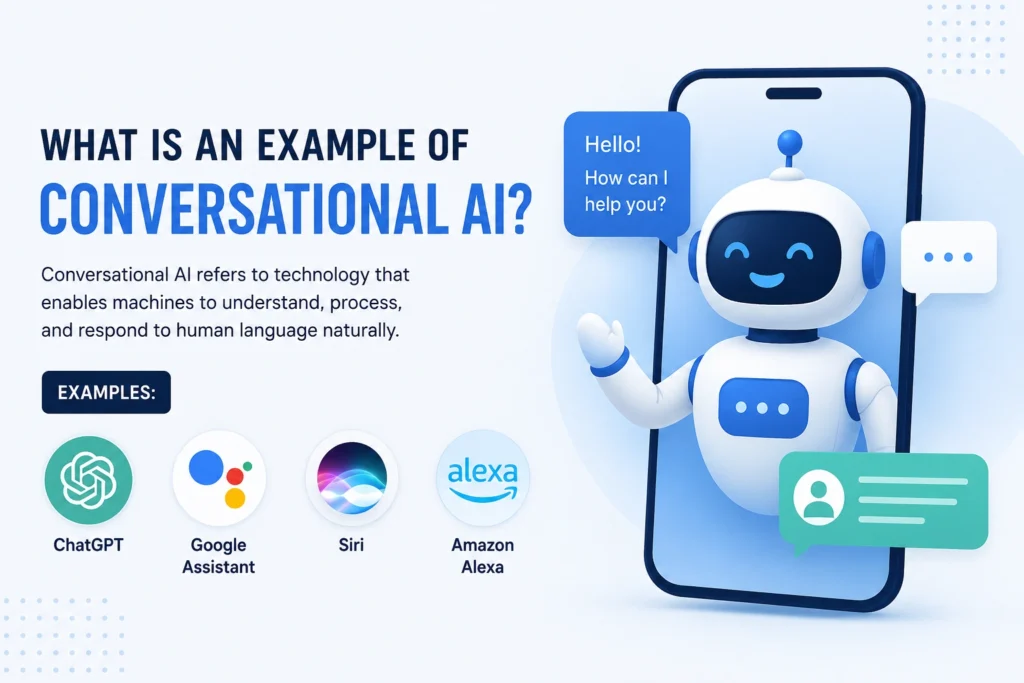
“What is an example of conversational AI?” is one of the most common questions people ask when they first learn about artificial intelligence. Conversational AI refers to technology that allows computers and machines to communicate with humans in a natural and human-like way through text or voice. Today, conversational AI is used everywhere, from customer support chatbots and virtual assistants to smart speakers and online learning platforms. Many businesses and students now use conversational AI tools to save time, improve productivity, and make communication easier. In this article, you will learn what conversational AI means, how it works, real-world examples of conversational AI, its benefits, challenges, future trends, and why it is becoming an important skill in modern industries. The article is written in simple language so beginners can easily understand the topic.
What Is Conversational AI?
Conversational AI is a type of artificial intelligence that helps machines understand, process, and respond to human language naturally. It combines technologies like Natural Language Processing (NLP), Machine Learning, and speech recognition to create smooth conversations between humans and computers. Instead of using complicated commands, users can simply type or speak normally, and the AI system responds intelligently. Conversational AI can answer questions, provide recommendations, solve customer problems, book appointments, and even assist with learning. These systems continuously improve because they learn from previous conversations and user behavior over time. The main goal of conversational AI is to make communication between humans and machines feel more natural and efficient.
An Example of Conversational AI
One of the best examples of conversational AI is ChatGPT. It allows users to ask questions, generate content, learn new topics, solve coding problems, and even practice conversations in different languages. Another common example is Google Assistant, which helps users set reminders, search the internet, play music, and control smart devices using voice commands. Similarly, Siri and Alexa are also popular conversational AI tools used worldwide. These AI systems understand user requests and respond instantly, making daily tasks easier and faster. Businesses also use conversational AI chatbots on websites to answer customer queries 24/7 without human support agents.
How Conversational AI Works
Conversational AI works using several advanced technologies combined. First, the system receives user input through text or voice. Then, Natural Language Processing helps the AI understand the meaning and intent behind the words. After understanding the request, Machine Learning models analyze data and generate the best possible response. Finally, the system sends the response back to the user in a conversational format. Some advanced conversational AI tools can even detect emotions, context, and user preferences to make interactions more personalized. Over time, these systems become smarter because they continuously learn from conversations and improve their responses.
Why Conversational AI Is Important
Conversational AI is becoming important because it improves communication and saves time for both businesses and users. Companies use AI chatbots to provide instant customer support, reduce waiting times, and improve customer satisfaction. Students use conversational AI for learning, research, and problem-solving. Many online platforms also use conversational AI to guide users and answer questions automatically. In industries like healthcare, banking, e-commerce, and education, conversational AI helps automate repetitive tasks and increase efficiency. It also allows businesses to provide support 24 hours a day without needing large customer service teams.
Conversational AI in Education
Conversational AI is changing the education industry rapidly. Students can now use AI tutors and chatbots to learn subjects more interactively. AI tools help explain difficult topics, answer homework questions, and provide personalized learning experiences. Many students interested in future careers are also exploring courses like Data Science, Artificial Intelligence, Machine Learning, and Python programming because these skills are highly connected to conversational AI technologies. Learning these subjects can help students understand how AI systems are created and trained. Educational institutions are also using conversational AI to automate admissions support, student queries, and online learning assistance.
Conversational AI in Business and Marketing
Businesses use conversational AI to improve customer engagement and automate communication. AI chatbots on websites can answer product questions, process orders, and guide users through services instantly. In Digital Marketing, conversational AI helps businesses communicate with customers more effectively through personalized messages and automated support. Many companies also use AI-powered chat systems on social media platforms to improve customer interactions and increase sales. Professionals studying Business Analytics often learn how conversational AI helps analyze customer behavior and improve business decision-making. As businesses continue adopting automation, conversational AI is becoming a valuable technology across industries.
Benefits of Conversational AI
Conversational AI provides many advantages for users and businesses. It saves time by providing instant responses and reducing manual work. It improves customer experience because users receive quick support without waiting for human agents. Businesses can also reduce operational costs by automating repetitive tasks. Conversational AI systems are available 24/7, making them more reliable for customer support. Additionally, these systems can handle multiple conversations at the same time, which improves efficiency significantly. Another major benefit is personalization, where AI systems remember user preferences and provide customized recommendations or responses.
Important Benefits of Conversational AI
- Provides instant customer support
- Works 24/7 without breaks
- Saves time and operational costs
- Improves user experience
- Helps automate repetitive tasks
- Supports personalized communication
- Increases productivity in businesses and education
Challenges of Conversational AI
Although conversational AI offers many benefits, it also has some challenges. Sometimes AI systems may misunderstand user questions or provide incorrect answers. Language complexity, accents, slang, and cultural differences can also make communication difficult for AI tools. Privacy and data security are additional concerns because conversational AI systems often collect user data to improve performance. Businesses must ensure that customer information remains protected and secure. Another challenge is that some users still prefer human interaction, especially in sensitive situations where emotional understanding is important. Despite these challenges, conversational AI technology continues to improve every year.
Future of Conversational AI
The future of conversational AI looks very promising. Experts believe AI assistants will become smarter, more personalized, and more human-like in the coming years. Future conversational AI systems may understand emotions better and provide more natural conversations. Businesses are expected to use AI chatbots even more widely in customer service, healthcare, finance, education, and entertainment industries. Voice assistants and AI-powered communication tools are also becoming more advanced with improved language understanding capabilities. As artificial intelligence continues growing, learning skills related to AI, Machine Learning, Python, and Data Science may become highly valuable for future careers.
How Beginners Can Start Learning Conversational AI
Beginners interested in conversational AI can start by learning the basics of artificial intelligence and Natural Language Processing. Understanding Python programming is helpful because many AI applications are developed using Python. Students can also explore beginner-friendly courses in Machine Learning, Data Science, and AI development to build foundational knowledge. Practicing with AI tools and experimenting with simple chatbot projects can improve understanding quickly. Reading articles, watching tutorials, and using conversational AI platforms regularly can also help beginners learn how these systems work in real life. Consistent learning and practice are the best ways to build skills in this growing technology field.
Conclusion
Conversational AI is transforming the way humans interact with technology. From virtual assistants like Google Assistant and Alexa to advanced AI chatbots like ChatGPT, conversational AI is becoming a part of daily life. It helps businesses improve customer service, supports students in learning, and automates communication across industries. Although there are some challenges, the future of conversational AI is highly promising because technology is improving rapidly. For beginners, learning subjects like Artificial Intelligence, Machine Learning, Python, Data Science, Digital Marketing, and Business Analytics can open many opportunities in the future. As conversational AI continues evolving, it will likely become one of the most important technologies shaping communication and digital experiences worldwide.