
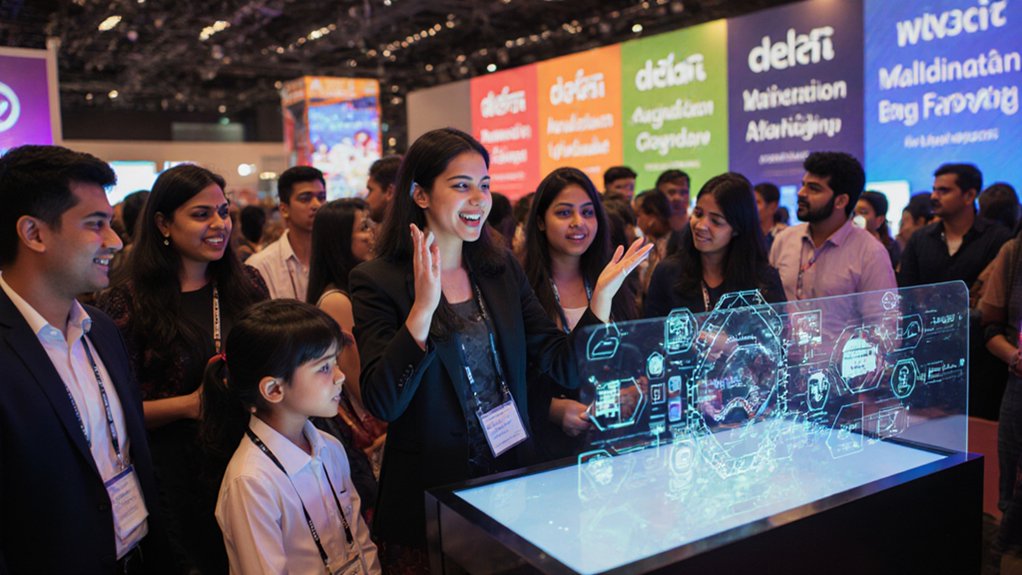
At the recent Delhi Summit, you might’ve noticed how “AI for Bharat” is shifting the landscape of technology in India. By focusing on multilingual and inclusive innovations, this initiative addresses vital communication barriers. It’s not just about technology; it’s about empowering marginalized communities and enhancing access to essential services. As you explore these advancements, consider how they could reshape lives and what challenges lie ahead in their implementation.
Key Takeaways
- The Delhi Summit highlighted multilingual chatbots that enhance communication and inclusivity across India’s diverse population.
- AI innovations showcased support local businesses and improve digital literacy, fostering economic empowerment.
- Regional language projects were presented, ensuring access to information and services for marginalized communities.
- Success stories featured AI applications in agriculture, enhancing crop management and sustainability for farmers.
- Collaborative efforts between government and tech companies aim to address the digital divide and promote cultural diversity.
Key Innovations in Multilingual AI Technology
As the world becomes more interconnected, key innovations in multilingual AI technology are transforming how we communicate and access information. You can now engage with multilingual chatbots that understand and respond in various languages and regional dialects, making interactions more personal and relevant. These advancements help bridge communication gaps, allowing you to receive support in your preferred language, whether it’s Hindi, Tamil, or any other regional dialect. Multilingual AI models are continuously learning from diverse linguistic data, ensuring they adapt to local nuances and cultural contexts. This not only enhances user experience but also promotes inclusivity. With these innovations, you’ll find it easier to connect with others, access information, and navigate the digital landscape without language barriers.
The Vision Behind AI for Bharat
Building on the advancements in multilingual AI technology, the vision behind AI for Bharat focuses on creating a more inclusive digital landscape tailored to India’s diverse population. You’ll see efforts aimed at fostering cultural inclusivity and driving economic empowerment. By harnessing AI, the initiative seeks to bridge language barriers, enabling everyone to access resources in their native tongue.
Here’s a glimpse of the vision:
| Goal | Strategy | Impact |
|---|---|---|
| Cultural Inclusivity | Develop regional AI models | Enhance user engagement |
| Economic Empowerment | Support local businesses | Boost job creation |
| Accessibility | Improve digital literacy | Empower marginalized groups |
With these steps, AI for Bharat aims to uplift every citizen. Additionally, training in data science skills can play a crucial role in empowering individuals and businesses alike.
Addressing the Digital Divide in India
While many Indians embrace the digital age, significant disparities still exist that hinder widespread access to technology. You’ll find that access barriers, such as lack of infrastructure or high costs, prevent many from connecting online. This gap creates a pressing need for improved digital literacy, enabling individuals to engage with technology effectively. By addressing these challenges, you can help foster a more inclusive digital environment. Initiatives aimed at enhancing digital literacy can empower communities, breaking down the barriers that keep them from accessing essential resources and information. Furthermore, programs like Data Analysis Training are essential in equipping individuals with the skills necessary to thrive in an increasingly interconnected world. Bridging the digital divide isn’t just about providing tools; it’s about equipping everyone with the skills necessary to thrive in an increasingly interconnected world. Together, we can create a more equitable digital landscape in India.
How AI Empowers Marginalized Communities?
AI has the potential to transform the lives of marginalized communities by providing them with tools and opportunities that were previously out of reach. By leveraging inclusive technologies, you can witness significant strides in community empowerment. Imagine being part of a world where:
- Access to education becomes easier through personalized learning platforms.
- Job opportunities expand as AI connects you with employers tailored to your skills.
- Health services improve with AI-driven solutions that cater to your specific needs.
- Local businesses thrive through data analytics that inform better decision-making.
These advancements not only uplift individuals but also foster stronger communities. Embracing AI can help break down barriers, ensuring everyone has a voice and a chance to succeed in today’s rapidly evolving landscape. Furthermore, the AI course offered in Delhi can equip individuals with the necessary skills to harness these technologies effectively.
How AI for Bharat Supports Regional Languages
Empowering marginalized communities also means ensuring that language isn’t a barrier to accessing information and services. AI for Bharat is making strides in regional language support, allowing you to engage with technology in your preferred tongue. This innovation not only breaks down communication barriers but also enhances the learning experience through multilingual education. With AI-driven solutions, educational resources become more accessible, ensuring that everyone, regardless of their linguistic background, can benefit from quality learning materials. By incorporating regional languages into digital platforms, these tools foster inclusivity and promote cultural diversity. As you navigate these advancements, you’ll find that AI is reshaping how you interact with information, making it easier than ever to learn and connect in a language that feels like home.
Real-World Examples of AI Transforming Daily Life
AI is changing your daily life in remarkable ways, from breaking language barriers with translation tools to enhancing healthcare access for everyone. You’ll see how agricultural innovations are transforming farming practices and boosting productivity. Let’s explore these real-world examples of AI making a difference in your community.
Language Translation Tools
As you navigate daily life, language translation tools have quietly transformed how you communicate across cultures. These innovations enhance language accessibility and guarantee translation accuracy, allowing you to connect with others effortlessly. Whether you’re traveling, working, or socializing, these tools empower you to break down language barriers.
- Instantly translate conversations with apps like Google Translate.
- Communicate better in multilingual workplaces using tools like Microsoft Translator.
- Enjoy real-time subtitles in video calls for seamless interaction.
- Access educational resources in different languages to broaden your knowledge.
With these advancements, you’re not just translating words, but fostering understanding and building relationships. Embrace these tools to enrich your interactions and expand your horizons.
Healthcare Accessibility Solutions
While traversing the healthcare landscape, you might find that AI-driven solutions are making essential services more accessible than ever. Telemedicine access is revolutionizing the way you connect with healthcare providers, allowing you to consult doctors from the comfort of your home. This innovation not only saves time but also breaks geographical barriers, promoting healthcare equity. AI chatbots and virtual assistants are available 24/7, answering your questions and guiding you through medical processes. Additionally, predictive analytics can identify health trends in your community, enabling targeted interventions. As these technologies continue to evolve, you’ll experience a more inclusive healthcare system that addresses diverse needs and guarantees everyone receives the care they deserve. Embrace these advancements for a healthier future.
Agricultural Innovations Impact
With the rise of smart farming technologies, you’re witnessing a transformation in how agriculture operates. AI innovations are making farming more efficient and sustainable, leading to better yields and healthier crops. Here are some real-world examples of how AI is making an impact:
- Crop Monitoring: Sensors and drones provide real-time data on plant health.
- Yield Prediction: AI algorithms analyze data to forecast crop yields, helping farmers plan better.
- Pest Management: Smart solutions identify and manage pests, reducing chemical use.
- Weather Forecasting: Accurate predictions allow farmers to make informed decisions about planting and harvesting.
Collaborative Efforts Between Government and Tech Companies
Recognizing the potential of AI to transform various sectors, government bodies and tech companies are joining forces to create innovative solutions tailored for diverse communities across India. These collaborative efforts focus on leveraging government initiatives aimed at boosting technological growth and inclusivity. By forming strategic tech partnerships, both parties can share resources and expertise, ensuring that AI solutions address local needs effectively. For instance, joint projects are being developed to improve healthcare access, education, and employment opportunities in regional languages. As you witness this synergy, you’ll see how these partnerships not only drive economic growth but also foster a more equitable society. Together, they pave the way for a future where technology empowers every citizen, regardless of their background or language.
Success Stories: How AI for Bharat Is Making a Difference
Success stories are emerging from every corner of India, showcasing how AI for Bharat is truly making a difference in people’s lives. From enhancing education to improving healthcare, these initiatives highlight the power of AI literacy and community engagement. Here are some inspiring examples:
- Rural Health Solutions: AI tools are providing remote diagnostics, making healthcare accessible for underserved populations.
- Educational Platforms: AI-driven apps are helping students learn in their native languages, breaking language barriers.
- Farmers’ Assistance: AI analytics are guiding farmers on crop management, optimizing yield and sustainability.
- Disability Support: AI innovations are creating tools that assist individuals with disabilities, promoting inclusivity.
These stories illustrate how AI is transforming lives and fostering a brighter future for Bharat.
Challenges in AI Implementation
While the success stories of AI for Bharat paint an optimistic picture, implementing these technologies isn’t without its hurdles. You’ll face challenges like data bias, which can skew results and affect trust. Algorithm transparency is critical; without it, users may doubt the AI’s fairness. Resource allocation often becomes a sticking point, especially in underserved areas. Cultural sensitivity is significant as AI must resonate with diverse populations to be effective. Additionally, you might encounter a talent shortage, making it hard to find experts who understand local needs. Finally, maneuvering regulatory frameworks can be complex, as they vary widely and impact how AI can be developed and deployed. Addressing these challenges is essential for AI to truly benefit everyone in Bharat.
The Future of AI in Driving Social Change in India
As AI continues to evolve, it’s set to play a transformative role in driving social change across India. By harnessing the power of AI, you can foster social innovation and enhance community engagement. Here are some ways AI can make a difference:
- Empowering Education: Personalized learning experiences cater to diverse linguistic needs.
- Healthcare Access: AI can identify health trends and improve service delivery in remote areas.
- Agricultural Support: Smart farming solutions can optimize resources and boost crop yields.
- Disaster Management: Predictive analytics can enhance preparedness and response strategies.
These advancements not only address pressing social issues but also create inclusive platforms, ensuring that every voice is heard. Embracing AI can lead to a brighter, more equitable future for all. Furthermore, real-world use cases integrated into AI training can help demonstrate the practical applications of these innovations.
Conclusion
In summary, the “AI for Bharat” initiative is transforming the landscape of technology in India. By focusing on multilingual and inclusive AI innovations, it bridges communication gaps and empowers marginalized communities. With collaborative efforts between the government and tech companies, the potential for social change is immense. As these technologies continue to evolve, you can expect an even greater impact on access to education, healthcare, and livelihoods, fostering a truly inclusive digital future for all.