
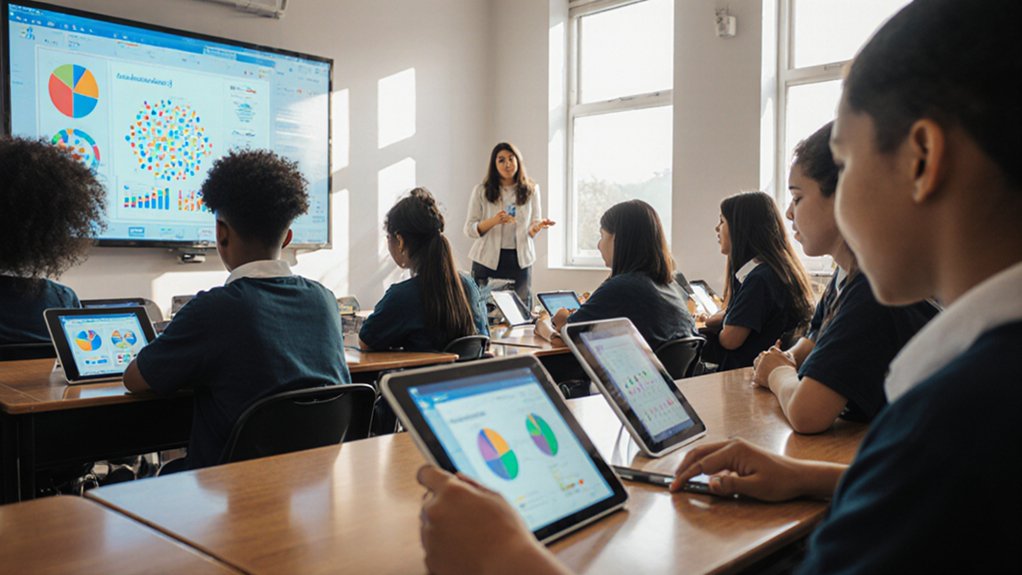
Artificial intelligence is increasingly shaping education, offering innovative solutions that cater to diverse learning needs. Personalized tutoring systems adapt content for individual students, while automated grading tools enhance assessment efficiency. Additionally, predictive analytics help identify students at risk of falling behind, enabling timely interventions. As educational institutions explore these advancements, the implications for teaching and learning become increasingly significant. What challenges and opportunities lie ahead in this evolving landscape?
Key Takeaways
- AI-powered tutoring systems personalize learning experiences, adapting to each student’s unique pace and learning style for effective engagement.
- Automated grading tools streamline evaluation processes, providing quick feedback and minimizing bias in assessments.
- Predictive analytics identify at-risk students, allowing for timely interventions and tailored support strategies to enhance academic success.
- AI-driven language-learning apps offer personalized practice and real-time feedback, catering to individual progress and improving language skills.
- Chatbots facilitate communication and provide instant support, addressing inquiries from students and parents while enhancing operational efficiency in schools.
How AI-Powered Tutoring Systems Personalize Learning
As students engage with AI-powered tutoring systems, they experience a personalized learning journey that adapts to their unique needs and pace. These systems analyze individual performance data to identify strengths and weaknesses, enabling tailored content delivery. By adjusting difficulty levels in real-time, they guarantee students remain challenged yet not overwhelmed. In addition, AI tutors offer instant feedback, allowing learners to understand their mistakes and improve quickly. This immediate response fosters a more engaging educational experience, motivating students to take ownership of their learning. Moreover, the flexibility of AI tutoring allows learners to study at times that suit them best, accommodating diverse schedules. Overall, these systems revolutionize education, making personalized learning accessible to all students. Furthermore, training programs like AI course provide individuals with the skills needed to develop such innovative learning technologies.
Practical Applications of AI in Learning Assessment
Artificial intelligence is transforming learning assessment through various practical applications. Automated grading systems streamline evaluation, while personalized learning pathways adapt to individual student needs. Additionally, predictive analytics tools provide valuable insights into student performance and future outcomes.
Automated Grading Systems
While educators endeavor for fair and efficient evaluation methods, automated grading systems have emerged as a transformative tool in learning assessment. These systems utilize artificial intelligence to assess student work, providing quick and consistent feedback. By analyzing written assignments, multiple-choice tests, and even complex essays, AI can evaluate responses for grammar, coherence, and content accuracy. This not only saves educators valuable time but also minimizes subjective bias in grading. Schools and universities are increasingly adopting these tools, allowing them to focus more on teaching and less on administrative tasks. Furthermore, automated grading systems can offer insights into student performance trends, helping educators identify areas needing improvement. As technology evolves, these systems continue to enhance the assessment landscape in education.
Personalized Learning Pathways
Automated grading systems have paved the way for more sophisticated educational approaches, including personalized learning pathways. These pathways tailor educational experiences to individual students based on their strengths, weaknesses, and learning preferences. AI-driven algorithms analyze student performance data, allowing educators to create customized curriculums that adapt in real-time. For instance, if a student struggles with a particular concept, the system can recommend targeted resources or exercises to help them master that area. This approach not only enhances engagement but also fosters a deeper understanding of the material. By leveraging AI, educators can provide support that meets each student’s unique needs, ensuring that learning is both effective and enjoyable, ultimately leading to improved academic outcomes.
Predictive Analytics Tools
As educators seek to enhance learning outcomes, predictive analytics tools have emerged as powerful assets in evaluating student performance. These tools analyze vast amounts of data, identifying trends and predicting future student behaviors. For instance, institutions can forecast which students may struggle based on patterns in attendance, grades, and engagement metrics. By leveraging these insights, educators can intervene early, offering tailored support and resources to at-risk students. Furthermore, predictive analytics aids in refining curriculum design, ensuring it meets the evolving needs of learners. Schools that implement these tools not only improve academic success rates but also foster a more proactive and responsive educational environment, enhancing the overall learning experience for all students.
Predictive Analytics for Identifying At-Risk Students
Predictive analytics plays an essential role in identifying at-risk students through early warning systems. By analyzing patterns in academic performance and engagement, educators can implement data-driven interventions tailored to individual needs. This proactive approach not only helps improve student outcomes but also enhances overall educational effectiveness. Moreover, leveraging data analysis training equips educators with the necessary skills to interpret data effectively and make informed decisions.
Early Warning Systems
Although many students face challenges that can affect their academic performance, early warning systems leveraging predictive analytics provide educators with valuable insights to identify those at risk of falling behind. These systems analyze vast amounts of data, including attendance, grades, and behavioral patterns, to pinpoint students who may struggle. By recognizing early signs of academic distress, educators can intervene promptly, tailoring their support to individual needs. This proactive approach helps prevent further decline and fosters a more supportive learning environment. Schools implementing these systems report increased student engagement and improved retention rates, demonstrating the effectiveness of data-driven strategies in education. Ultimately, early warning systems empower teachers to make informed decisions that enhance student success.
Data-Driven Interventions
Data-driven interventions harness the power of predictive analytics to identify at-risk students effectively. By analyzing various data points, educators can pinpoint students who may need additional support, allowing for timely interventions. This approach not only enhances academic performance but also fosters a supportive learning environment.
- Predictive analytics uses historical data to forecast potential challenges.
- Early identification helps educators implement tailored support strategies.
- Interventions can range from personalized tutoring to mental health resources.
- Data-driven insights promote collaboration among educators, parents, and counselors.
As a result, schools can create proactive measures that improve student outcomes and reduce dropout rates, ultimately paving the way for a more equitable education system.
How AI Enhances Classroom Engagement
As educators seek innovative ways to captivate students, AI tools have emerged as powerful allies in enhancing classroom engagement. These technologies can personalize learning experiences, adapting content to meet individual students’ needs and interests. For instance, AI-driven platforms provide interactive simulations and gamified lessons that make learning more dynamic and enjoyable. Additionally, chatbots can facilitate real-time feedback, allowing students to ask questions and receive instant support, which fosters a more interactive environment. Moreover, AI can analyze student participation and performance, enabling teachers to identify engagement levels and adjust their teaching methods accordingly. By leveraging AI, educators can create a more inclusive and stimulating atmosphere, ultimately encouraging students to take an active role in their learning journey. Furthermore, the integration of real-world use cases in AI applications helps students understand the practical implications of their learning.
Streamlining School Operations With AI Tools
While engaging students is essential, schools also face the challenge of efficiently managing operations. AI tools have emerged as effective solutions for streamlining various administrative tasks, allowing educators to focus more on teaching. By automating routine processes, schools can enhance productivity and reduce operational costs.
- Enrollment Management: AI can analyze data to predict enrollment trends, helping schools plan accordingly.
- Scheduling: Intelligent scheduling systems optimize class timetables, accommodating both student and teacher availability.
- Resource Allocation: AI tools assess resource usage, ensuring schools allocate materials and staff efficiently.
- Communication: Chatbots can handle inquiries from parents and students, improving response times and communication flow.
Additionally, implementing AI solutions can provide career assistance by equipping students with skills relevant to the job market.
These applications illustrate how AI can transform school operations, making them more efficient and effective.
AI in Education: Language Learning Innovations
With technology evolving rapidly, AI is revolutionizing language learning in education. Innovative tools like chatbots and intelligent tutoring systems provide personalized language practice and real-time feedback, enhancing students’ speaking and writing skills. For instance, language-learning apps utilize AI algorithms to adapt lessons based on individual progress, making learning more engaging. Additionally, voice recognition technology helps learners improve pronunciation by analyzing their speech patterns. AI-driven platforms can also facilitate immersive experiences, connecting students with native speakers through virtual exchanges. These advancements enable learners to practice conversational skills in authentic contexts, breaking down traditional classroom barriers. As AI continues to develop, it promises to transform language education, making it more accessible and tailored to diverse learners’ needs. Furthermore, institutions like DSTI offer comprehensive training in data science, equipping educators with the skills to integrate AI tools effectively into their teaching methods.
How AI Supports Special Education
AI plays an essential role in supporting special education by offering tailored solutions that address diverse learning needs. It helps educators create individualized learning plans, ensuring that each student receives the support necessary for their development. AI-driven tools can adapt content and instructional strategies based on real-time assessments, making learning more effective.
- Personalized learning experiences that cater to unique abilities
- Enhanced communication tools for students with speech or language difficulties
- Data analysis to track progress and adjust strategies accordingly
- Virtual assistants that provide instant feedback and support for students
AI in Education: Career Guidance and Counseling
As students navigate their educational journeys, integrating AI in career guidance and counseling can greatly enhance their decision-making processes. AI tools analyze students’ interests, strengths, and academic performance, offering personalized career recommendations. By utilizing data-driven insights, these systems help students identify suitable career paths and educational opportunities. Additionally, AI-powered chatbots provide instant support, answering questions about various professions and educational requirements. This immediate access to information empowers students to make informed choices, reducing anxiety about their futures. Furthermore, predictive analytics can forecast job market trends, helping students align their studies with in-demand skills. Overall, AI serves as a valuable resource, guiding students toward fulfilling careers that match their unique abilities and aspirations.
Successful Implementations of AI in Educational Settings
The integration of artificial intelligence in educational settings has led to remarkable advancements in teaching and learning. Schools and universities are leveraging AI to enhance student engagement and streamline administrative tasks. For instance, AI-driven platforms provide personalized learning experiences, allowing students to progress at their own pace. Additionally, AI chatbots offer instant support for frequently asked questions, freeing up educators for more complex inquiries.
Key successful implementations include:
- Adaptive learning systems that tailor content to individual learning styles.
- Automated grading tools that save teachers time and provide quick feedback.
- Predictive analytics to identify at-risk students and intervene early.
- Virtual tutors that assist in subjects like math and science, reinforcing classroom lessons.
These innovations illustrate AI’s potential to transform education.
Conclusion
In summary, artificial intelligence is transforming education by personalizing learning experiences, streamlining assessments, and enhancing engagement. Tools like DreamBox and Gradescope demonstrate AI’s potential to cater to individual needs and provide timely feedback. Predictive analytics help identify at-risk students, ensuring timely interventions. As AI continues to evolve, its applications in language learning, special education, and career guidance promise to further enrich educational environments, ultimately fostering a more inclusive and effective learning experience for all students.