
Understanding Career Anxiety in Today’s Teenagers
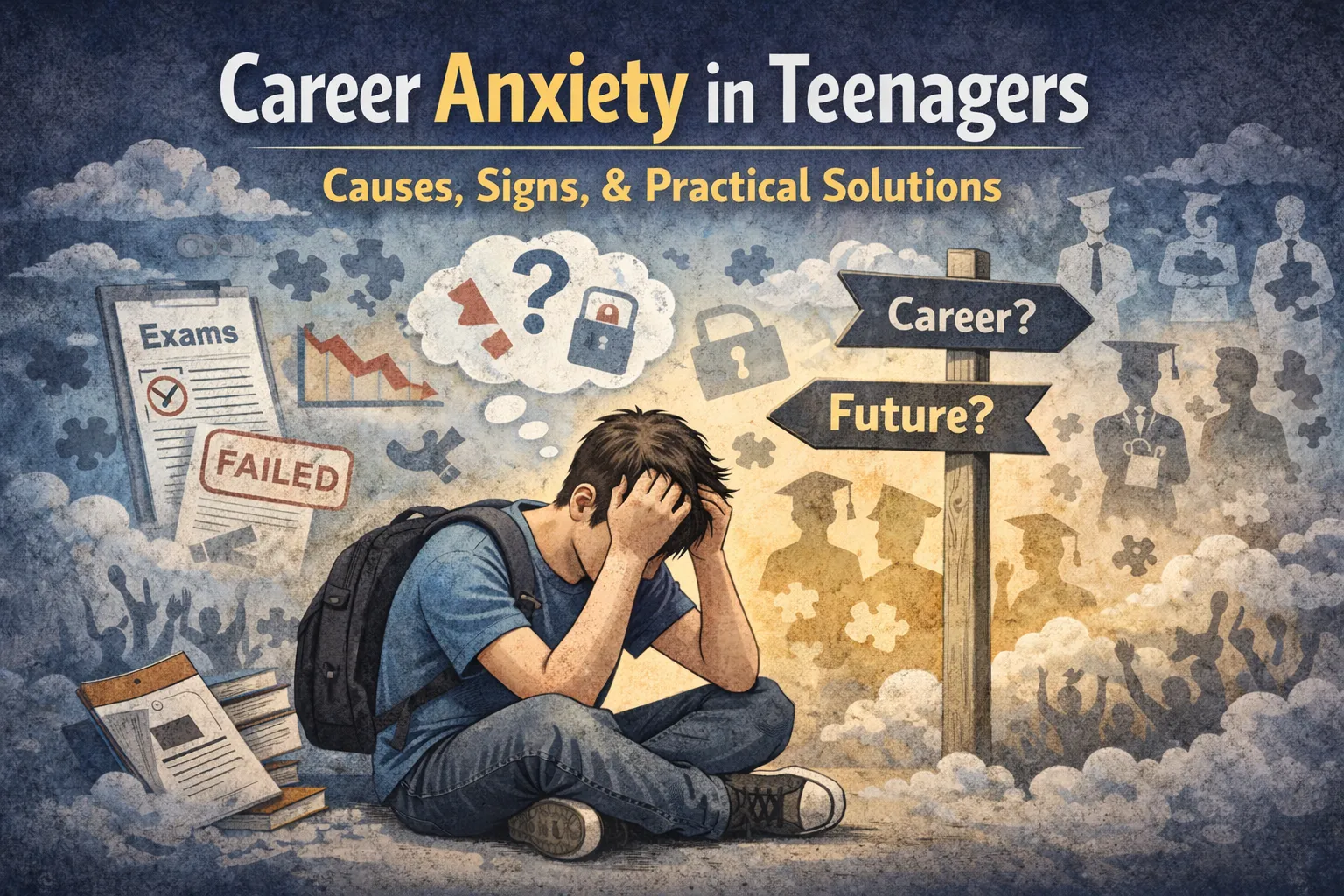
Career anxiety in teenagers has become increasingly common in today’s competitive and fast-changing world. Unlike previous generations, teens now face intense pressure to make early career decisions while navigating academic demands, social expectations, and digital comparison. Career anxiety refers to persistent worry, confusion, or fear related to future education and job choices. It often begins subtly but can grow into chronic stress if not addressed. Recognizing this issue early is crucial because adolescence is a sensitive period when self-identity and confidence are still developing.
Why Career Pressure Is Rising Among Teens
The modern environment has significantly amplified career-related stress among teenagers. Factors such as fierce academic competition, rapidly evolving job markets, and constant exposure to success stories on social media create unrealistic benchmarks. Many teens feel they must “figure out their life” far too early. Parents, schools, and society—often unintentionally—add to this pressure by emphasizing high-paying or prestigious careers. As a result, teenagers may feel trapped between personal interests and external expectations, which fuels anxiety and indecision.
The Role of Social Media and Comparison Culture
Social media has quietly become one of the strongest triggers of career anxiety. Teenagers regularly see peers showcasing achievements, college admissions, internships, and skill certifications online. This constant comparison distorts reality and creates the illusion that everyone else is ahead. The fear of falling behind, commonly known as “comparison stress,” can damage self-esteem and increase career confusion. Teens may begin to doubt their abilities or rush into career choices simply to keep up with perceived competition.
Academic Pressure and Fear of Failure
For many teenagers, career anxiety is deeply tied to academic performance. High-stakes exams, grading systems, and ranking culture often send the message that marks define future success. This belief creates a fear-driven mindset where every test feels like a life-defining moment. When teens internalize the idea that one mistake can ruin their future, anxiety naturally increases. Over time, this pressure can lead to burnout, avoidance behaviors, or excessive perfectionism.
Lack of Career Clarity and Guidance
Another major contributor is the absence of proper career guidance. Many teenagers are asked to choose streams or subjects without fully understanding available career paths. Schools sometimes focus heavily on academics but provide limited real-world career exposure. Without structured guidance, teens rely on hearsay, peer choices, or parental preferences. This uncertainty creates mental overload, making decision-making feel overwhelming and risky.
Common Warning Signs of Career Anxiety
Career anxiety does not always appear as obvious panic. It often shows up through subtle behavioral and emotional changes. Teenagers may frequently express confusion about their future, avoid career-related discussions, or constantly change their interests. Physical symptoms like headaches, sleep disturbance, irritability, or lack of motivation can also appear. Some teens become overly perfectionistic, while others procrastinate excessively to escape decision pressure. Recognizing these early signs allows parents and educators to intervene before anxiety intensifies.
Emotional Impact on Teen Mental Health
If left unaddressed, career anxiety can significantly affect a teenager’s overall well-being. Persistent worry about the future can lower self-confidence and create chronic stress patterns. Teens may begin to believe they are “not good enough” or that they are already behind in life. In severe cases, this anxiety can contribute to depressive symptoms, social withdrawal, or academic disengagement. Because adolescence is a critical stage for emotional development, prolonged career stress can shape long-term self-perception.
Practical Solutions to Reduce Career Anxiety
Addressing career anxiety requires a balanced and supportive approach rather than pushing teenagers toward quick decisions. One of the most effective strategies is gradual career exploration. Encouraging teens to research multiple fields, talk to professionals, and try short-term skill courses can replace fear with curiosity. Building decision-making skills step by step helps teenagers feel more in control. It is also important to normalize uncertainty and remind teens that career paths today are flexible and often non-linear.
The Importance of Open Communication at Home
Parents play a powerful role in either increasing or reducing career anxiety. Teens need safe spaces where they can express confusion without fear of judgment. Instead of asking pressure-filled questions like “What will you become?”, supportive conversations should focus on strengths, interests, and values. Active listening, emotional validation, and realistic reassurance can significantly lower stress levels. When teenagers feel understood rather than evaluated, they make clearer and more confident decisions.
How Schools and Educators Can Help
Educational institutions can reduce career anxiety by integrating structured career guidance programs. Workshops, aptitude assessments, mentorship sessions, and industry exposure visits help students make informed choices. Schools that emphasize skill development alongside marks create healthier mindsets. When educators present career selection as a journey rather than a one-time decision, students feel less trapped and more empowered to explore.
Building Confidence and Decision-Making Skills
Confidence is one of the strongest antidotes to career anxiety. Teenagers benefit greatly from experiences that build competence—such as internships, volunteering, competitions, or creative projects. These activities provide real-world feedback and help teens discover their strengths naturally. Teaching decision-making frameworks, such as weighing pros and cons or setting short-term goals, also reduces overwhelm. When teens trust their ability to adapt, their fear of choosing “wrong” decreases significantly.
When Professional Support May Be Needed
In some cases, career anxiety becomes intense enough to require professional guidance. If a teenager shows persistent distress, panic symptoms, severe avoidance, or declining mental health, consulting a career counselor or mental health professional can be beneficial. Early intervention prevents anxiety from becoming deeply rooted. Professional assessments can also provide clarity about interests, personality, and aptitude, which reduces confusion and builds direction.
Turning Career Anxiety Into Career Awareness
Career anxiety, when managed properly, can actually become a positive signal. It often indicates that a teenager cares deeply about their future. With the right support, this worry can be redirected into healthy career awareness and proactive planning. The goal is not to eliminate uncertainty but to help teens develop resilience, flexibility, and informed confidence.
Final Thoughts
Career anxiety in teenagers is a growing but manageable challenge in the modern world. It stems from a complex mix of academic pressure, social comparison, lack of guidance, and fear of making the wrong choice. The key to addressing it lies in early recognition, open communication, gradual exploration, and supportive environments at home and school. When teenagers are guided with patience rather than pressure, they move from confusion to clarity and from anxiety to empowered decision-making.