
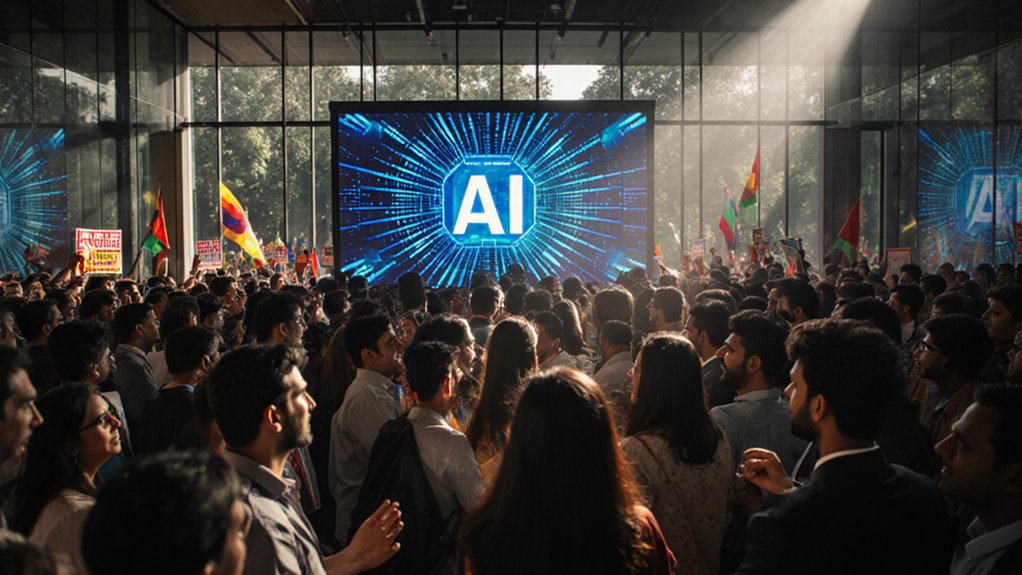
At the AI Summit Delhi 2026, you witnessed a clash of ideals surrounding artificial intelligence. Tensions flared as public protests revealed deep-seated fears about job loss and algorithmic bias. Industry leaders pushed for innovation, but their call for transparency faced skepticism from activists demanding ethical practices. The discussions raised vital questions about the future of AI in India. What happens next could shape the technology landscape for years to come.
Key Takeaways
- Debates centered around algorithmic bias and its impact on decision-making processes sparked significant controversy among attendees.
- Public protests addressed job displacement concerns, highlighting fears of unemployment due to AI advancements.
- Activists called for greater transparency and accountability in AI systems to build trust and ensure ethical compliance.
- Discussions on regulatory frameworks emphasized the need for balance between innovation and safety to mitigate risks associated with AI.
- Industry leaders advocated for collaboration among tech companies to establish unified approaches to AI regulation, garnering mixed public reactions.
Understanding Ethical Dilemmas in AI
As we plunge into the domain of artificial intelligence, it’s essential to recognize the ethical dilemmas that arise. You’ll encounter algorithmic bias, which can skew decision-making processes and perpetuate inequality. Transparency issues make it difficult for users to understand how AI systems function, raising concerns about trust and reliability. Without clear accountability frameworks, it’s hard to hold developers responsible for their creations, leading to potential harm in society. The societal impact of these dilemmas can be profound, affecting everything from job opportunities to privacy rights. By addressing these challenges head-on, you can contribute to a more ethical landscape in AI, ensuring that technology serves everyone fairly and justly.
AI Regulations: Balancing Innovation and Safety
While embracing the rapid advancements in artificial intelligence, it’s essential to establish regulations that guarantee safety without stifling innovation. You need to understand that AI transparency requirements are vital for fostering trust among users and developers alike. By ensuring that AI systems are open about their processes and data usage, you can promote responsible development. Additionally, implementing algorithmic accountability measures helps mitigate risks associated with biased or harmful outcomes. These regulations don’t have to hinder creativity; instead, they can create a framework where innovative solutions thrive within a safe environment. As we navigate this complex landscape, striking the right balance between regulation and freedom will be key to harnessing AI’s full potential while protecting society.
How Industry Leaders Influence AI Regulation
When industry leaders engage in discussions about AI regulation, they greatly shape the framework that governs technology’s development and deployment. Their influence often stems from a mix of expertise, resources, and strategic partnerships. Here’s how they impact regulation:
- Advocating for Industry Collaboration: By fostering partnerships among tech companies, they promote a unified approach, ensuring diverse perspectives are considered in regulatory frameworks.
- Pushing for Regulatory Transparency: Industry leaders champion transparency, helping to demystify AI regulations for the public and policymakers, which builds trust.
- Driving Innovation: Their insights into emerging technologies guide lawmakers, ensuring regulations don’t stifle progress while still addressing safety concerns.
Through these actions, industry leaders play an essential role in shaping a balanced regulatory landscape for AI.
What Are the Main Concerns of Public Protests Against AI?
As you watch the rise of AI, you might notice growing public protests fueled by concerns about job displacement and ethical usage. People are worried about how AI could invade their privacy and impact their lives. It’s essential to understand these concerns to engage in meaningful conversations about the future of technology.
Job Displacement Fears
People are increasingly worried about job displacement as AI technology advances, leading to widespread public protests. The fears surrounding job security and automation anxiety are palpable, and you can see it reflected in the streets. Here are the main concerns driving these protests:
- Loss of Jobs: Many believe that AI will replace their roles, leaving them unemployed and without income.
- Economic Inequality: There’s anxiety that automation will benefit only a small elite, widening the gap between rich and poor.
- Skill Obsolescence: Workers fear their skills will become outdated, making it hard to find new jobs in an AI-dominated market.
These issues underscore the urgent need for dialogue about the future of work in an AI-driven world.
Ethical AI Usage
Growing concerns about ethical AI usage are driving significant public protests. People are demanding responsible innovation, urging developers to prioritize human welfare over profit. The lack of transparent algorithms raises fears about accountability and bias, prompting many to question AI’s role in society.
Here’s a snapshot of these concerns:
| Concern | Public Reaction | Proposed Solution |
|---|---|---|
| Bias in AI systems | Outrage and distrust | Implement transparent algorithms |
| Job displacement | Fear and anxiety | Promote responsible innovation |
| Lack of regulations | Calls for stricter laws | Establish ethical guidelines |
You’re witnessing a pivotal moment where the future of AI hinges on public trust and ethical considerations.
Privacy Invasion Concerns
Many individuals are voicing their fears about how AI technology can invade personal privacy. Concerns arise from the increasing use of surveillance technology that often operates without clear consent protocols. Here are the main issues fueling public protests against AI:
- Data Security: People worry that their personal information is vulnerable to breaches, leading to unauthorized access and misuse.
- Surveillance Overreach: The pervasive nature of AI surveillance raises alarms about constant monitoring and the potential for abuse by authorities or corporations.
- Lack of Consent: Many feel that AI systems collect and utilize their personal information without proper consent, stripping away individual agency.
As these concerns grow, public backlash against unchecked AI development is likely to intensify.
AI’s Effect on Jobs
As AI continues to advance, its impact on jobs becomes increasingly significant. You might notice that job automation is reshaping entire industries, leading to both opportunities and challenges. Many routine tasks are now handled by machines, which can boost efficiency but may also displace workers. This workforce transformation requires you to adapt and acquire new skills to stay relevant in your field. While some jobs may disappear, new roles are emerging that focus on creativity, problem-solving, and human interaction—areas where AI can’t easily compete. Embracing this change is vital. By reskilling and upskilling, you’ll not only prepare yourself for the future job market but also contribute to a more balanced integration of AI into the workforce. Additionally, many educational institutions offer data science training programs designed to equip you with the necessary skills in the evolving job landscape.
Expert and Activist Viewpoints on AI Ethics and Regulation
While the rapid development of AI offers remarkable potential, it also raises urgent ethical and regulatory questions that experts and activists are increasingly addressing. You’ll find that many advocate for the establishment of robust AI accountability frameworks to guarantee responsible use. Here are three key viewpoints that highlight their concerns:
- Transparency: Experts stress the need for clear AI decision-making processes to allow for public scrutiny.
- Bias Mitigation: Activists call for rigorous methods to identify and eliminate biases in AI systems, promoting fair outcomes.
- Stakeholder Involvement: Engaging diverse groups in ethical decision making guarantees a broader perspective on AI’s impact.
These discussions are critical as society navigates the complexities of AI technology.
Navigating the Future of AI in India
As you consider the future of AI in India, think about the importance of ethical AI development. You’ll face regulatory framework challenges that can shape how technology evolves. Let’s explore how you can navigate this complex landscape effectively.
Ethical AI Development
Maneuvering the landscape of artificial intelligence in India demands a strong commitment to ethical development. You’ll need to prioritize responsible innovation and guarantee that your AI solutions respect societal values. To achieve this, consider these key elements:
- Transparency: Clearly communicate how algorithms operate and the data they use, fostering trust among users.
- Fairness: Develop systems that minimize bias and promote inclusivity, ensuring equal treatment for all demographics.
- Accountability: Implement mechanisms for algorithmic accountability, holding developers responsible for the outcomes of their AI systems.
Regulatory Framework Challenges
Maneuvering the regulatory landscape for AI in India presents several challenges that could shape its future. You’ll find that achieving regulatory compliance is tricky, as existing laws may not fully address the rapid advancements in AI technology. There’s a pressing need for framework adaptability to accommodate innovations while ensuring safety and ethics. As you navigate these complexities, it’s essential to engage with policymakers to foster a collaborative approach. By voicing your concerns and suggesting solutions, you can help create a more robust regulatory environment. Remember, the balance between innovation and regulation isn’t just about compliance; it’s about fostering a culture where AI can thrive responsibly. Your insights will be significant in shaping a future where technology serves society effectively.
Conclusion
As the AI Summit Delhi 2026 highlighted, steering the future of AI in India requires a balanced approach to innovation and ethics. You’ve seen how public protests and expert opinions shape the conversation around job displacement and algorithmic bias. It’s clear that fostering transparency and accountability is crucial for building trust in AI. By actively engaging in discussions and advocating for responsible practices, you can play an essential role in shaping a future where technology benefits everyone.