
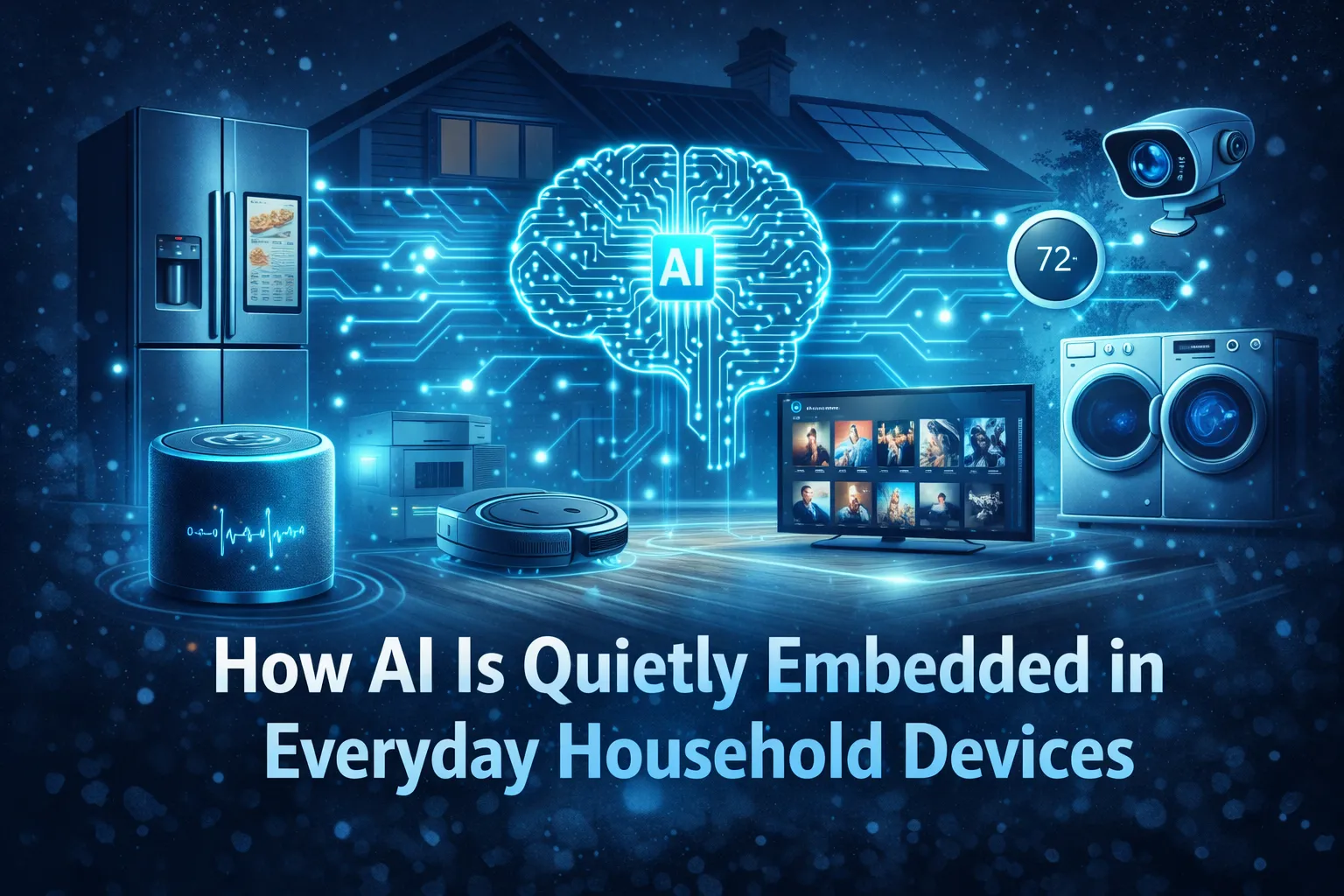
Introduction: The Invisible Rise of AI at Home
Artificial Intelligence (AI) is no longer a futuristic concept reserved for tech labs and sci-fi movies. Today, AI is quietly woven into the fabric of everyday household devices, transforming how we live, cook, clean, and secure our homes. From smart speakers that understand voice commands to refrigerators that manage groceries, AI is working behind the scenes to make daily life more convenient and efficient. What makes this transformation remarkable is how seamlessly AI integrates into devices we already use, often without us even noticing.
Smart Speakers: The Voice-Activated Home Assistant
Smart speakers have become one of the most visible examples of AI in households. Devices like voice assistants use natural language processing (NLP) and machine learning to understand commands, answer questions, and control other smart devices. Over time, these systems learn user preferences, speech patterns, and routines. This allows them to provide personalized reminders, play preferred music, and even anticipate needs. The AI embedded in smart speakers continuously improves through cloud updates, making them smarter the more they are used.
AI in Smart Thermostats: Comfort Meets Efficiency
Modern smart thermostats use AI algorithms to learn household temperature preferences and daily schedules. Instead of manual adjustments, these devices automatically optimize heating and cooling patterns. By analyzing occupancy patterns, weather forecasts, and historical usage, AI-powered thermostats reduce energy waste while maintaining comfort. The long-term impact is significant—lower electricity bills and reduced environmental footprint. This is a clear example of AI delivering both convenience and sustainability in everyday life.
Intelligent Security Systems: Smarter Home Protection
Home security has been revolutionized by AI-driven cameras and monitoring systems. Unlike traditional security setups that simply record footage, AI-enabled systems can distinguish between humans, pets, vehicles, and random motion. Facial recognition, anomaly detection, and real-time alerts make modern home security far more proactive. These systems can notify homeowners instantly about suspicious activity, reducing false alarms and improving overall safety. As machine learning models improve, home security continues to become more predictive rather than reactive.
AI-Powered Kitchen Appliances: The Future of Cooking
AI is rapidly transforming kitchen appliances into intelligent cooking assistants. Smart refrigerators can track food inventory, suggest recipes, and even notify users when groceries are running low. AI-enabled ovens adjust cooking time and temperature automatically based on the type of food. Some coffee makers learn your morning routine and prepare your drink before you even enter the kitchen. These innovations reduce guesswork in cooking and help minimize food waste, making kitchens more efficient than ever.
Robot Vacuums and Smart Cleaning Devices
Robot vacuum cleaners represent one of the most practical uses of AI in households. Using computer vision, sensors, and mapping algorithms, these devices navigate homes intelligently, avoid obstacles, and optimize cleaning paths. Advanced models learn floor layouts over time and adjust cleaning intensity based on surface type. AI also enables scheduling based on user habits, ensuring cleaning happens when it is most convenient. The result is a hands-free cleaning experience that saves time and effort for homeowners.
Smart TVs and Entertainment Personalization
AI plays a major role in how modern smart TVs and streaming devices deliver content. Recommendation engines analyze viewing history, watch time, and user preferences to suggest shows and movies tailored to each viewer. Voice search capabilities further enhance the experience by allowing natural language commands. Behind the scenes, AI also improves picture quality through upscaling, motion smoothing, and adaptive brightness. This level of personalization has fundamentally changed how people consume entertainment at home.
AI in Laundry Appliances: Smarter Washing and Drying
Washing machines and dryers have also embraced AI to optimize fabric care and energy use. Smart washers detect load size, fabric type, and dirt levels to automatically select the best wash cycle. Some systems even learn from previous washes to refine performance over time. AI-driven dryers adjust heat and drying time to prevent over-drying and reduce energy consumption. These improvements not only protect clothing but also contribute to long-term cost savings for households.
The Role of AI in Energy Management Systems
Whole-home energy management systems use AI to monitor electricity consumption across devices and identify inefficiencies. By analyzing usage patterns, these systems recommend ways to reduce power consumption and automate energy-saving actions. For example, AI can coordinate when appliances run during off-peak hours or automatically power down unused devices. As energy costs rise globally, AI-driven home energy optimization is becoming increasingly valuable for homeowners.
Privacy and Security Considerations in AI Homes
While AI brings undeniable convenience, it also raises important privacy and data security concerns. Many smart household devices collect behavioral data to function effectively. Without proper safeguards, this information could be vulnerable to misuse. Manufacturers are increasingly implementing encryption, local processing, and stronger authentication to address these risks. Homeowners should also follow best practices such as updating firmware, using strong passwords, and managing device permissions carefully.
The Future of AI in Everyday Household Devices
The integration of AI into household technology is still in its early stages. Future homes will likely feature more predictive automation, where devices anticipate needs before users even issue commands. Advances in edge AI, improved sensors, and deeper ecosystem integration will make smart homes more responsive and context-aware. We can expect appliances that collaborate with each other seamlessly, creating a truly intelligent living environment that adapts continuously to human behavior.
Conclusion: Living in the Age of Quiet Intelligence
AI is no longer loud or obvious; it is subtle, embedded, and increasingly indispensable in everyday household devices. From cleaning floors to managing home security and optimizing energy use, AI is steadily transforming modern living. The most powerful aspect of this shift is its invisibility; the technology works quietly in the background while delivering meaningful improvements in convenience, efficiency, and safety. As adoption grows, households around the world will continue to experience the benefits of this silent technological revolution.