
Introduction to AI in E-commerce
Artificial Intelligence has revolutionized the way online businesses operate. In modern Data Science and AI-driven environments, e-commerce platforms are becoming smarter and more efficient. From personalized shopping experiences to automated customer support, AI plays a major role in improving both user satisfaction and business performance in data analytics ecosystems.
Personalized Product Recommendations
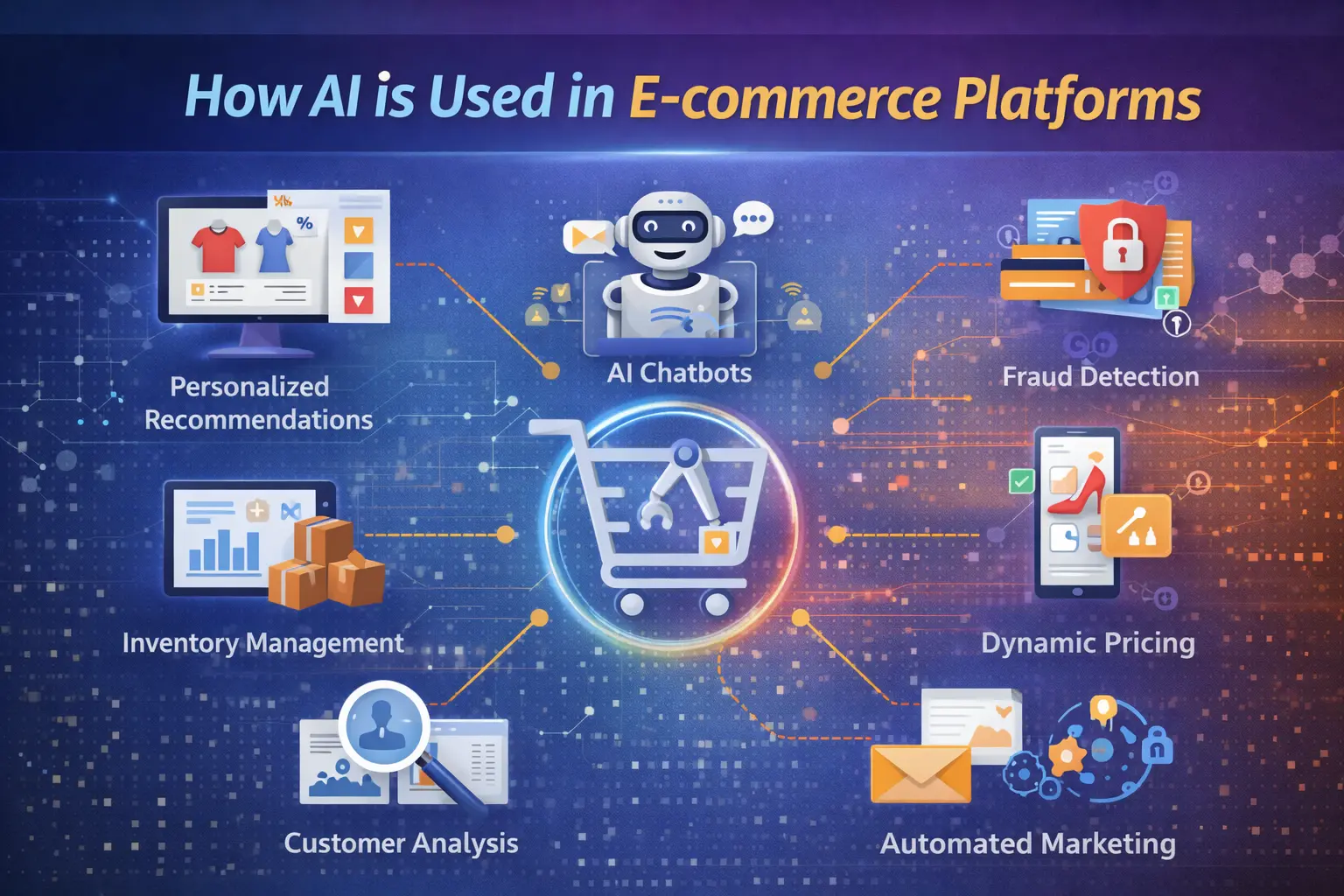
One of the most common uses of AI in e-commerce is personalized product recommendations. Using machine learning algorithms, platforms analyze customer behavior, preferences, and purchase history to suggest relevant products. This approach enhances user experience and increases sales. Many companies use Python-based models to build recommendation engines that drive engagement and conversions.
AI-Powered Chatbots and Customer Support
AI-powered chatbots are widely used to provide instant customer support. These systems can handle queries, track orders, and resolve issues without human intervention. In data analytics, chatbots help businesses analyze customer interactions and improve service quality. This application of AI reduces operational costs while ensuring 24/7 support for users.
Inventory Management and Demand Forecasting
AI helps e-commerce businesses manage inventory more efficiently by predicting demand trends. Using machine learning and historical data, companies can avoid overstocking or stockouts. In Data Science projects, predictive models built with Python are used to forecast demand and optimize supply chain operations.
Fraud Detection and Security
Security is a critical concern in e-commerce, and AI plays a vital role in fraud detection. By analyzing transaction patterns, AI systems can identify suspicious activities in real time. In AI-driven platforms, machine learning models are trained to detect anomalies and prevent fraud, ensuring safe transactions for customers.
Dynamic Pricing Strategies
AI enables dynamic pricing, where product prices are adjusted based on demand, competition, and customer behavior. In data analytics, this strategy helps businesses maximize profits while staying competitive. Tools like Power BI allow companies to visualize pricing trends and make informed decisions using insights generated from AI systems.
Customer Behavior Analysis
Understanding customer behavior is essential for e-commerce success. AI helps analyze browsing patterns, purchase history, and user interactions to gain valuable insights. In Data Science, these insights are used to create targeted marketing strategies and improve customer retention through advanced machine learning techniques.
Visual Search and Image Recognition
AI-powered visual search allows customers to upload images and find similar products online. This feature uses machine learning and computer vision techniques to enhance the shopping experience. In data analytics, visual search data helps businesses understand trends and preferences, making it a powerful tool in modern e-commerce platforms.
Automation in Marketing Campaigns
AI automates marketing campaigns by analyzing user data and delivering personalized advertisements. In AI systems, algorithms determine the best time, platform, and content for marketing efforts. Using tools like Power BI, marketers can track campaign performance and optimize strategies based on real-time data analytics insights.
Conclusion: The Future of AI in E-commerce
AI continues to transform e-commerce platforms by improving efficiency, personalization, and decision-making. In Data Science and machine learning, the use of AI is expanding rapidly, enabling businesses to stay competitive in a digital world. With the support of tools like Python and Power BI, companies can leverage data analytics to create smarter, more responsive e-commerce experiences.