
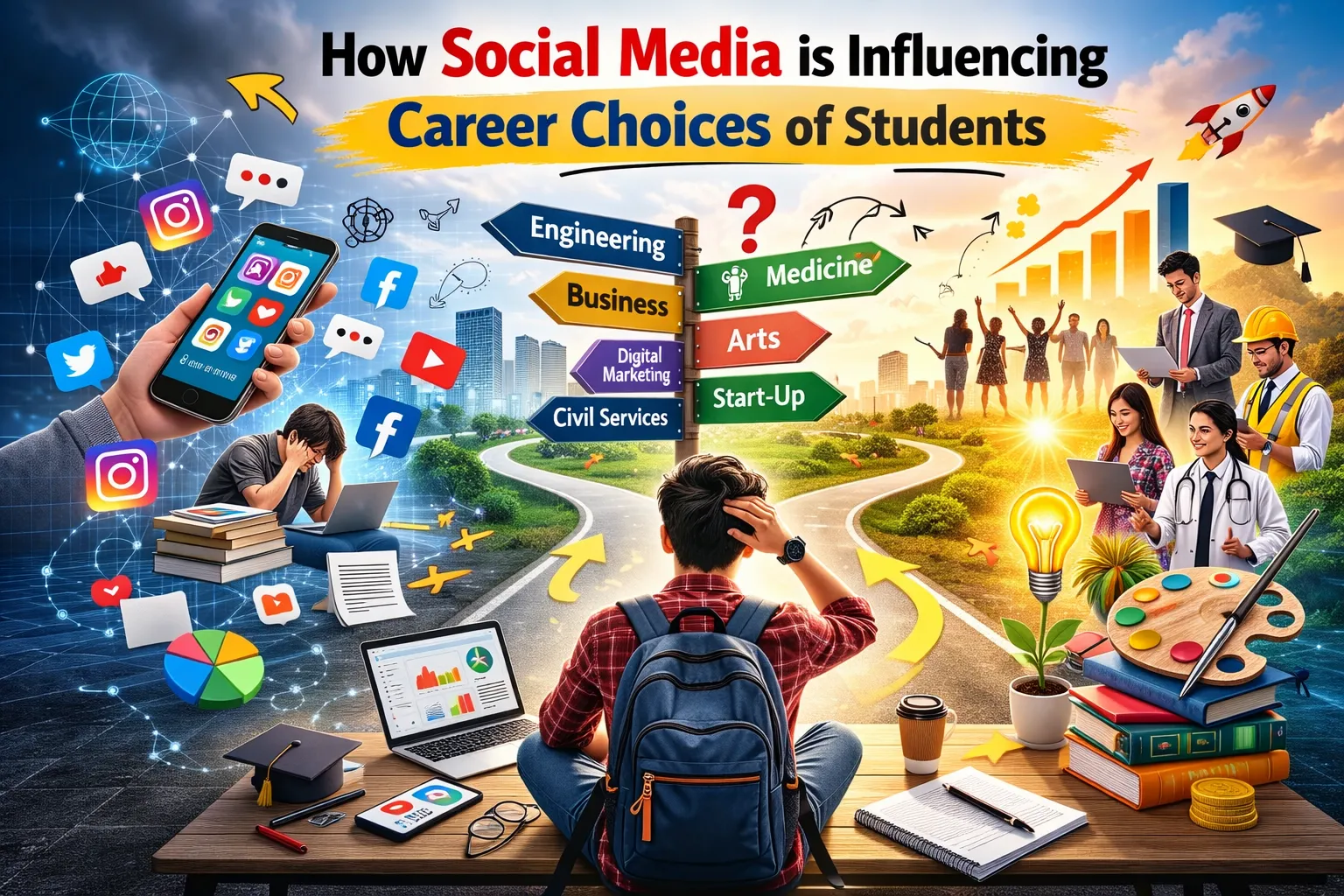
The Growing Power of Social Media in Career Decisions
Social media has rapidly transformed from a simple communication tool into a powerful influence on students’ career choices. Platforms that once focused mainly on entertainment and social connection now serve as major sources of information about professions, income potential, lifestyle goals, and success stories. Today’s students are constantly exposed to curated career journeys, day-in-the-life videos, and viral success narratives. While this exposure can be inspiring, it also significantly shapes how young people perceive different career paths. Understanding this influence is essential for students, parents, and educators who want to support smarter decision-making.
Why Students Turn to Social Media for Career Guidance
Many students increasingly rely on social media because it feels more accessible and relatable than traditional career counseling. Short-form videos, reels, and creator content present careers in a visually engaging and simplified manner. Students often feel they are getting “real-world” insights directly from professionals. Additionally, algorithms continuously push career-related content based on user interest, which reinforces certain career ideas repeatedly. Over time, this repeated exposure can strongly shape preferences, sometimes even more than formal education or parental advice.
The Positive Impact: Exposure to New Career Paths
One of the most beneficial effects of social media is increased awareness of diverse career opportunities. In the past, students mainly knew about conventional professions such as engineering, medicine, law, or government jobs. Today, social media highlights emerging fields like digital marketing, UI/UX design, content creation, data science, gaming, and entrepreneurship. This expanded visibility helps students discover careers that better match their interests and skills. For many young people, social media has opened doors to possibilities they might never have explored through textbooks alone.
Role Models and Career Inspiration Online
Social media creators often act as informal career role models. Students watching professionals share their daily routines, struggles, and achievements may feel motivated to pursue similar paths. Seeing someone from a relatable background succeed can boost confidence and ambition. This is particularly powerful for students in smaller towns or underserved communities who previously had limited exposure to diverse professions. When used wisely, social media can democratize career awareness and inspire goal-setting.
The Hidden Risk of Unrealistic Career Glamour
Despite its benefits, social media frequently presents an overly polished version of professional life. Many creators highlight only the rewards—high income, flexible lifestyle, or fame—while rarely showing the years of effort, failures, and uncertainty behind the scenes. This creates career glamourization. Students may develop unrealistic expectations about how quickly success comes or how easy certain fields are. When reality does not match the online image, disappointment and career confusion often follow.
Comparison Culture and Career Anxiety
Constant comparison is one of the most harmful psychological effects of social media on students. When teenagers repeatedly see peers announcing achievements, internships, or early success stories, they may feel left behind. This comparison pressure can push students toward career choices driven by fear rather than genuine interest. Instead of asking “What suits me best?”, many begin asking “What is everyone else doing?” Over time, this mindset increases anxiety and weakens authentic decision-making.
The Rise of Trend-Driven Career Choices
Social media trends can strongly influence which careers suddenly become “popular” among students. Fields like coding, stock trading, content creation, and AI-related roles often experience waves of interest after going viral online. While some students genuinely belong in these fields, others may follow trends without proper self-assessment. Trend-driven decisions increase the risk of a mismatch between personality, skills, and career demands. This is one of the biggest reasons why some students later feel dissatisfied or stuck.
Influence of Short-Form Content on Attention and Decisions
The dominance of short-form content has also changed how students process career information. Quick reels and bite-sized videos simplify complex professions into 30–60 second highlights. While this makes information easy to consume, it can oversimplify career realities. Important factors like required education, long-term growth, job stress, and market competition often get ignored. As a result, students may make decisions based on incomplete understanding rather than deep research.
How Social Media Algorithms Shape Career Exposure
Many students do not realize that what they see online is heavily controlled by algorithms. Once a student watches a few videos about a particular career, platforms begin showing similar content repeatedly. This creates an echo chamber effect where one career path appears more dominant than it actually is. Over time, students may assume that a heavily promoted field is the best or safest option. Being aware of algorithm bias is crucial for balanced career exploration.
Smart Ways Students Can Use Social Media for Career Research
Social media itself is not the problem—uncritical consumption is. Students can use these platforms wisely by cross-checking information, following credible professionals, and looking for realistic career breakdowns rather than only motivational content. Watching long-form interviews, reading industry reports, and talking to real professionals offline helps balance online impressions. Creating a habit of deep research alongside social media browsing leads to far better decisions.
Guidance for Parents and Educators in the Digital Age
Parents and teachers need to understand that social media is now a major career influence, whether they approve of it or not. Instead of dismissing it completely, they should help students interpret what they see online. Encouraging open discussions about viral career trends, income myths, and real job requirements builds critical thinking. Schools can also integrate digital career literacy into counseling programs so students learn how to evaluate online information responsibly.
Building Independent Career Thinking in Students
The ultimate goal is to help students become independent career thinkers rather than passive content consumers. This involves strengthening self-awareness, encouraging real-world exposure, and teaching decision-making skills. When students clearly understand their strengths, interests, and values, they become less vulnerable to online hype. Social media then becomes a tool for exploration rather than a source of confusion.
Final Thoughts
Social media is undeniably reshaping how students view and choose careers. It has opened valuable doors by increasing awareness and providing relatable role models. However, it has also introduced risks such as unrealistic expectations, comparison stress, and trend-driven decision-making. The key lies in balanced usage. When students combine social media insights with self-reflection, real-world research, and supportive guidance, they can make confident and well-informed career choices in the digital age.