
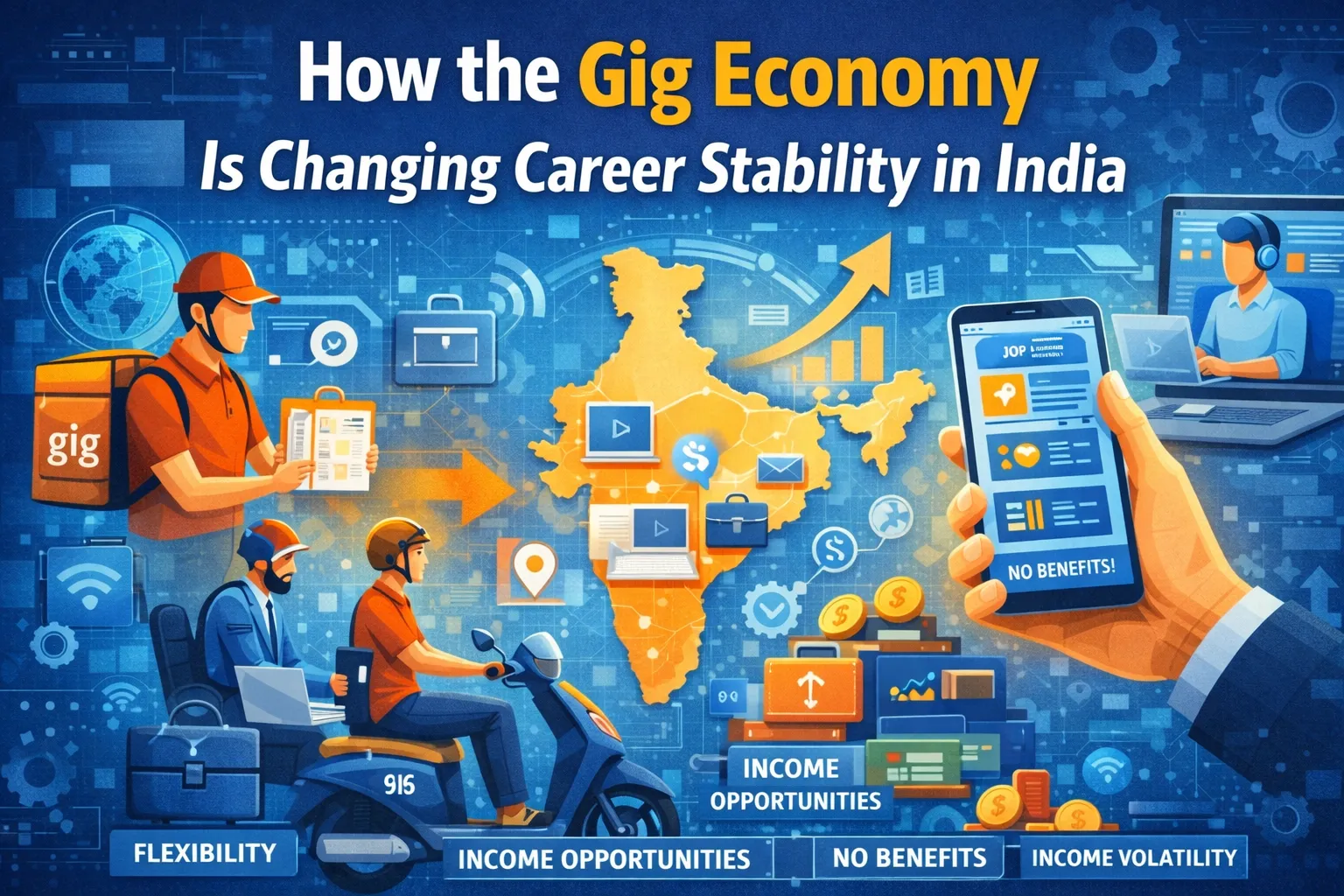
Understanding the Rise of the Gig Economy in India
The gig economy in India has grown rapidly over the past decade, transforming the way people work, earn, and build careers. Traditionally, career stability in India was associated with long-term employment in government sectors, multinational corporations, or established private companies. However, digital transformation, smartphone penetration, affordable internet access, and the rise of app-based platforms have reshaped employment structures. Today, millions of Indians are engaged in freelance, contract-based, and platform-driven work across industries such as ride-sharing, food delivery, digital marketing, content creation, IT services, and consulting.
The gig economy refers to a labor market characterized by short-term contracts, flexible assignments, and freelance opportunities instead of permanent employment. Platforms such as ride-hailing apps, food delivery services, and freelance marketplaces have enabled workers to earn independently. This shift has brought both opportunities and challenges, particularly in terms of career stability, income security, and long-term growth.
Factors Driving the Growth of Gig Work in India
Several economic and technological factors have fueled the expansion of gig employment in India. First, the rapid digitization of businesses has created demand for specialized skills on a project basis. Companies prefer hiring freelancers for short-term assignments rather than committing to full-time employees, especially for roles in graphic design, software development, social media management, and content writing.
Second, the startup ecosystem in India has grown significantly, encouraging flexible hiring models. Emerging businesses often operate with limited budgets and prefer contract-based professionals to reduce fixed costs. Third, young professionals increasingly value flexibility and work-life balance. Many millennials and Gen Z workers prefer freelancing to traditional nine-to-five jobs, seeking autonomy and multiple income streams.
Additionally, economic disruptions such as the COVID-19 pandemic accelerated remote work adoption. Many professionals who lost traditional jobs turned to gig platforms for income, further normalizing freelance and contract work.
The Changing Meaning of Career Stability in India
Career stability in India historically meant job security, predictable income, employee benefits, and long-term growth within a single organization. Government jobs were considered the gold standard for stability due to pensions and lifetime employment security. However, the gig economy is redefining stability.
In the modern context, career stability increasingly revolves around employability rather than employment. Instead of relying on one employer, gig workers build stability by diversifying clients and continuously upgrading skills. Stability is no longer about staying in one company for decades but about maintaining a consistent demand for one’s expertise.
This shift reflects a broader change in mindset. Professionals are beginning to prioritize adaptability, digital skills, and personal branding over traditional job permanence. While this model offers flexibility, it also introduces uncertainty that must be managed strategically.
Advantages of the Gig Economy for Indian Professionals
The gig economy offers numerous advantages for workers across India. One of the most significant benefits is flexibility. Gig workers can choose projects, set schedules, and often work from anywhere. This is particularly beneficial for students, homemakers, retirees, and individuals in smaller cities seeking remote opportunities.
Another advantage is income diversification. Unlike traditional employment, gig workers can collaborate with multiple clients simultaneously, reducing dependency on a single source of income. Skilled freelancers in technology, digital marketing, and consulting can often earn competitive incomes, sometimes exceeding traditional salaried roles.
Gig work also encourages entrepreneurship. Freelancers learn to manage clients, negotiate contracts, market their services, and build personal brands. Over time, many gig workers transition into agency owners or startup founders, creating employment for others.
Challenges to Career Stability in the Gig Economy
Despite its benefits, the gig economy presents several challenges that directly impact career stability in India. Income volatility is one of the most pressing concerns. Unlike salaried jobs with fixed monthly pay, gig work income fluctuates depending on demand, competition, and project availability.
Another major issue is the lack of social security benefits. Many gig workers do not receive health insurance, provident fund contributions, paid leave, or retirement benefits. This absence of safety nets creates financial vulnerability, especially during health emergencies or economic slowdowns.
Job insecurity and intense competition also pose challenges. With low entry barriers in many gig platforms, competition can drive down pricing. Additionally, algorithm-driven platforms often control visibility and job allocation, limiting worker autonomy.
Impact on Traditional Employment Structures in India
The growth of gig work is influencing how traditional companies approach hiring. Many organizations now adopt hybrid workforce models that combine full-time employees with freelancers and consultants. This approach allows businesses to remain agile while controlling operational costs.
However, this shift can reduce the availability of permanent roles, especially in sectors where project-based work is feasible. Entry-level professionals may find fewer long-term employment opportunities as companies rely more on contract talent.
At the same time, gig work is pushing traditional organizations to improve work culture, compensation, and flexibility. To retain talent, companies must offer competitive benefits and growth opportunities that rival the autonomy of freelance work.
Government Policies and Regulatory Developments in India
Recognizing the rapid growth of gig employment, the Indian government has begun introducing frameworks to address worker protection. Discussions around social security codes and platform worker rights aim to provide financial and legal safeguards.
Efforts to include gig workers under social security schemes represent a significant step toward improving career stability. However, implementation challenges remain, particularly in tracking income, contributions, and eligibility.
Regulatory clarity will play a crucial role in shaping the future of the gig economy in India. Balanced policies must protect workers without discouraging innovation and entrepreneurship.
Skill Development and Continuous Learning as Stability Factors
In the gig economy, skill relevance determines career stability. Professionals who continuously upgrade their technical and soft skills are more likely to secure consistent projects. Fields such as artificial intelligence, digital marketing, cybersecurity, data analytics, and app development offer strong freelance demand.
Certifications, online courses, and portfolio development enhance credibility. Personal branding through LinkedIn, professional websites, and networking platforms also improves visibility. Unlike traditional employment, where promotions may depend on organizational hierarchy, gig workers grow by expanding expertise and client networks.
Continuous learning transforms uncertainty into opportunity. By staying updated with industry trends, gig professionals can command higher rates and build long-term client relationships.
Urban and Rural Impact of the Gig Economy in India
The gig economy is not limited to metropolitan cities. Digital platforms have opened income opportunities for individuals in Tier-2 and Tier-3 cities. Remote work allows skilled professionals from smaller towns to access national and international clients.
However, disparities in digital access, skill training, and financial literacy still exist. Bridging these gaps through government initiatives and private sector training programs can enhance inclusive growth.
For rural India, gig work in logistics, delivery services, and micro-entrepreneurship is creating new income streams. While these opportunities improve financial participation, ensuring fair wages and worker protection remains essential.
The Future of Career Stability in India’s Gig-Driven Economy
The gig economy is not replacing traditional employment entirely but reshaping the definition of career stability. The future likely lies in a blended model where professionals balance full-time roles with freelance assignments or side projects. Portfolio careers, where individuals manage multiple income streams, are becoming increasingly common.
For India, a country with a young and dynamic workforce, the gig economy presents immense potential for economic growth. However, sustainable career stability will depend on policy support, financial planning awareness, skill development, and responsible platform governance.
In conclusion, the gig economy is fundamentally transforming career stability in India. It offers flexibility, entrepreneurial opportunities, and broader access to work, but also introduces income volatility and limited social security. As professionals adapt and policymakers refine regulations, India’s workforce is entering a new era where stability is built not on permanence, but on adaptability, skills, and resilience.