
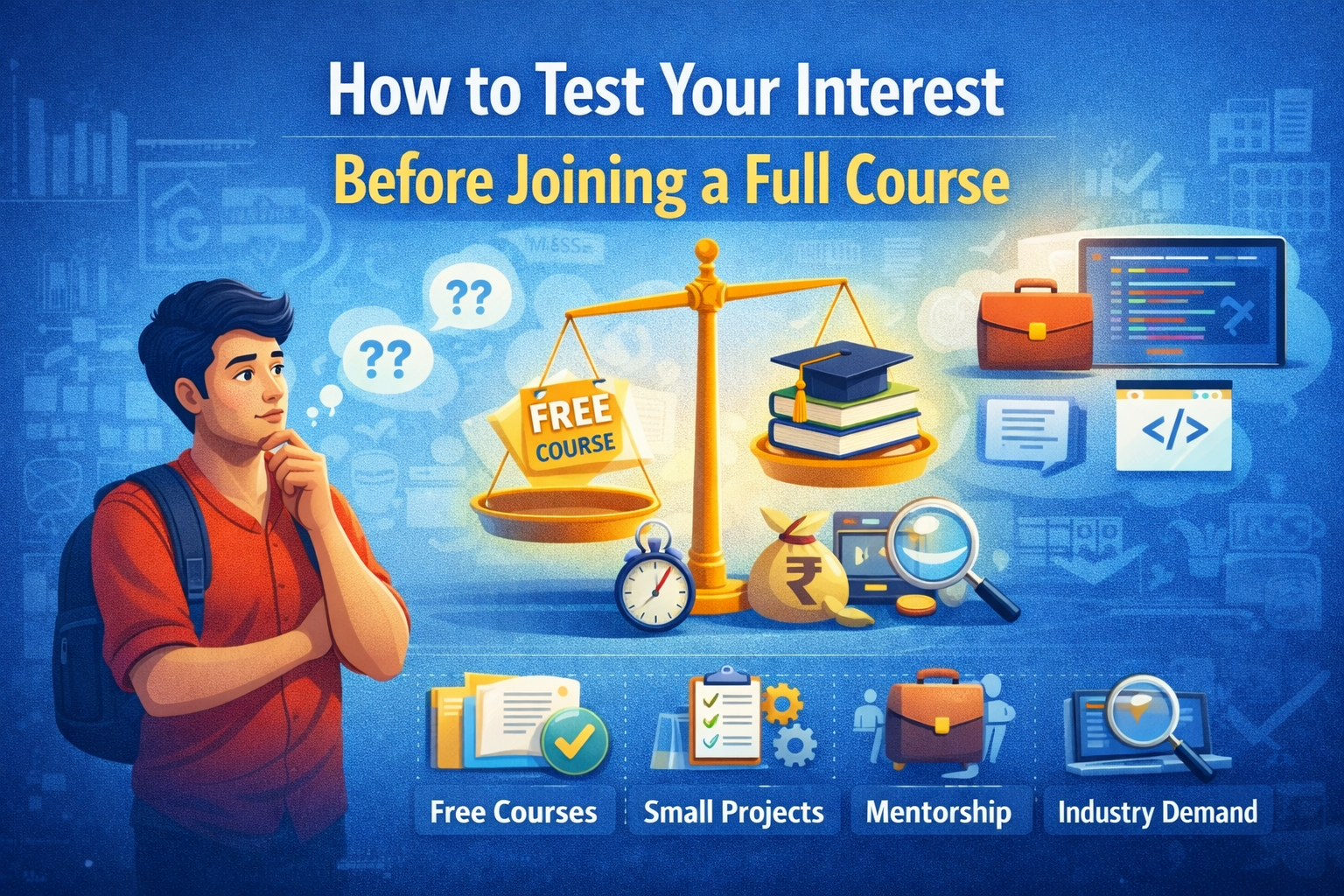
Why Testing Your Interest Before Enrolling Is Crucial
Choosing a full-time course or certification is a major decision that requires time, money, and emotional investment. Many students enroll in programs based on trends, peer pressure, or marketing promises, only to realize later that the field does not truly interest them. In today’s fast-changing job market, where industries evolve rapidly due to technology and innovation, making informed education choices is more important than ever.
Companies like Google and Microsoft prioritize skills and practical knowledge over degrees alone. This means students must carefully evaluate not just the career prospects but also their genuine interest in the subject. Testing your interest before committing to a full course helps you avoid wasted time, financial loss, and career dissatisfaction.
Understanding the Difference Between Curiosity and Commitment
Many students confuse temporary curiosity with long-term interest. Watching a few YouTube videos about data science or digital marketing can create excitement, but excitement alone does not sustain long-term commitment. A full course may require months of learning, assignments, projects, and continuous practice.
Before enrolling, ask yourself: Do I enjoy learning about this topic even when it becomes challenging? Am I willing to practice consistently? Genuine interest shows up when you are ready to invest effort even without immediate rewards. Testing your interest helps you distinguish between a passing trend and a potential career path.
Start with Free Introductory Courses and Workshops
One of the easiest ways to test your interest is by enrolling in free introductory courses. Platforms like Coursera and Udemy offer beginner-level modules that provide an overview of various subjects. These short courses allow you to explore the fundamentals without making a financial commitment.
Free webinars, bootcamps, and demo classes are also valuable. Attend a few sessions and observe your engagement level. Are you excited to learn more? Do you find yourself researching additional resources after the session? These are positive indicators of genuine interest.
Work on a Small Practical Project
Interest becomes clearer when theory meets practice. Instead of only reading about a field, try completing a small project. For example, if you are considering digital marketing, create a sample social media campaign. If you are thinking about coding, build a basic website or simple application.
Hands-on experimentation reveals whether you enjoy the actual work involved. Many learners discover that they like the idea of a field but not the daily tasks required. Testing your interest through projects provides realistic insight into the profession.
Shadow Professionals and Seek Mentorship
Talking to professionals working in your desired field can give you practical clarity. Platforms like LinkedIn make it easier to connect with industry experts. Request informational interviews and ask about their daily responsibilities, challenges, and growth opportunities.
If possible, shadow a professional for a day or intern for a short period. Observing real workplace dynamics helps you understand whether the career matches your expectations. Mentorship also guides skills and preparation strategies.
Analyze Your Strengths and Natural Abilities
Testing your interest is not only about enjoyment; it is also about alignment with your strengths. For example, analytical thinkers may thrive in data-related roles, while creative individuals may excel in design or marketing.
Self-assessment tools, personality tests, and career aptitude assessments can provide insights into your preferences. When your interest aligns with your natural abilities, long-term success becomes more achievable.
Evaluate Industry Demand Before Full Commitment
Even if you are interested in a subject, it is important to assess market demand. Research job trends, salary growth, and future opportunities. Certifications from reputed organizations such as Amazon Web Services or IBM often have strong industry recognition.
Search job portals to see how frequently certain skills appear in job listings. If demand is growing and aligns with your interest, it strengthens your decision to pursue the course seriously.
Consider Time Commitment and Learning Style
Different courses require different levels of dedication. Some demand daily practice, while others focus more on theoretical understanding. Evaluate whether the learning style suits you.
For example, technical fields may require consistent coding practice, while management courses may involve case studies and group discussions. If the course structure matches your preferred learning style, your chances of sustained engagement increase significantly.
Track Your Consistency Over 30 Days
A practical method to test your interest is the 30-day rule. Spend 30 days consistently learning about the subject for at least 30–60 minutes daily. Observe your motivation levels.
Do you look forward to learning each day? Or do you struggle to maintain focus? Consistency over a month reveals whether your interest is deep-rooted or temporary. This short experiment can save you from long-term regret.
Calculate Opportunity Cost Before Enrolling
Before committing to a full course, consider what you might be giving up. Are you leaving a job? Are you postponing another opportunity? Calculate both financial and time investments.
A course may seem attractive, but if it requires sacrificing a stable income or delaying career progress in another field, you must evaluate whether your interest justifies that cost. Smart decisions combine passion with practical thinking.
Common Mistakes Students Should Avoid
Many students enroll in courses because friends are joining or because the field is trending. Social media hype can create unrealistic expectations. Avoid making decisions based solely on advertisements or influencer recommendations.
Another mistake is ignoring personal preferences. Just because a field promises high salaries does not mean it will suit you. Long-term career satisfaction comes from alignment between interest, skills, and market demand.
Final Thoughts: Choose Wisely, Commit Confidently
Testing your interest before committing to a full course is a strategic and responsible approach. Education is an investment, and thoughtful decision-making ensures better returns in terms of career growth and satisfaction.
By exploring free resources, working on small projects, seeking mentorship, analyzing strengths, and evaluating industry demand, you can make informed choices. Instead of rushing into long-term commitments, take time to validate your interest. When you finally enroll in a full course, you will do so with clarity, confidence, and strong motivation to succeed.