
Introduction: A Defining Moment for India’s AI Leadership
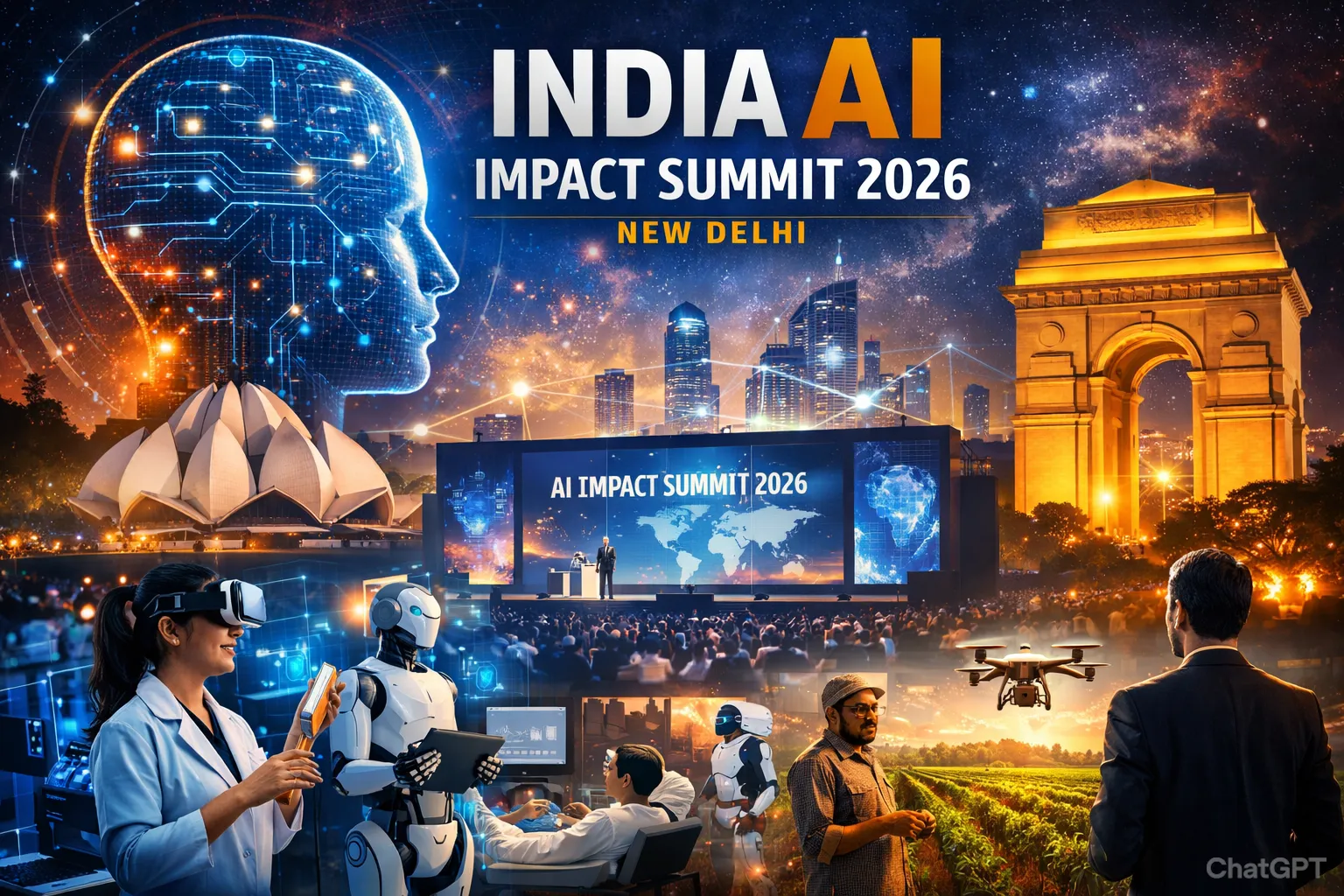
The India AI Impact Summit 2026, held in New Delhi, marked a historic turning point in India’s technological journey. As artificial intelligence reshapes global economies, governance systems, and job markets, this summit positioned India at the center of global AI conversations. Bringing together policymakers, global tech leaders, AI researchers, startups, investors, and students, the summit was more than just a conference; it was a strategic declaration of India’s ambition to become a global leader in AI. The event reflected India’s commitment to building inclusive, ethical, and scalable AI solutions not just for urban innovation hubs but for the broader population across Bharat. With massive participation and high-level discussions, the summit demonstrated that India is no longer just adopting AI technologies but actively shaping the future of artificial intelligence.
Major Highlights and Key Announcements from the Summit
One of the strongest aspects of the summit was the scale of announcements made across infrastructure, policy, research, and industry collaboration. The government emphasized expanding AI compute infrastructure, including large-scale GPU deployments and enhanced data center capabilities to support domestic AI model development. There were commitments toward strengthening India’s semiconductor ecosystem, promoting indigenous AI research, and building sovereign AI capabilities. Several partnerships were announced between government bodies and private technology firms to accelerate AI adoption in public services. The summit also highlighted multilingual AI models tailored for Indian languages, ensuring that artificial intelligence reaches the last mile. These announcements collectively signaled a shift from theoretical discussions to practical implementation and readiness of infrastructure.
Policy Shifts and the New AI Governance Framework
A central theme of the summit was responsible AI governance. Policymakers introduced discussions around safety, transparency, accountability, and fairness in AI systems. The focus was on creating regulatory frameworks that balance innovation with ethical safeguards. India’s approach emphasized a “pro-innovation but pro-safety” model, ensuring startups and enterprises can innovate without excessive regulatory burdens while still maintaining global standards of trust. Conversations also revolved around data protection, algorithmic bias mitigation, cybersecurity preparedness, and AI risk assessment mechanisms. This policy direction aims to build global confidence in Indian AI systems and attract international collaboration. The summit made it clear that India wants to lead not only in AI innovation but also in AI responsibility.
Startup Innovations and Emerging AI Ecosystem
The summit served as a launchpad for emerging AI startups across sectors such as healthcare diagnostics, agritech automation, fintech analytics, edtech personalization, and generative AI platforms. Indian startups showcased cutting-edge solutions, including AI-powered medical imaging systems, predictive crop advisory platforms, conversational AI in regional languages, and enterprise automation tools. Investors showed strong interest in scalable AI SaaS products built in India for global markets. The vibrant startup participation highlighted the maturity of India’s AI ecosystem, which is rapidly moving from service-based outsourcing to deep-tech innovation. The presence of incubators, accelerators, and venture capital firms at the summit indicated strong funding momentum for AI-driven ventures in 2026 and beyond.
AI Infrastructure Expansion: GPUs, Data Centers, and Compute Power
Artificial intelligence development depends heavily on computational infrastructure, and the summit placed significant emphasis on building India’s AI backbone. Discussions around expanding GPU clusters, strengthening cloud infrastructure, and building AI-ready data centers dominated technical panels. There was a clear recognition that without robust compute capacity, India would struggle to compete globally in large language models and deep learning systems. Investments in AI supercomputing facilities and public-private cloud collaborations were highlighted as strategic moves. By focusing on infrastructure readiness, India aims to reduce dependency on foreign compute resources and create a self-reliant AI innovation ecosystem capable of training large-scale models domestically.
AI for Bharat: Multilingual and Inclusive Artificial Intelligence
A distinctive feature of India’s AI roadmap presented at the summit was its emphasis on inclusivity. Unlike many global AI strategies centered only around enterprise automation, India’s vision strongly emphasized AI for social impact. Multilingual AI tools capable of understanding and generating content in Indian regional languages were showcased as transformative solutions. These innovations aim to support rural education, digital governance, healthcare accessibility, and agricultural advisory services. The concept of “AI for Bharat” focuses on ensuring that AI adoption does not widen the digital divide but instead bridges it. This inclusive vision differentiates India’s AI development model from many Western counterparts.
AI in Healthcare, Agriculture, and Education
Sector-specific applications of AI received strong attention during the summit. In healthcare, AI-powered diagnostic tools and predictive analytics systems were presented as cost-effective solutions to improve rural medical services. In agriculture, AI-driven weather prediction models and crop health monitoring systems promise to enhance farmer productivity. In education, adaptive learning platforms and AI tutors are expected to revolutionize personalized learning experiences. These real-world applications demonstrate that AI in India is not limited to chatbots or automation—it is being positioned as a foundational technology to solve large-scale socio-economic challenges.
Global Impact and Geopolitical Significance
The summit also carried strong geopolitical undertones. As global AI competition intensifies among major economies, India’s hosting of a high-level AI summit signaled its strategic ambitions. Discussions touched upon international AI collaboration, cross-border data governance, and ethical AI standards. India positioned itself as a neutral and collaborative player capable of bridging global AI divides. This diplomatic positioning strengthens India’s global tech credibility and enhances its role in shaping international AI frameworks. By balancing innovation, regulation, and inclusivity, India aims to carve out a unique global identity in the AI race.
AI Jobs, Skills, and Workforce Transformation
Another major discussion area was employment and skill transformation. With automation reshaping industries, the summit emphasized large-scale AI skilling programs, industry-academia partnerships, and workforce reskilling initiatives. Panels discussed how AI will not simply eliminate jobs but transform job roles, creating demand for AI engineers, data scientists, machine learning specialists, AI ethics consultants, and prompt engineers. Educational institutions were encouraged to align curricula with AI industry needs. The summit reinforced the idea that AI literacy will become a fundamental skill in the coming decade, much like computer literacy did in the previous one.
Challenges, Criticism, and Areas for Improvement
While the summit was largely celebrated, discussions also acknowledged operational and structural challenges. Questions were raised around implementation speed, equitable access to AI infrastructure, startup funding distribution, and regulatory clarity. Critics highlighted the importance of moving from announcements to measurable outcomes. The government and industry leaders responded by stressing phased implementation strategies and transparent policy evolution. Recognizing these challenges adds credibility to India’s AI journey and ensures that future summits focus on tangible progress metrics.
Long-Term Impact on India’s AI Ecosystem
The long-term implications of the summit extend beyond immediate announcements. By strengthening infrastructure, governance frameworks, startup ecosystems, and workforce development, India is building a sustainable AI growth model. The summit may accelerate India’s transformation into a global AI research and innovation hub. Increased foreign investments, domestic innovation incentives, and cross-sector AI integration could significantly boost India’s digital GDP contribution. Over the next five to ten years, the policies and partnerships formed at this summit could redefine India’s technological competitiveness on the global stage.
Conclusion: A New Chapter in India’s AI Journey
The India AI Impact Summit 2026 in New Delhi was not merely an industry gathering; it was a strategic milestone in India’s digital evolution. By combining infrastructure expansion, policy reform, startup empowerment, inclusive innovation, and global collaboration, India demonstrated its readiness to lead in the AI era. The summit laid the foundation for a future where artificial intelligence becomes a catalyst for economic growth, social transformation, and global technological leadership. As India moves forward, the real measure of success will lie in implementation, scalability, and inclusive impact—but the direction is clear: India is firmly on the path to becoming a global AI powerhouse.