
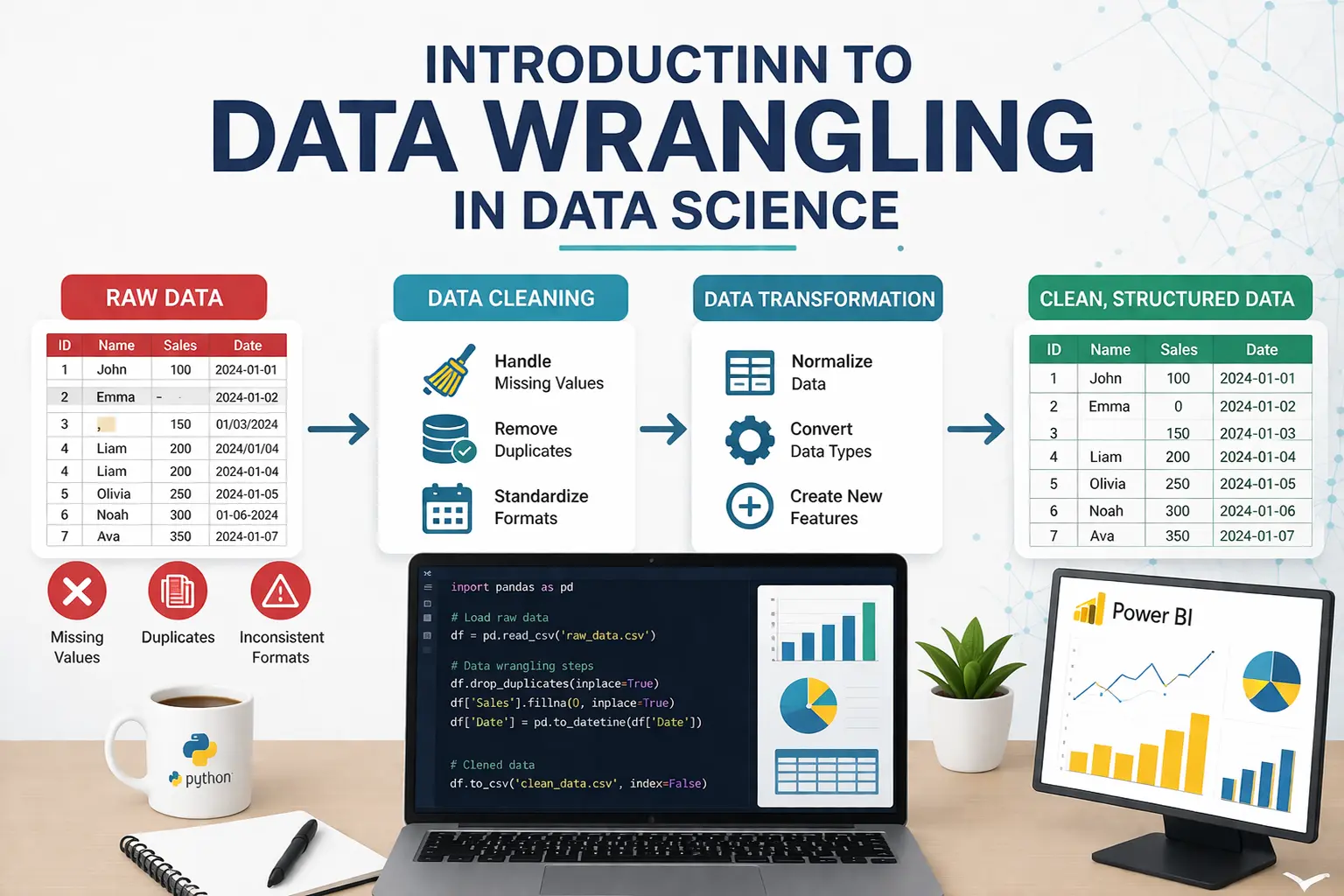
Introduction to Data Wrangling in Data Science
Data wrangling is the process of cleaning, transforming, and organizing raw data into a usable format for analysis. It is one of the most important steps in any data-driven workflow because raw data is often incomplete or inconsistent. In fields like Data Science and data analytics, data wrangling ensures that the dataset is structured properly before applying any analytical or predictive techniques.
Understanding the Need for Data Wrangling
Raw data collected from multiple sources is rarely ready for direct use. It may contain missing values, duplicates, or errors that can impact results. Data wrangling helps fix these issues and prepares the data for further processing. In AI and machine learning, well-prepared data is essential for building accurate and reliable models.
Key Steps Involved in Data Wrangling
Data wrangling typically includes several steps such as data collection, cleaning, transformation, and validation. Cleaning involves handling missing values and removing duplicates, while transformation focuses on formatting data for analysis. In Python and Data Science workflows, these steps are often automated using libraries to improve efficiency.
Importance of Data Cleaning in Wrangling
Data cleaning is a core part of data wrangling as it directly affects the quality of insights generated. Incorrect or inconsistent data can lead to misleading results. In data analytics and AI, proper data cleaning ensures that models are trained on accurate information, leading to better decision-making.
Data Transformation and Structuring
Once the data is cleaned, it needs to be transformed into a structured format. This may include normalizing data, converting formats, or creating new features. In machine learning and Python, data transformation is crucial for preparing datasets that can be easily processed by algorithms.
Role of Data Wrangling in Visualization Tools
Data wrangling also plays a significant role in preparing data for visualization. Clean and structured data makes it easier to create meaningful dashboards and reports. Tools like Power BI rely on well-wrangled data to present clear insights. In data analytics, this helps businesses understand trends and patterns effectively.
Improving Model Performance Through Data Wrangling
The quality of data directly impacts the performance of machine learning models. Proper data wrangling ensures that irrelevant or incorrect data is removed, which improves model accuracy. In Data Science and AI, this step is essential for building models that perform well on real-world data.
Real-World Applications of Data Wrangling
Data wrangling is used across industries such as healthcare, finance, and e-commerce. It helps in preparing data for tasks like customer analysis, fraud detection, and forecasting. In Python and data analytics, professionals rely on data wrangling to extract meaningful insights from large datasets.
Conclusion on Data Wrangling in Data Science
Data wrangling is a foundational step that ensures data is accurate, consistent, and ready for analysis. It enhances the quality of insights and improves model performance. In fields like Data Science, Power BI, and machine learning, mastering data wrangling is essential for creating effective and reliable data solutions.