
Introduction: How AI Is Transforming Modern Parenting
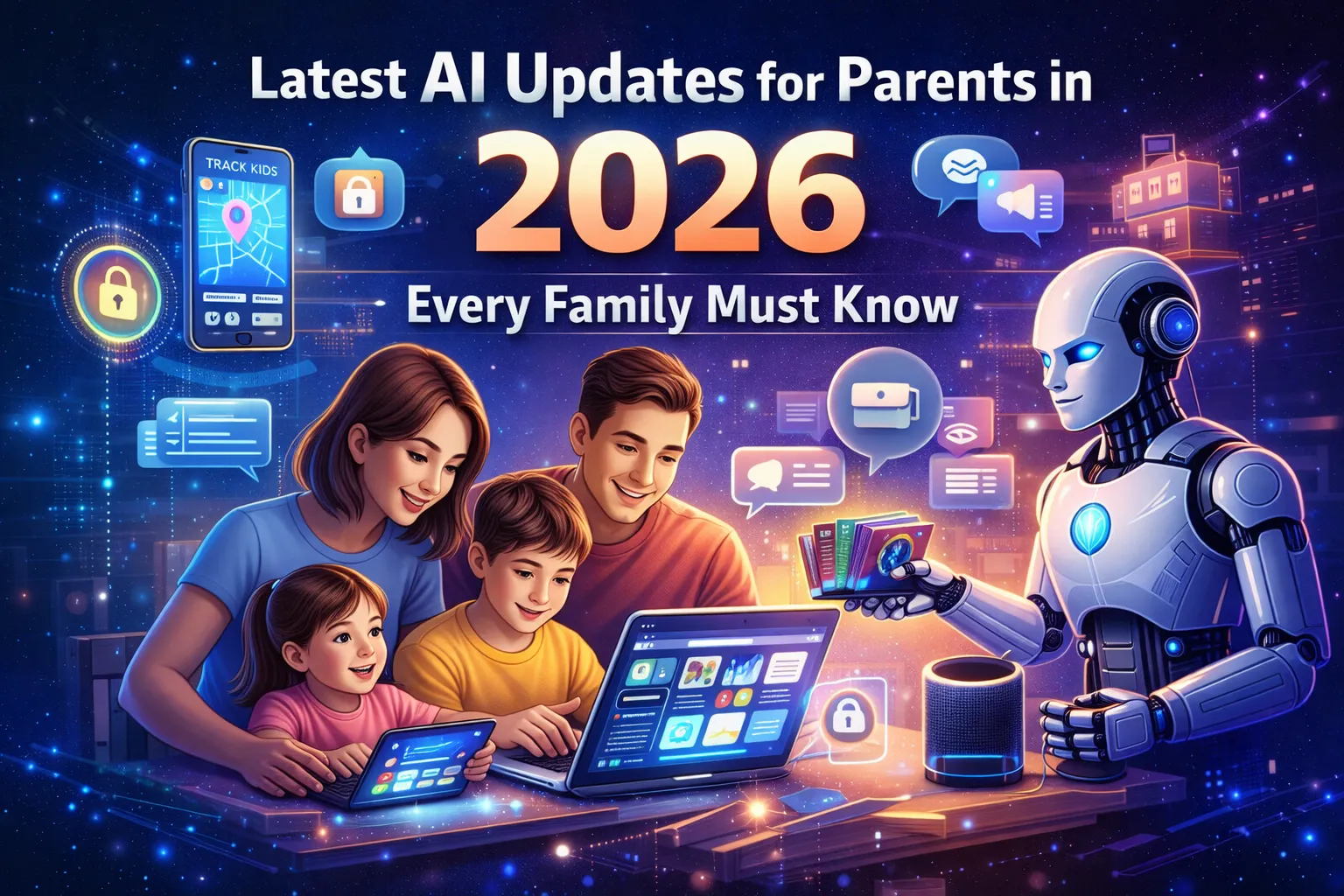
Artificial intelligence is no longer just for tech professionals—it is rapidly becoming part of everyday family life. In 2026, AI tools will help parents manage screen time, support children’s learning, monitor safety, and reduce the mental load of parenting. From AI-powered learning apps to smarter parental controls, the latest updates show a clear shift toward family-focused technology. For parents who want to stay ahead, understanding these new AI developments is essential. This guide explores the most important AI updates for parents released recently and how they can be used safely and effectively.
AI-Powered Learning Apps Are Getting Smarter
One of the biggest trends in 2026 is the rise of AI learning platforms designed specifically for children. New tools use adaptive algorithms to personalize lessons based on each child’s pace, strengths, and weaknesses. Research shows AI tutoring systems can significantly improve learning outcomes through personalized support.
A notable recent development is India’s e-Magic Box app, which uses AI bots to make early learning interactive for children aged 3–8. The platform helps both parents and teachers deliver engaging foundational education.
For parents, this means children can now receive customized learning support at home without expensive tutoring.
Stronger Parental Controls Across Major Platforms
Tech companies are rapidly upgrading parental controls to address safety concerns. Updated controls in Google Family Link and YouTube now make it easier for parents to manage children’s screen time and app usage from one dashboard.
In addition, new safeguards across social platforms allow parents to block or restrict children’s interactions with AI chatbots and view conversation insights. These changes come amid growing concerns about minors interacting with AI companions.
The trend is clear: AI is becoming more child-friendly, but companies are also giving parents stronger oversight tools.
AI Assistants Are Supporting Homework and Creativity
AI chat tools are increasingly being positioned as homework helpers and creativity partners for kids. Some platforms now allow supervised access for children under 13, enabling features like storytelling help and homework assistance while keeping parental monitoring in place.
Experts advise parents to frame AI as a support tool rather than a replacement for thinking so children still develop critical skills.
When used correctly, AI can help explain complex topics, summarize notes, and generate study guides, making home learning more efficient.
AI Is Entering Classrooms Faster Than Ever
The school ecosystem is also changing rapidly. Recent initiatives in India include AI-enabled smart classrooms and digital learning environments that adapt to student levels. Thousands of AI smart boards are being deployed to modernize education delivery.
Additionally, partnerships are bringing AI tools into more than 10,000 school innovation labs across India, potentially impacting millions of students.
For parents, this means children will increasingly interact with AI both at school and at home, making digital literacy an essential life skill.
AI Family Management Tools Reduce Parenting Stress
Beyond education, AI is being used to simplify daily family management. Modern AI parenting products can automate schedules, track developmental milestones, and provide personalized recommendations. These tools aim to reduce the growing cognitive burden many parents face.
Virtual assistants and smart home AI systems are also becoming more family-centric, helping with reminders, safety alerts, and household coordination. As these systems mature, they are expected to become the digital backbone of busy families.
Rise of AI Communication Tools for Parents and Schools
A newer trend in 2026 is AI tools that improve communication between schools and families. Emerging parent-communication AI systems can generate clear school messages, updates, and alerts in seconds, saving time for educators and improving transparency for families.
This shift is particularly valuable for working parents who rely on quick, clear updates about their child’s progress and school activities.
Growing Adoption of Generative AI Among Students
Data from recent surveys shows that generative AI adoption in Indian schools is rising quickly, with about 35% of edtech users already incorporating it into learning routines.
This rapid uptake highlights why parents must become AI-aware. Children are using these tools whether families actively plan for it or not.
The key for parents is guided usage, teaching children when AI is helpful and when independent thinking is necessary.
Key Safety Tips Parents Should Follow in the AI Era
As AI becomes more embedded in children’s lives, responsible use is critical. Parents should keep open conversations about AI, set clear usage boundaries, and monitor tools regularly. Experts recommend treating AI as a collaborative learning aid rather than a shortcut.
It is also important to teach children not to share personal information with AI systems and to verify AI-generated answers. With proper supervision, AI can be powerful and safe.
Future Outlook: What Parents Should Expect Next
Looking ahead, AI will become even more integrated into family life. Expect more emotionally aware AI companions, smarter learning personalization, and deeper integration into school systems. The focus in late 2026 and beyond will likely shift toward agentic AI—tools that can proactively manage tasks for families.
Parents who start understanding AI now will be better prepared to guide their children in an increasingly automated world.
Conclusion: Why Parents Must Stay AI-Aware in 2026
The latest AI updates for parents in 2026 show a clear transformation in how families manage learning, safety, and daily routines. AI is making parenting more data-driven, personalized, and efficient, but it also requires awareness and guidance. By staying informed and setting healthy boundaries, parents can harness AI’s benefits while protecting their children’s development and privacy.
The families that thrive in the coming years will not be those who avoid AI, but those who learn to use it wisely.