
Introduction to Regression in Machine Learning
Regression techniques are widely used in machine learning to analyze relationships between variables and make predictions. In fields like Data Science and AI, regression models help solve real-world problems using data. Two of the most commonly used regression techniques are linear regression and logistic regression.
What is Linear Regression
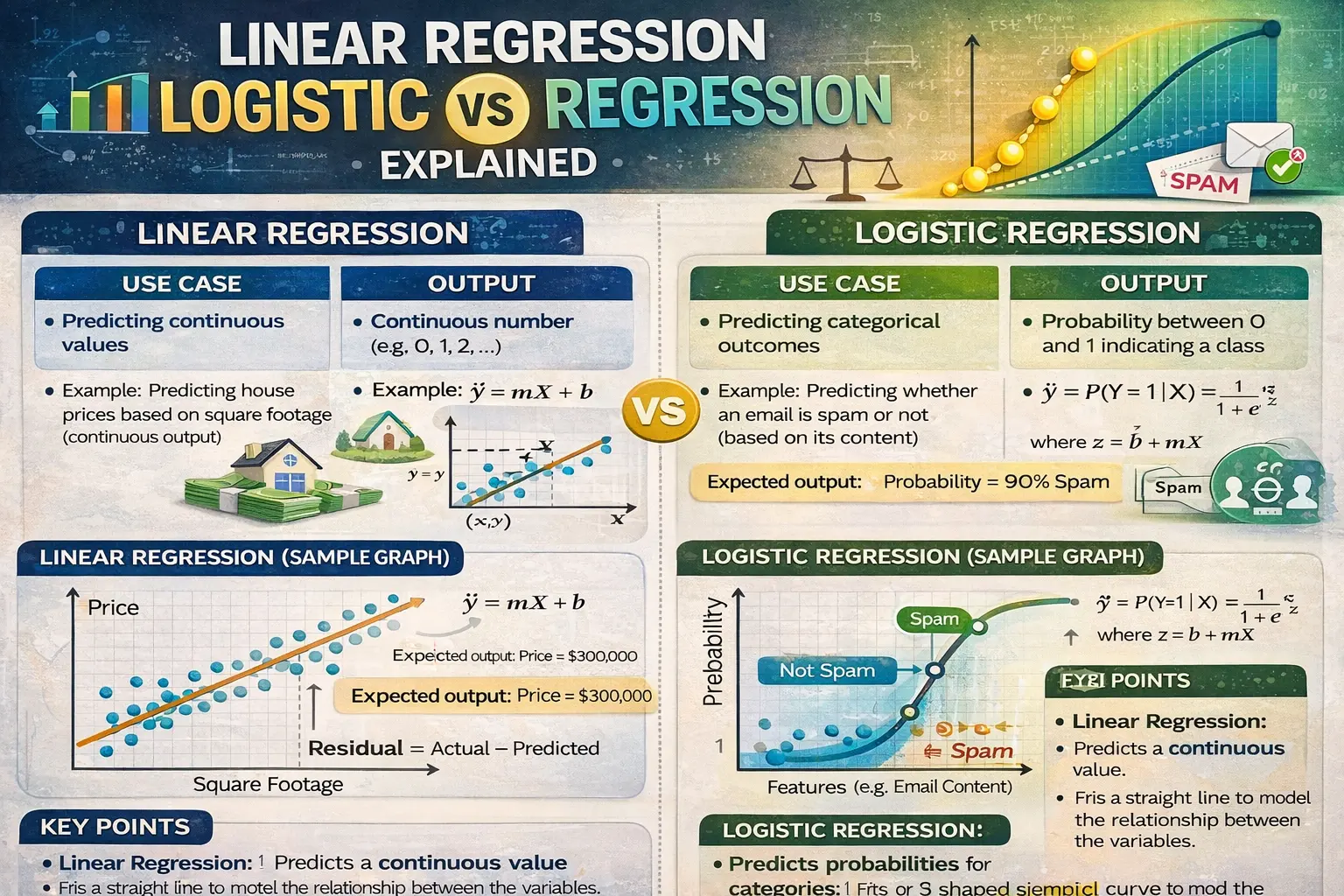
Linear regression is a method used to predict continuous values based on input data. It establishes a linear relationship between independent and dependent variables. In data analytics, this model is often used for forecasting trends, such as predicting sales or prices using Python tools.
What is Logistic Regression
Logistic regression is used for classification problems where the output is categorical. Instead of predicting a continuous value, it predicts probabilities. In machine learning, it is commonly used for tasks like spam detection or disease prediction in AI applications.
Key Differences Between Linear and Logistic Regression
The main difference lies in their output. Linear regression predicts numerical values, while logistic regression predicts categories. In Data Science, choosing the right model depends on the type of problem you are solving and the nature of the dataset.
Mathematical Approach and Functionality
Linear regression uses a straight-line equation to model data, whereas logistic regression uses a sigmoid function to map values between 0 and 1. In data analytics, this difference makes logistic regression suitable for classification tasks and linear regression ideal for prediction tasks.
Use Cases of Linear Regression
Linear regression is widely used in areas like finance, marketing, and sales forecasting. In Data Science, it helps in understanding relationships between variables and predicting future trends using Python-based models.
Use Cases of Logistic Regression
Logistic regression is commonly used in classification problems such as customer churn prediction, fraud detection, and email filtering. In AI systems, it helps classify data into different categories based on probability values.
Advantages of Linear Regression
Linear regression is simple, easy to implement, and easy to interpret. In machine learning, it works well with smaller datasets and provides quick insights, making it a popular choice for beginners in data analytics.
Advantages of Logistic Regression
Logistic regression is efficient for classification problems and provides probability-based outputs. In Data Science, it is widely used because it performs well even with limited data and is easy to implement using Python libraries.
Limitations of Both Models
Both models have limitations. Linear regression assumes a linear relationship, which may not always exist. Logistic regression, on the other hand, may not perform well with complex datasets. In machine learning, understanding these limitations is important for selecting the right approach.
Integration with Visualization Tools
Results from both regression models can be visualized using charts and graphs. In Power BI, these results can be presented through dashboards to make insights more understandable. This is especially useful in data analytics for reporting and decision-making.
Conclusion: Choosing the Right Regression Model
Understanding the difference between linear and logistic regression is essential for anyone working in Data Science, AI, Power BI, machine learning, data analytics, and Python. Each model has its own strengths and use cases. By selecting the appropriate model based on your problem, you can achieve better results and build effective data-driven solutions.