
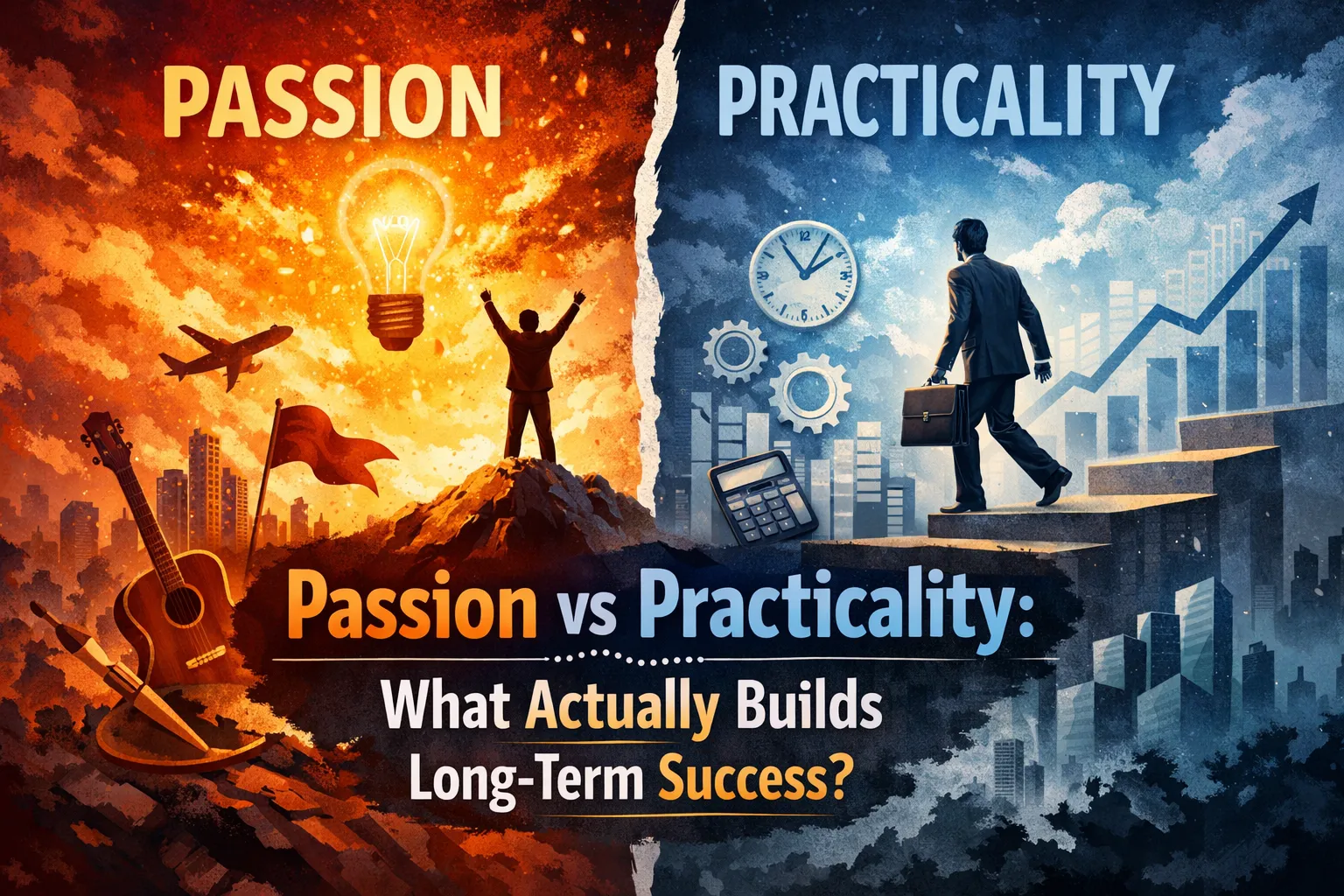
Understanding the Passion vs Practicality Debate
One of the most common career dilemmas students and professionals face is whether to follow passion or choose practicality. Should you pursue what you love, even if it offers uncertain income? Or should you choose a stable, high-demand field that guarantees financial security?
In today’s competitive world, where companies like Google and Microsoft prioritize high-value skills and performance, the debate has become even more relevant. Long-term success is no longer defined only by salary or job title; it also includes fulfillment, growth, and sustainability. Understanding the balance between passion and practicality is essential for building a stable and satisfying career.
What Does It Mean to Follow Your Passion?
Following your passion means choosing a career aligned with your interests, values, and natural enthusiasm. It is about doing work that excites you and gives you intrinsic motivation. Passion-driven individuals often show creativity, persistence, and a deep sense of purpose.
For example, someone passionate about storytelling may pursue content creation, journalism, or filmmaking. A person passionate about technology may explore programming, Artificial Intelligence, or app development. Passion fuels commitment, especially during difficult phases. When challenges arise, passionate individuals are more likely to stay consistent because they genuinely care about their work.
However, passion alone does not guarantee financial stability or career growth. Without strategy, market research, and skill development, passion may remain only a hobby rather than a sustainable profession.
The Role of Practicality in Career Success
Practicality focuses on realistic factors such as industry demand, salary potential, job stability, and growth opportunities. It emphasizes choosing a career based on market trends and long-term viability rather than emotional preference alone.
For instance, certifications in cloud computing from Amazon Web Services or professional programs from IBM often offer strong employability because they align with current market needs.
Practical decision-making helps reduce financial risk. It ensures that your education and efforts translate into measurable returns. However, choosing a career solely for money without interest can lead to burnout, dissatisfaction, and lack of motivation.
Why Passion Alone Is Not Enough
Many motivational quotes encourage people to “follow your passion,” but they rarely discuss preparation and strategy. Passion without skill development and industry understanding can lead to frustration.
For example, being passionate about photography does not automatically guarantee income. You must learn editing tools, marketing strategies, client management, and branding. Platforms like LinkedIn show that professionals who succeed combine creativity with business skills.
Long-term success requires discipline, continuous learning, and adaptability. Passion provides energy, but practical planning provides direction.
Why Practicality Alone Can Be Dangerous
On the other hand, choosing a purely practical career path without interest may create emotional exhaustion. Working in a field that does not align with your personality or strengths can reduce productivity and long-term satisfaction.
Many students select careers based on salary trends or societal expectations. While this may provide short-term financial stability, it often leads to disengagement over time. Without genuine interest, maintaining consistency becomes difficult, especially in competitive environments.
The Real Secret: Strategic Alignment of Passion and Practicality
Long-term success is rarely built on extremes. The most successful professionals combine passion with practicality. They identify what they enjoy and then evaluate how to make it economically viable.
For example, a student passionate about design can specialize in UI/UX design, a field that is both creative and in demand. Someone interested in writing can develop expertise in SEO content marketing, aligning creativity with digital business needs.
Online learning platforms like Coursera and Udemy allow learners to upgrade practical skills while exploring their interests. This blended approach reduces risk while maintaining motivation.
Building Skills That Bridge Both Worlds
To create long-term success, focus on transferable skills that enhance both passion and practicality. Communication, problem-solving, leadership, and digital literacy are valuable across industries.
If you are passionate about a creative field, learn business fundamentals. If you choose a practical technical career, develop creative thinking and innovation skills. This hybrid skill set increases adaptability and long-term career resilience.
Financial Stability as a Foundation for Passion
In many cases, practicality can serve as a foundation while you nurture your passion gradually. Some professionals start with stable jobs to build financial security and later transition into passion-driven careers.
This phased approach reduces pressure and allows experimentation without major financial risk. It proves that success does not require choosing one side permanently; instead, it involves timing and strategy.
Long-Term Success Is About Sustainability
True long-term success is not about short bursts of achievement. It is about sustaining growth over decades. Sustainability requires both emotional engagement and economic stability.
A career that excites you but does not pay the bills creates stress. A job that pays well but drains your energy creates dissatisfaction. The key lies in building a path where both factors support each other.
How Students Can Make Balanced Career Decisions
Students should start with self-assessment. Identify interests, strengths, and values. Then, research industry demand, salary trends, and skill requirements. Create a roadmap that blends what you enjoy with what the market values.
Internships, short courses, and mentorship help test alignment before long-term commitment. Continuous learning ensures you remain relevant even as industries evolve.
Final Thoughts: Balance Builds Long-Term Success
The debate between passion and practicality is not about choosing one over the other. Long-term success is built when passion fuels your motivation and practicality shapes your strategy.
When you align what you love with what the world needs and is willing to pay for, you create a powerful formula for sustainable growth. Instead of asking “passion or practicality?”, ask “how can I combine both?” That balanced mindset is what truly builds lasting success.