
Introduction to Python and R in Data Science
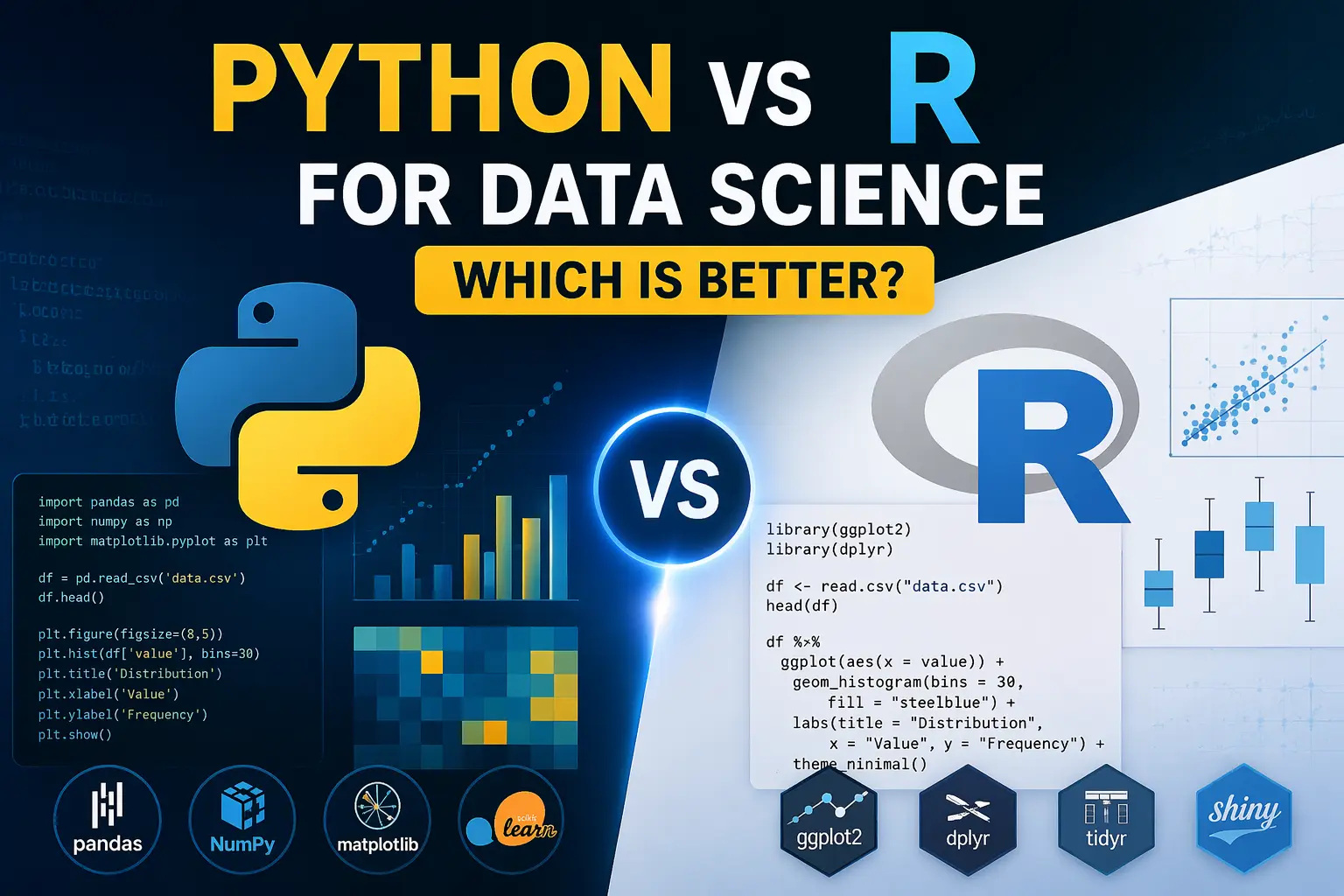
In the world of Data Science, choosing the right programming language is essential for success. Python and R are two of the most widely used programming languages for data analysis and model building. Both languages offer powerful tools for data analytics, but they differ in terms of usability, performance, and applications.
Why Choosing the Right Language Matters
Selecting the right language can significantly impact your productivity and learning curve. In fields such as AI and machine learning, the choice between Python and R depends on project requirements and personal preferences. Beginners often start with Python due to its simplicity, while R is preferred for statistical analysis.
Ease of Learning and Usability
Python is known for its simple syntax and readability, making it ideal for beginners in Data Science. On the other hand, R has a steeper learning curve but is specifically designed for statistical computing. For those new to data analytics, Python offers a smoother start and faster adoption.
Libraries and Ecosystem Comparison
Both Python and R have strong ecosystems. Python provides libraries like Pandas, NumPy, and Scikit-learn, which are widely used in machine learning. R also has powerful packages such as ggplot2 and dplyr for statistical analysis. However, Python is more versatile and widely used in AI applications.
Performance and Speed
When it comes to performance, Python is generally faster and more efficient for large-scale applications. In Data Science projects involving big data, Python handles complex computations more effectively. R performs well in statistical tasks but may struggle with very large datasets.
Data Visualization Capabilities
R is traditionally known for its strong visualization capabilities, making it popular among statisticians. However, Python has caught up with libraries like Matplotlib and Seaborn. In data analytics, both languages provide excellent tools for creating insightful visualizations.
Integration with Tools and Technologies
Python integrates easily with various tools and platforms, making it a preferred choice in AI and machine learning workflows. It also works well with tools like Power BI, allowing users to combine data processing with visualization. R also supports integration, but is less flexible compared to Python.
Use Cases of Python and R
Python is widely used for web development, automation, and machine learning projects. It is a versatile language suitable for multiple domains. R, on the other hand, is mainly used for statistical analysis and research in Data Science. The choice depends on whether your focus is on development or analysis.
Community Support and Popularity
Python has a larger and more active community, which makes it easier to find resources, tutorials, and support. In data analytics, having access to a strong community is beneficial for learning and problem-solving. R also has a dedicated community, especially among statisticians and researchers.
Which One Should You Choose?
For beginners entering Data Science, AI, Power BI, machine learning, and data analytics, Python is generally the better choice due to its simplicity and versatility. However, if your focus is purely on statistical analysis, R can be a valuable tool. Many professionals learn both languages to maximize their skills.
Conclusion: Final Thoughts on Python vs R
Both Python and R have their strengths and are valuable in the field of Data Science. The decision ultimately depends on your goals and project needs. By understanding the differences and applications of each language, you can choose the right tool and build a successful career in data-driven industries.