
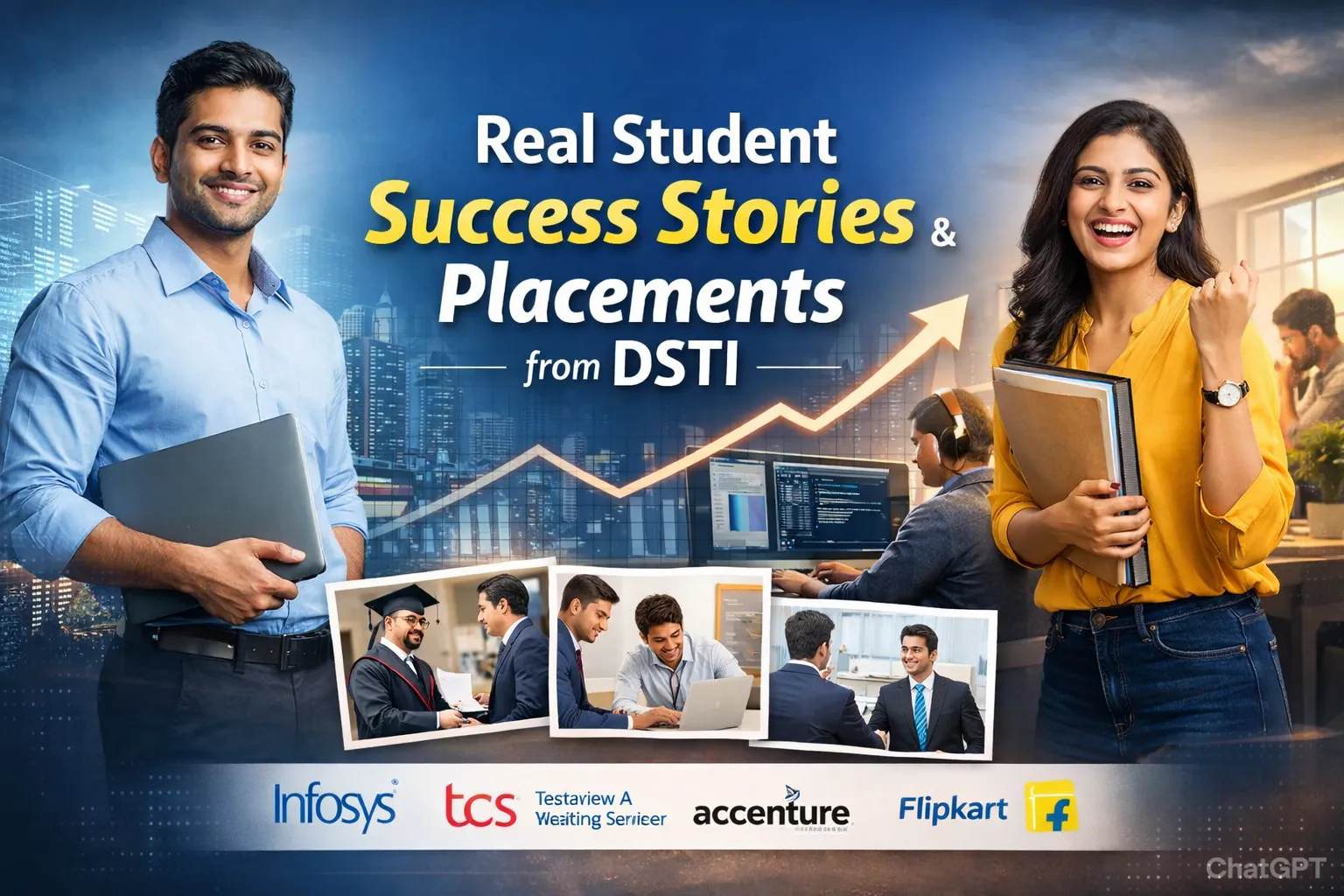
The Rising Importance of Choosing the Right Career Path
Choosing the right career path is one of the most important decisions a student and their family will ever make. In a world where industries are rapidly shifting toward automation, analytics, and artificial intelligence, the demand for skilled data professionals has grown tremendously. However, the real question parents and students often ask is not just “Is data science a good career?” but rather “Can my child truly succeed in this field?” At DSTI , Data Science Training Institute, the answer is best demonstrated not through promises but through real student journeys that reflect growth, transformation, and meaningful career outcomes.
Students from Diverse Backgrounds Achieving Career Growth
Over the years, DSTI has trained students from diverse academic backgrounds, including engineering, commerce, business administration, and even completely non-technical streams. Many of them started with doubts about coding, uncertainty about industry expectations, and confusion about where to begin. What they shared, however, was a strong desire to build a future-proof career. Through structured learning, practical exposure, and consistent mentorship, these students transitioned from beginners to confident professionals working in roles such as Data Analyst, Machine Learning Engineer, and Business Intelligence Executive.
From Non-Technical Background to Data Analyst Success
One such example is a commerce graduate who joined DSTI with minimal technical exposure. Initially overwhelmed by programming concepts, he struggled with understanding how data could be transformed into business insights. The turning point came when he began working on real datasets during practical sessions. Instead of memorizing concepts, he learned how to clean data, analyze patterns, and create visual dashboards that told a story. This hands-on approach helped him build a portfolio that demonstrated actual problem-solving ability. Within months of completing the course, he secured a position as a Data Analyst at a growing analytics firm. His journey reflects a powerful message for parents and students alike: with the right guidance and practical training, even non-technical backgrounds can successfully enter the data science domain.
Bridging the Gap Between Academic Learning and Industry Requirements
Another inspiring journey comes from a computer science graduate who felt that her college education alone was not enough to compete in today’s job market. While she understood theoretical concepts, she lacked confidence in applying machine learning algorithms to real-world problems. At DSTI, she gained exposure to structured modules that emphasized application over theory. She worked on projects involving predictive modeling and classification problems, gradually building the expertise required to present her work confidently during interviews. Soon after completing her training, she secured an internship in machine learning, which later converted into a full-time role. Her experience highlights an important reality: academic degrees provide a foundation, but industry-ready skills and project-based learning create employability.
Successful Career Transitions for Working Professionals
Career transitions have also been a major part of DSTI’s success stories. Professionals from finance, marketing, and operations have enrolled to upgrade their skill sets to stay relevant in the evolving job market. For many working professionals, balancing a full-time job with upskilling is challenging. Through structured guidance and consistent mentorship, they were able to build new technical competencies without disrupting their professional responsibilities. One finance professional, for example, moved into a Business Intelligence role after learning data visualization and analytics tools. The shift not only increased his earning potential but also expanded his career opportunities into strategic decision-making functions. Such transformations demonstrate that data science is not restricted to fresh graduates; it is equally powerful for experienced professionals seeking growth.
The Power of Practical Learning and Real-World Projects
What makes these success stories meaningful is not just the job titles achieved, but the journey behind them. Students often enter with hesitation and leave with clarity. They begin by questioning whether they can understand coding and end by confidently explaining machine learning models in interviews. They start with limited exposure to tools and finish with portfolios showcasing end-to-end projects. This transformation is the result of consistent practice, mentorship, and a curriculum aligned with real industry needs. Instead of focusing purely on theoretical lectures, the emphasis remains on applying concepts to solve practical business problems, which is exactly what recruiters seek.
Why These Success Stories Matter for Parents and Students
For parents researching educational options, these stories provide reassurance. They show that structured training, practical exposure, and placement guidance can significantly improve a student’s employability. For students exploring their future, these journeys serve as proof that dedication combined with the right learning environment can lead to rewarding career outcomes. The data science industry values skill, adaptability, and problem-solving ability, and these are precisely the areas where students grow throughout their training.
Placement Preparation That Makes the Difference
The impact of real-world projects, mock interviews, resume refinement, and portfolio building cannot be overstated. Recruiters today do not simply ask about academic qualifications; they evaluate how candidates think, analyze, and solve problems. By preparing students to present their work confidently and articulate their learning experiences clearly, DSTI helps bridge the gap between training and employment. This holistic preparation is often the deciding factor in successful placements.
Creating the Next Success Story
Every success story that emerges from DSTI begins with a simple decision: the willingness to learn and invest in the future. The transformation from uncertainty to achievement is not accidental; it is built through disciplined learning, guided practice, and industry-oriented preparation. As the demand for data professionals continues to grow across sectors such as finance, healthcare, e-commerce, and technology, students equipped with practical data science skills are positioned for long-term career stability and growth. For anyone wondering whether they can create their own success story in data science, the journeys shared above offer a clear message. With structured training, practical exposure, and focused career guidance, students can move from aspiration to accomplishment.