
Understanding Career Direction in a Rapidly Changing World
Choosing a career path is one of the most important decisions a student makes. However, in today’s fast-evolving world driven by automation, Artificial Intelligence, and digital transformation, career paths are no longer linear. Industries are constantly shifting, and companies like Google and Microsoft regularly redefine skill requirements.
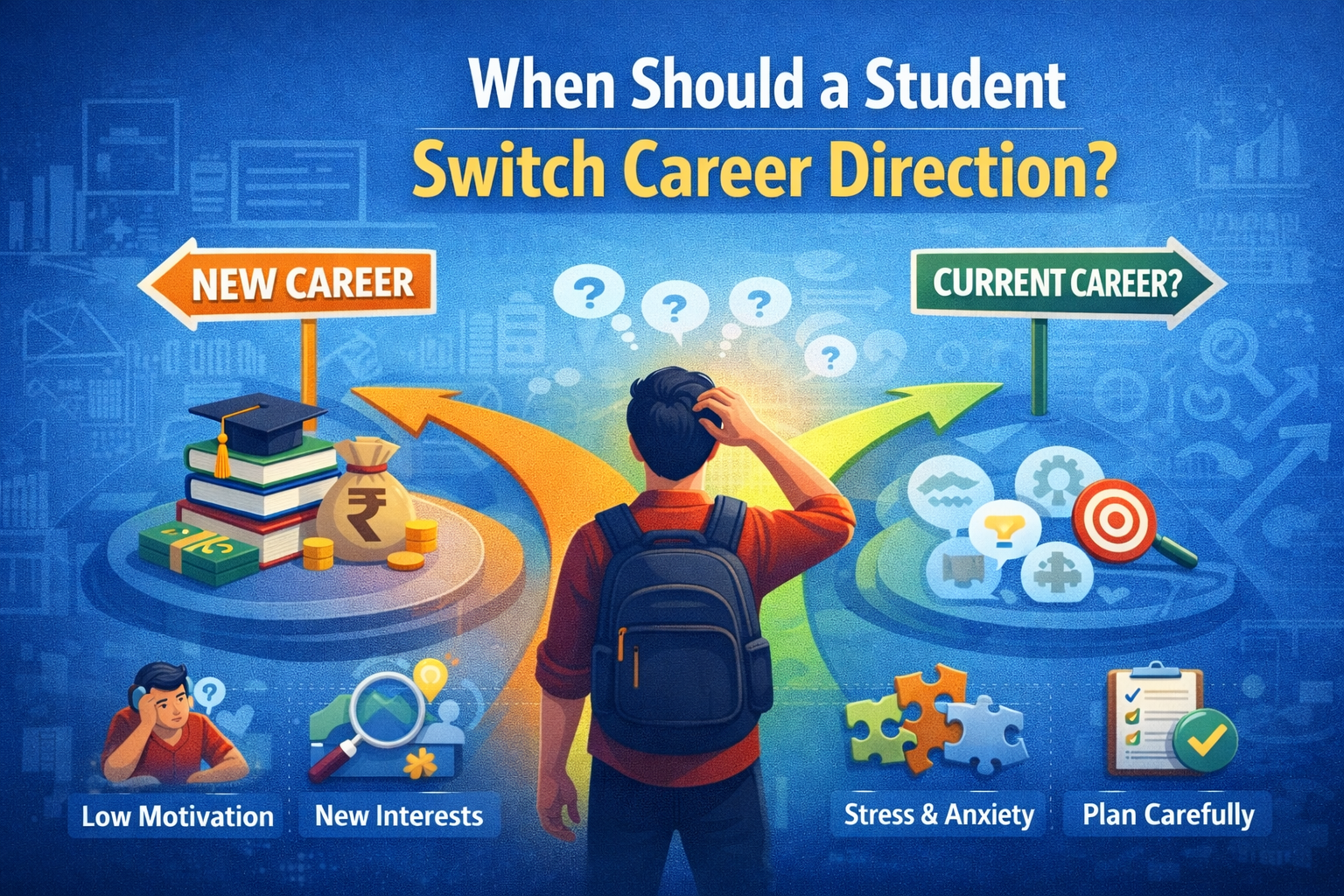
Because of this dynamic environment, it is natural for students to question their chosen path. Switching career direction is not a failure; in many cases, it is a strategic move. The key lies in understanding when a shift is necessary and how to approach it wisely.
Sign 1: Persistent Lack of Interest and Motivation
One of the strongest indicators that a student should reconsider their career direction is a consistent lack of interest. Every field has challenges, but if you feel drained, disengaged, and unmotivated for a long period, it may signal misalignment.
Temporary boredom is normal, especially during difficult academic phases. However, if you constantly avoid learning, feel no excitement about industry updates, and struggle to imagine yourself working in that field long-term, it might be time to reflect. Passion alone is not everything, but sustained disinterest can negatively impact performance and growth.
Sign 2: Mismatch Between Strengths and Career Demands
Sometimes students choose careers based on trends or external pressure rather than personal strengths. For example, a student may pursue coding because it is popular, but struggle significantly with logical problem-solving.
Self-awareness is crucial. Use assessment tools, mentorship, and performance analysis to evaluate whether your natural abilities align with your chosen field. Platforms like LinkedIn can help you explore various job roles and required competencies. If there is a consistent mismatch between your strengths and career demands despite sincere effort, a strategic switch might be beneficial.
Sign 3: Changing Industry Demand and Market Trends
The job market evolves rapidly. Some industries grow exponentially, while others decline due to technological disruption. For instance, certifications in cloud computing from Amazon Web Services or AI programs from IBM are currently in high demand.
If your chosen field shows limited growth, low job availability, or declining salary trends, it may be wise to reconsider. Conduct market research regularly. Check job portals, salary reports, and industry forecasts. A data-driven decision reduces emotional bias in career shifts.
Sign 4: Mental and Emotional Well-Being Is Affected
Career choices significantly impact mental health. If your academic path causes chronic stress, anxiety, or self-doubt, you should evaluate whether the issue lies in workload management or deeper career misalignment.
Switching careers solely due to temporary academic pressure may not be wise. However, if the field fundamentally conflicts with your interests and values, continuing may lead to long-term dissatisfaction. Your well-being is an essential factor in sustainable career growth.
Sign 5: Discovery of a Stronger, More Aligned Interest
Sometimes students discover new passions during internships, side projects, or extracurricular activities. For example, an engineering student may realize a strong interest in digital marketing after managing social media campaigns.
Exploring new interests through short courses on platforms like Coursera or Udemy can help validate this shift before making a full transition. If the new field consistently excites you and aligns with your strengths, switching direction could open better opportunities.
When NOT to Switch Career Direction
It is equally important to understand when not to switch. Many students consider changing paths during challenging semesters or after a poor exam result. Short-term setbacks should not drive long-term decisions.
Avoid switching careers because of peer pressure, social media trends, or fear of competition. Every field has competition. Instead of escaping difficulty, evaluate whether the challenge is temporary or structural. Patience and resilience are essential before making drastic changes.
How to Switch Career Direction Strategically
If you decide that switching is necessary, approach it strategically rather than impulsively. First, conduct thorough research about the new field. Understand required skills, certifications, and entry-level opportunities.
Second, build foundational knowledge gradually. Take introductory courses, work on small projects, and connect with professionals in the industry.
Third, calculate financial and time investments. Switching fields may require additional education or certifications. Weigh the opportunity cost carefully before committing fully.
Building a Transition Plan with Minimal Risk
A smart transition minimizes risk. Instead of quitting your current path immediately, consider parallel skill-building. For example, you can complete online certifications while continuing your current degree.
Networking plays a major role in smooth transitions. Use platforms like LinkedIn to connect with professionals and seek mentorship. Informational interviews can provide practical insights and realistic expectations.
The Long-Term Perspective on Career Switching
Career paths are no longer rigid. Many professionals switch industries multiple times during their careers. What matters is adaptability and continuous learning.
Switching direction early in your academic journey is often easier than after years of professional experience. However, even later transitions are possible with strategic planning. Focus on transferable skills such as communication, problem-solving, and adaptability, as these remain valuable across industries.
Final Thoughts: Switch with Clarity, Not Emotion
Switching career direction is a significant decision that requires careful evaluation. It should be based on self-awareness, market research, and long-term vision—not temporary emotions.
If your interests, strengths, and industry opportunities align better with another path, making a calculated shift can lead to greater satisfaction and success. However, always approach the decision strategically, with research, planning, and patience.
Remember, a career is a long journey. Adjusting your direction when necessary is not a sign of failure; it is a sign of growth and self-awareness.