
Introduction
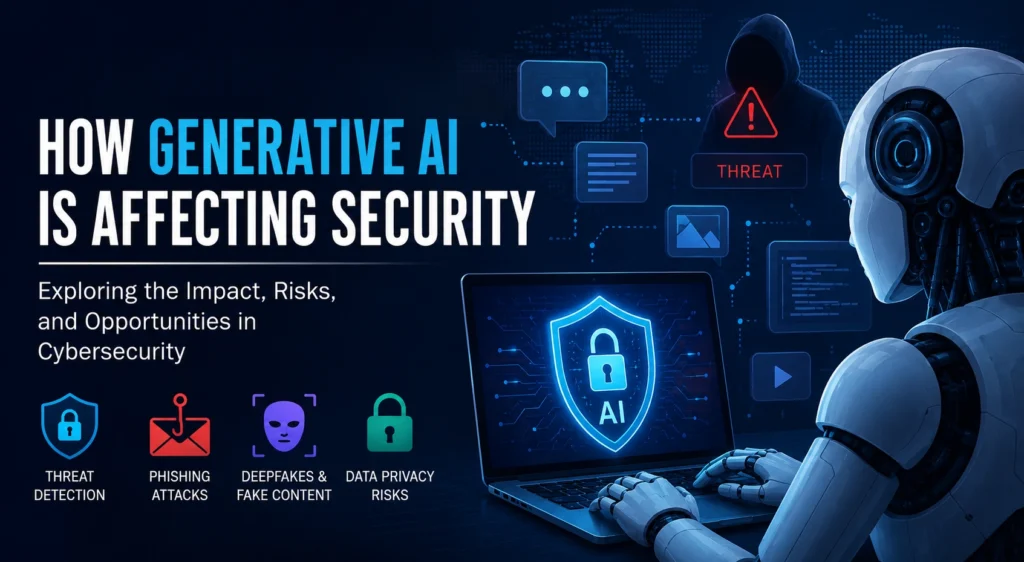
Generative AI has changed the way people use technology, communicate online, and protect digital systems. While it helps businesses improve cybersecurity, automate tasks, and detect threats faster, it has also created new security risks such as phishing attacks, deepfakes, fake content, and AI-generated malware. As artificial intelligence continues to grow, understanding its impact on security has become important for students, businesses, and internet users. This article explains how generative AI is affecting security, its advantages and risks, and why learning modern skills like AI, Machine Learning, Python, Data Science, Digital Marketing, and Business Analytics is becoming more valuable in today’s digital world.
1. Understanding Generative AI and Security
Generative AI refers to artificial intelligence systems that can generate human-like content such as text, audio, code, videos, and images based on user prompts and data patterns. Popular AI systems are now being used in industries like education, healthcare, finance, e-commerce, and digital marketing because they improve productivity and automate repetitive tasks. However, security experts are concerned because these AI tools can also be used by cybercriminals to create convincing scams, fake identities, malicious code, and misleading information. As businesses adopt AI rapidly, cybersecurity teams must also improve their security systems to defend against AI-powered attacks and data breaches.
2. Generative AI Has Improved Cybersecurity Systems
One of the biggest positive effects of generative AI is that it has strengthened cybersecurity systems. AI-powered security tools can analyze massive amounts of data quickly, identify unusual activities, and detect threats faster than traditional systems. Companies now use AI to monitor suspicious logins, malware behavior, phishing emails, and network attacks in real time. This helps organizations prevent cyberattacks before they cause serious damage. AI systems also help automate security operations, reducing the workload for cybersecurity professionals and improving response times during emergencies.
3. AI-Powered Phishing Attacks Have Increased
Although AI helps improve security, it has also made phishing attacks more dangerous and realistic. Earlier phishing emails often contained grammatical mistakes and suspicious formatting, making them easier to identify. Today, generative AI can create professional-looking emails, fake messages, and social engineering content that appear highly authentic. Cybercriminals can imitate company executives, customer support agents, or trusted organizations to trick people into sharing passwords, banking details, or personal information. This has increased the importance of digital awareness and cybersecurity education for internet users worldwide.
Important Points to Remember:
- Never share passwords or OTPs through emails or messages.
- Verify unknown links before clicking on them.
- Use two-factor authentication whenever possible.
- Keep software and devices updated regularly.
- Learn basic cybersecurity skills to stay protected online.
4. Deepfakes and Fake Content Are Growing Concerns
Generative AI has made it easier to create deepfakes, which are fake videos, audio clips, or images that look real. Deepfake technology can imitate a person’s face or voice with surprising accuracy, creating serious security and trust issues. Businesses, political organizations, and social media platforms are struggling to manage the spread of fake information created through AI tools. Fraudsters may use fake voice recordings to trick employees into transferring money or sharing confidential information. As a result, companies are investing more in AI detection systems and digital verification technologies to identify manipulated media.
5. Data Privacy Risks Have Increased
Another major concern related to generative AI is data privacy and information security. AI systems require large amounts of data for training and improvement, which raises concerns about how personal and sensitive information is collected, stored, and used. If AI systems are not properly secured, hackers may gain access to confidential business records, customer data, or private conversations. Organizations must now follow strict cybersecurity policies and privacy regulations to protect user data and maintain trust. Businesses are also focusing on ethical AI practices to ensure responsible use of technology.
6. AI Is Helping Businesses Detect Fraud Faster
Generative AI is playing an important role in fraud detection across banking, finance, e-commerce, and online payment platforms. AI systems can analyze customer behavior patterns and identify suspicious activities instantly. For example, if an unusual login attempt or unexpected financial transaction occurs, AI can trigger alerts immediately. This helps companies reduce fraud risks and protect customer accounts. Business Analytics professionals are increasingly using AI-driven tools to study security trends, improve decision-making, and strengthen risk management strategies within organizations.
7. Demand for AI and Cybersecurity Skills Is Growing
As generative AI continues to influence security, the demand for skilled professionals in AI and cybersecurity is increasing rapidly. Students and working professionals are now exploring courses such as Data Science, Artificial Intelligence, Machine Learning, Python, and Business Analytics to build future-ready skills. Python programming is especially popular because it is widely used for AI development, cybersecurity automation, and data analysis. Companies are actively searching for professionals who understand both AI technologies and cybersecurity principles to help protect digital systems from modern threats.
8. Generative AI Has Changed Digital Marketing Security
The digital marketing industry has also experienced the impact of generative AI on security. AI tools are now used to create content, automate advertising campaigns, and analyze customer behavior efficiently. However, cybercriminals can also misuse AI to create fake reviews, spam content, and fraudulent advertisements that mislead consumers. Businesses must carefully monitor online campaigns and use security verification tools to maintain trust and authenticity. Digital marketers are learning how to balance AI automation with ethical practices and online safety measures.
9. AI Can Generate Malicious Code
One serious security challenge is that generative AI can help create malicious software and harmful code. Hackers may use AI systems to generate scripts that exploit vulnerabilities in websites, applications, or networks. Although many AI platforms include safety restrictions, cybercriminals often try to bypass these protections. Cybersecurity teams must therefore stay updated with the latest threats and improve their defensive systems continuously. Ethical hackers and security researchers are also using AI to test vulnerabilities and strengthen protection against advanced cyberattacks.
10. The Future of Generative AI and Security
The future relationship between generative AI and security will continue to evolve as technology becomes more advanced. Governments, businesses, educational institutions, and technology companies are working together to create AI regulations, ethical guidelines, and stronger cybersecurity frameworks. AI will likely become an essential part of future security systems, helping organizations predict threats, automate defenses, and improve digital safety. At the same time, users must remain aware of AI-related risks and practice responsible online behavior. Learning modern technical skills such as Machine Learning, AI development, Data Science, and cybersecurity can help individuals prepare for future career opportunities in the digital economy.
Conclusion
Generative AI has significantly affected security in both positive and negative ways. It has improved cybersecurity systems, fraud detection, automation, and threat monitoring, while also creating new risks such as deepfakes, phishing attacks, fake content, and AI-generated malware. As AI technology continues to grow, businesses and individuals must adapt to changing security challenges and invest in digital awareness and protection strategies. Students and professionals who learn skills related to Artificial Intelligence, Python, Data Science, Machine Learning, Digital Marketing, and Business Analytics will have better opportunities to succeed in the future technology-driven world. Understanding how generative AI affects security is essential for staying safe, informed, and prepared in an increasingly digital society.