
Introduction
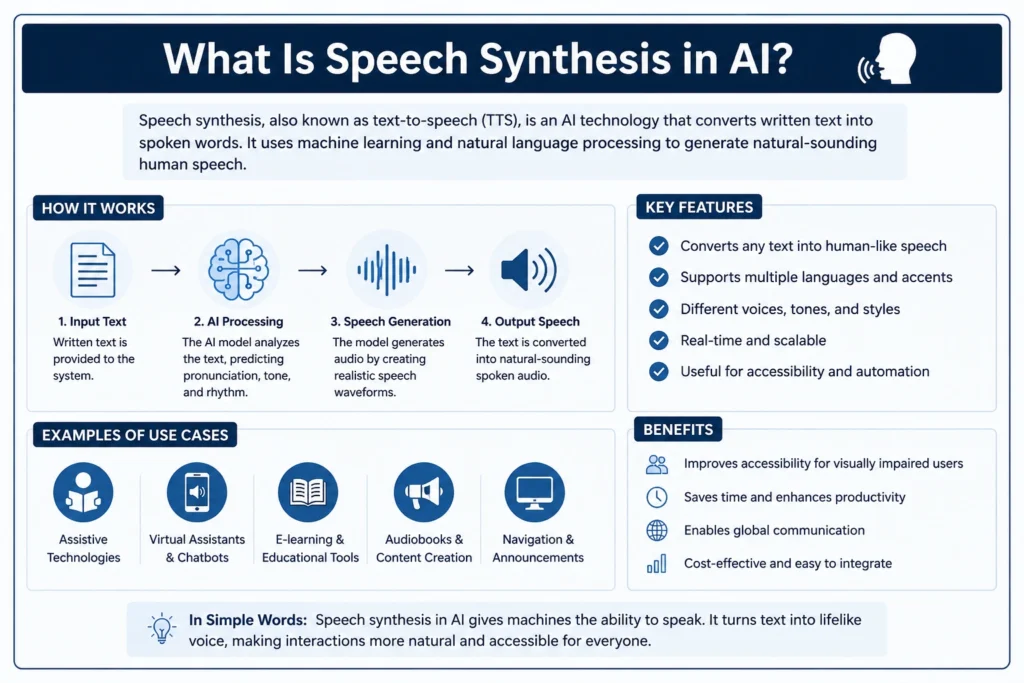
Speech synthesis in AI is a technology that allows computers and machines to convert written text into human-like speech. It is widely used in virtual assistants, smart devices, customer support systems, audiobooks, and online learning platforms. With the help of Artificial Intelligence, Machine Learning, and Natural Language Processing, modern speech synthesis systems can produce realistic and natural-sounding voices. This technology is improving communication between humans and machines and is becoming an important part of industries like education, healthcare, Digital Marketing, and Business Analytics. In this blog, we will understand what speech synthesis in AI is, how it works, its types, benefits, applications, challenges, and future scope in simple and beginner-friendly language.
1. Understanding Speech Synthesis in AI
Speech synthesis is a technology that converts written text into spoken words using Artificial Intelligence systems. It is also known as Text-to-Speech or TTS technology. The main goal of speech synthesis is to create natural and understandable human-like voices. Earlier speech systems sounded robotic and unnatural, but modern AI-based systems can produce voices that sound realistic and emotional. AI models analyze language patterns, pronunciation, tone, speed, and pauses to generate smooth speech. Speech synthesis is widely used in smartphones, virtual assistants, online videos, e-learning platforms, and smart home devices. The technology helps users interact with machines more easily and improves accessibility for people who cannot read text easily.
2. How Speech Synthesis Works
Speech synthesis works through several AI processes that convert text into speech. First, the AI system receives written text as input. Then it analyzes grammar, punctuation, sentence structure, and pronunciation rules. After that, Natural Language Processing helps the system understand how words should sound in different contexts. Machine Learning models trained on large voice datasets generate speech patterns similar to human voices. Finally, audio signals are produced and played through speakers or headphones. Modern speech synthesis systems use deep learning models to improve voice quality and make speech sound more natural. Students learning Python and Machine Learning often create beginner Text-to-Speech projects to understand how AI voice systems work.
3. Types of Speech Synthesis
There are different types of speech synthesis technologies used in AI systems today. Rule-based synthesis follows predefined pronunciation and grammar rules to generate speech. Concatenative synthesis combines small recorded voice segments to create complete sentences. Neural speech synthesis is the most advanced method and uses deep learning to generate realistic voices. AI companies now use neural networks to create highly expressive speech systems that can copy emotions, accents, and speaking styles. These advanced systems are commonly used in virtual assistants and customer service bots because they provide a more human-like communication experience.
4. Importance of Speech Synthesis in Modern Technology
Speech synthesis has become an important part of modern digital technology because it improves communication between humans and machines. It allows users to interact with devices using voice instead of typing or reading text. Many businesses use AI voice assistants to improve customer support services and save time. Educational platforms use speech synthesis to help students learn through audio content. Accessibility tools use AI-generated speech to help visually impaired users access digital information. Speech synthesis also supports multilingual communication, making technology more accessible worldwide. As AI technology continues to grow, speech synthesis will become even more important in everyday life.
5. Applications of Speech Synthesis in AI
Speech synthesis is used in many industries and applications. Virtual assistants like smart speakers use speech synthesis to answer questions and perform tasks. GPS navigation systems use AI-generated voices to guide drivers. E-learning platforms convert study materials into audio lessons for students. Customer support chatbots use speech technology to communicate with users naturally. Audiobooks and podcast creators use AI voices to produce content faster and more efficiently. Healthcare systems also use speech synthesis for patient assistance and medical information delivery. In the field of Digital Marketing, AI-generated voiceovers are used in advertisements, social media videos, and promotional campaigns to improve audience engagement.
Important Points About Speech Synthesis in AI
- Converts written text into human-like speech
- Improves accessibility for visually impaired users
- Used in virtual assistants and smart devices
- Supports multiple languages and accents
- Helps businesses automate customer support
- Uses AI, Machine Learning, and deep learning technologies
- Enhances user experience in education and entertainment
6. Role of Artificial Intelligence in Speech Synthesis
Artificial Intelligence plays a major role in improving speech synthesis systems. AI allows machines to understand pronunciation, sentence flow, emotions, and speech patterns. Deep learning algorithms train on massive voice datasets to create realistic voices. AI can also generate personalized voices based on user preferences. Modern AI speech systems can understand context and produce more accurate pronunciations. This makes communication smoother and more natural. Students studying AI and Data Science often learn speech processing techniques because voice technology is becoming one of the fastest-growing fields in the tech industry.
7. Benefits of Speech Synthesis Technology
Speech synthesis provides many advantages for users and businesses. It saves time by converting large amounts of text into audio instantly. It improves accessibility for people with reading difficulties or visual impairments. Businesses can automate customer communication using AI voice assistants. Educational platforms can provide audio-based learning experiences for students. Speech synthesis also reduces content production costs because AI-generated voices can replace manual voice recordings in some cases. In Business Analytics and Digital Marketing, AI voice technology helps companies create engaging audio content for branding and communication purposes.
8. Challenges in Speech Synthesis
Although speech synthesis technology has improved significantly, it still faces some challenges. Some AI-generated voices may sound unnatural in complex conversations or emotional situations. Pronunciation errors can occur when the system encounters uncommon names or words. Different languages and regional accents also create difficulties for speech systems. Another challenge is maintaining privacy and preventing misuse of AI-generated voices. Developers continuously work on improving speech quality, emotional expression, and language accuracy. Machine Learning experts are researching better algorithms to solve these problems and make AI voices more realistic.
9. Future of Speech Synthesis in AI
The future of speech synthesis looks very promising because AI technology is advancing rapidly. Future AI systems may produce voices that sound almost identical to real human speech. Personalized voice assistants could become more interactive and emotionally intelligent. Speech synthesis may also play a major role in education, healthcare, entertainment, gaming, and customer service industries. AI-generated multilingual voices could improve global communication and online learning experiences. Students learning Python, AI, and Machine Learning today may contribute to future innovations in speech technology and voice-based AI systems.
10. Why Beginners Should Learn About Speech Synthesis
Beginners interested in technology and Artificial Intelligence should learn about speech synthesis because it combines multiple important AI concepts such as Machine Learning, Natural Language Processing, and deep learning. Understanding speech technology can help students build innovative projects and improve their technical skills. Many online courses related to Data Science, AI, Python, Machine Learning, Digital Marketing, and Business Analytics now include voice AI topics because of their growing importance in the industry. Learning speech synthesis can open career opportunities in software development, AI engineering, voice application design, automation, and digital communication.
Conclusion
In conclusion, speech synthesis in AI is an advanced technology that helps machines convert text into natural human-like speech. It is widely used in virtual assistants, education, customer service, healthcare, and smart devices to improve communication and accessibility. With the growth of Artificial Intelligence, Machine Learning, and Natural Language Processing, speech synthesis is becoming more realistic and useful in daily life. As technology continues to evolve, speech synthesis will play an even bigger role in the future of automation, digital communication, and user experience.