
Introduction
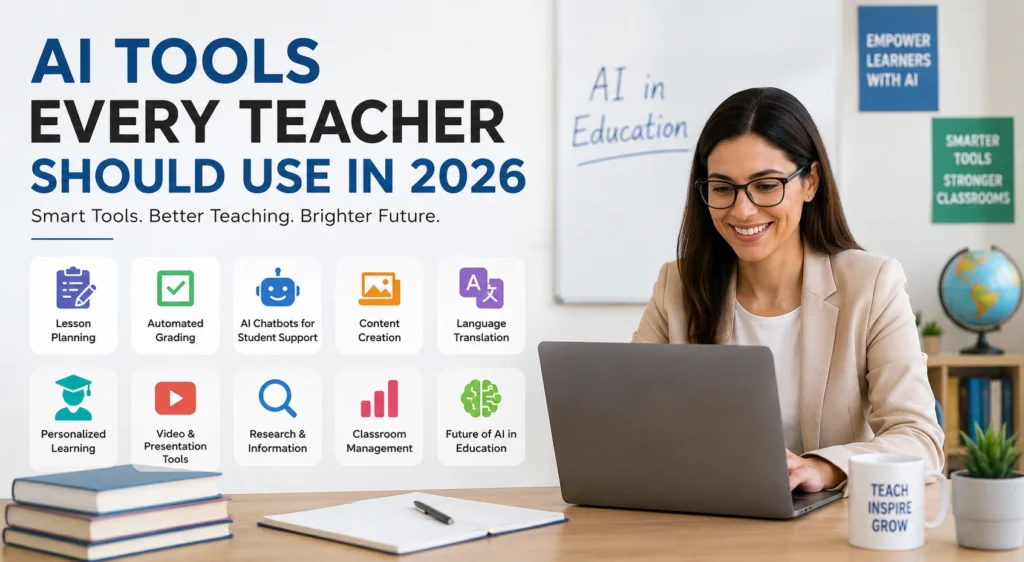
“AI Tools Every Teacher Should Use in 2026” highlights how artificial intelligence is changing modern education. From smart lesson planning and automated grading to personalized learning and AI-powered classroom management, these tools are helping teachers save time and improve student engagement. In 2026, AI is becoming an essential part of education, making teaching simpler, faster, and more effective for both educators and students.
1. AI Lesson Planning Tools
AI lesson-planning tools are becoming increasingly popular among teachers because they can generate structured lesson plans, quizzes, assignments, and classroom activities within minutes. These tools analyze topics and create customized teaching material based on grade level and subject requirements. Teachers can save hours of preparation time and focus more on student interaction. In 2026, many educators are using AI to design interactive classroom experiences that improve student engagement and understanding. AI-generated teaching content is also useful for online classes, hybrid learning environments, and personalized education systems.
2. AI Tools for Automated Grading
One of the biggest challenges for teachers is grading assignments and exams. AI-powered grading tools now help educators evaluate multiple-choice questions, essays, reports, and homework automatically. These systems provide instant feedback, reduce human errors, and save valuable time. Teachers can also analyze student performance trends and identify weak areas quickly. In modern classrooms, AI grading systems are improving productivity while allowing teachers to spend more time helping students learn instead of handling repetitive administrative tasks.
3. AI Chatbots for Student Support
AI chatbots are helping teachers provide 24/7 support to students. These virtual assistants can answer common questions, explain concepts, and guide students through assignments anytime. Chatbots are especially useful for online education platforms and remote learning systems where students may need extra help outside of classroom hours. Many schools and training institutes now use AI assistants to improve communication between teachers and students. These tools also help students become more independent learners while reducing the workload on educators.
4. AI Content Creation Platforms
Teachers in 2026 are increasingly using AI content creation tools to generate presentations, worksheets, visual explanations, notes, and classroom activities. These tools can turn simple text into attractive slides, infographics, and videos that make learning more engaging for students. AI-generated visuals help explain difficult subjects in a simpler way. Educational content creators are also using AI platforms to prepare learning materials for courses like Data Science, AI, Machine Learning, Python, Digital Marketing, and Business Analytics, making technical education easier for beginners and students.
5. AI Language Translation and Accessibility Tools
AI translation tools are making classrooms more inclusive by helping teachers communicate with students from different language backgrounds. Real-time translation and speech-to-text tools improve accessibility for students who face language or hearing difficulties. Teachers can create multilingual learning experiences and ensure every student understands the lesson properly. Accessibility-focused AI tools also help visually impaired students through voice assistance and smart reading technologies. This is helping educational institutions provide equal learning opportunities for all students in 2026.
6. AI Tools for Personalized Learning
Personalized learning is one of the most important benefits of AI in education. AI platforms analyze student performance, behavior, and learning patterns to recommend customized study plans and learning resources. Teachers can identify which students need additional support and which students are ready for advanced learning. This creates a smarter classroom environment where every learner receives attention according to their individual needs. AI-driven adaptive learning systems are now widely used in schools, colleges, and professional training programs.
Important Point
- AI tools should support teachers, not replace them. Human creativity, emotional understanding, and classroom interaction remain essential for effective education in 2026.
7. AI Video and Presentation Tools
Modern AI video tools allow teachers to create educational videos with automatic subtitles, voiceovers, animations, and visual effects. These tools help simplify complex topics and improve student understanding. AI presentation software can generate professional slides instantly using just a topic or prompt. Teachers are using these technologies to make classroom sessions more engaging and interactive. Educational videos are especially useful for explaining technical subjects like Machine Learning, Python programming, and Business Analytics in a beginner-friendly way.
8. AI Research and Information Tools
Research-based AI tools help teachers gather information quickly, summarize lengthy articles, and prepare educational material efficiently. Instead of spending hours searching for reliable sources, teachers can use AI assistants to collect accurate and updated information within seconds. These tools are helping educators stay informed about industry trends, new technologies, and educational innovations. Teachers preparing lessons for Digital Marketing, AI, and Data Science courses are especially benefiting from smart AI research platforms.
9. AI Classroom Management Tools
AI classroom management systems are helping teachers monitor attendance, track student participation, manage assignments, and analyze classroom performance automatically. These tools provide valuable insights into student behavior and learning progress. AI-powered analytics help teachers understand classroom trends and make better teaching decisions. Schools are also using AI systems to improve communication with parents and provide real-time academic updates. Smart classroom management tools are reducing administrative stress and improving educational efficiency.
10. Future of AI Tools in Education
The future of AI in education looks extremely promising as schools and institutions continue adopting advanced technologies. In 2026, teachers are expected to work closely with AI systems to create more interactive, efficient, and student-focused learning environments. AI will continue improving online education, virtual classrooms, and skill-based training programs. Students interested in career-focused courses like Artificial Intelligence, Data Science, Machine Learning, Python, Digital Marketing, and Business Analytics will benefit greatly from AI-powered educational platforms and smart learning technologies.
Conclusion
AI tools are transforming education in 2026 by helping teachers improve productivity, personalize learning, and create more engaging classroom experiences. From automated grading to smart lesson planning, these technologies are making teaching easier and more effective. While AI continues to grow in education, teachers will always play the most important role in guiding, inspiring, and supporting students for a better learning future.